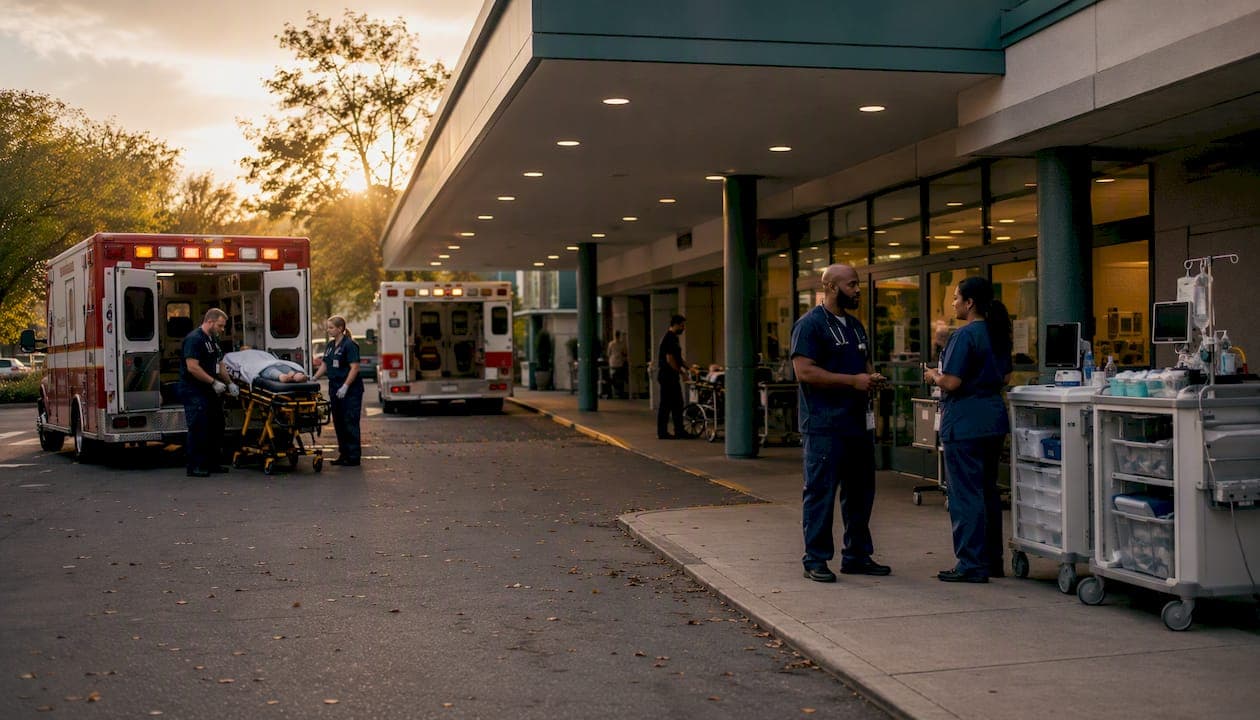
For life-threatening or rapidly worsening symptoms, go to the ER or call 911. For non-life-threatening conditions that need same-day care, urgent care is faster and cheaper. For minor or unclear symptoms, telehealth or a symptom checker can guide your next step without leaving home.
Quick decision checklist:
- Life-threatening red flags (chest pain, stroke signs, severe bleeding, trouble breathing, loss of consciousness) → ER or 911 immediately
- Non-life-threatening but urgent (sprain, fever, UTI, minor cut, ear infection) → Urgent care
- Minor or unclear symptoms (mild cough, rash, stomach upset, "should I be worried?") → Telehealth or symptom checker
Pro Tip: When you genuinely can't tell whether something is serious, default to the ER. The cost of an unnecessary ER visit is recoverable. The cost of skipping one when you needed it may not be.
The single rule worth memorizing: if it could kill you or permanently damage you in the next few hours, it's an ER problem. Everything else is a judgment call, and the sections below help you make it.
Table of Contents
- What's the real difference between an ER, urgent care, walk-in clinic, and telehealth?
- Which symptoms mean you need the emergency room right now?
- When should you call 911 instead of driving to the hospital?
- What conditions is urgent care actually built to handle?
- When does telehealth or a symptom checker actually make sense?
- How to prepare for an ER or urgent care visit
- How much does an ER visit cost compared to urgent care?
- How symptom checkers fit into responsible triage
- When should you see your primary care doctor instead?
- How location and time of day affect your options
- Key Takeaways
- The gap between triage theory and what people actually do
- Not sure where to go? Peacehealthai can help you decide in seconds
What's the real difference between an ER, urgent care, walk-in clinic, and telehealth?
These four settings exist on a spectrum of severity, cost, and capability. Knowing what each one can actually do prevents both dangerous under-treatment and expensive over-treatment.
Emergency Department (ED/ER): Open 24/7, staffed by emergency physicians and nurses, and connected to hospital inpatient units, ICUs, and surgical suites. EDs have advanced imaging (CT, MRI, ultrasound), full labs, cardiac monitoring, and on-call specialists. They triage by severity, not arrival time, so a minor complaint may wait hours behind critical cases. According to Scripps Health, EDs are the right place for suspected heart attack, stroke, severe trauma, or respiratory failure.
Urgent Care Center: Typically open extended hours (often 8 AM–10 PM), no appointment needed, and staffed by physicians or nurse practitioners. Most locations offer X-rays, basic labs, suturing, EKGs, and prescriptions. They cannot admit patients, rarely have CT or MRI on-site, and will transfer you to the ED if your condition escalates. Harvard Health notes that urgent care quality varies and clinicians will refer to the ED when higher-level care is needed.
Walk-In / Express Care Clinic: Often found inside pharmacies or retail stores. Narrower scope than urgent care: think flu shots, strep tests, blood pressure checks, and minor prescription refills. Not equipped for injuries or complex complaints.
Telehealth / Symptom Checker: Video visits with a licensed clinician or AI-guided symptom assessment. Best for assessment, reassurance, and prescriptions for straightforward conditions. Cannot perform a physical exam, draw labs, or image anything. Should always escalate to in-person care when red flags appear.
| Setting | Hours | Staffing | Key capabilities | Can admit? | Relative cost |
|---|---|---|---|---|---|
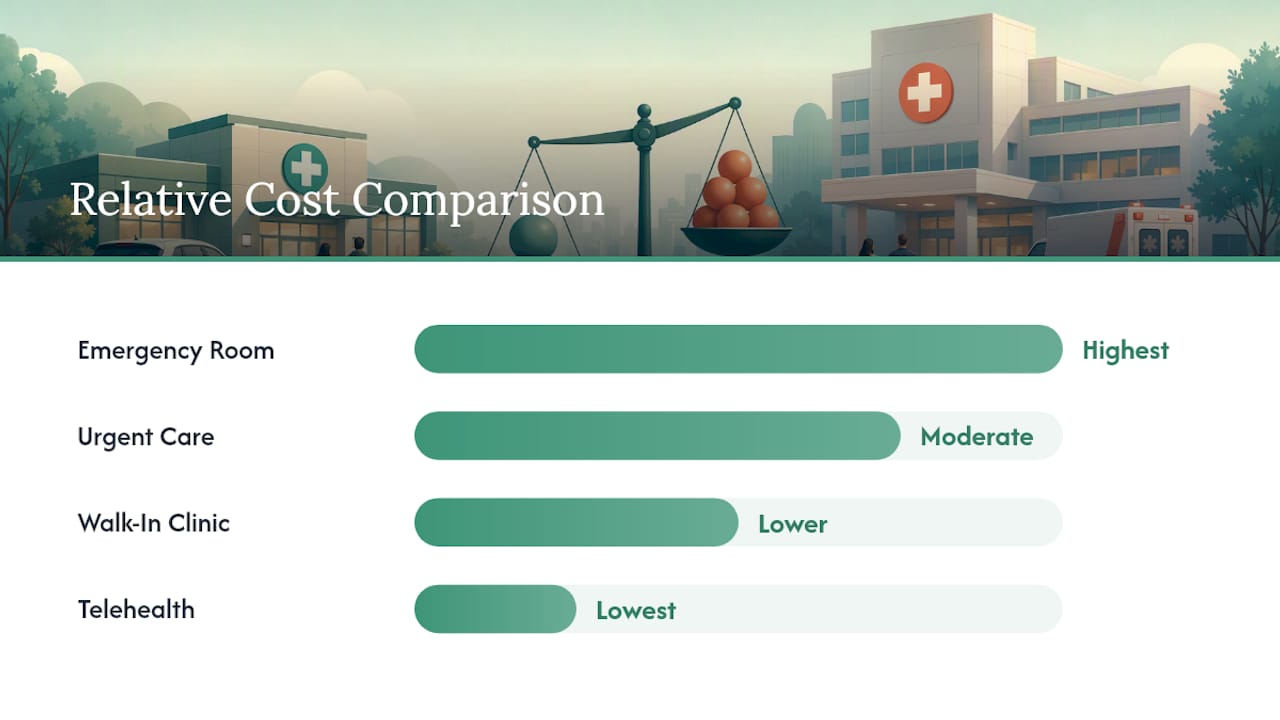
| Emergency Room | 24/7 | Emergency MDs, specialists | CT/MRI, full labs, surgery, ICU | Yes | Highest |
| Urgent Care | Extended (varies) | MD or NP/PA | X-ray, basic labs, suturing, EKG | No | Moderate |
| Walk-In / Express Care | Business hours | NP/PA | Strep/flu tests, minor Rx | No | Lower |
| Telehealth / Symptom Checker | On-demand | MD, NP, or AI-guided | Assessment, Rx for minor issues | No | Lowest |
The triage model is the sharpest operational difference. ERs rank patients by severity. Urgent care and walk-in clinics work first-come, first-served, which means a straightforward sprain gets seen faster at urgent care than at a busy ER on a Friday night.
Which symptoms mean you need the emergency room right now?
Any symptom that threatens life, limb, or long-term function belongs in the ED. The VA's guidance on emergency versus urgent care is direct: go to the ED or call 911 for the following:
- Chest pain or pressure (especially with sweating, arm pain, or jaw pain)
- Difficulty breathing or shortness of breath that is worsening
- Stroke signs: sudden facial drooping, arm weakness, slurred speech, or severe sudden headache
- Uncontrolled bleeding that won't stop with pressure
- Loss of consciousness or altered mental status
- Seizures, especially those that don't stop within a few minutes
- Severe allergic reaction (throat tightening, swelling of the face/tongue, hives with breathing trouble)
- Suspected poisoning or drug overdose
- Severe abdominal pain, especially sudden onset
- Major trauma: head injury with confusion, suspected spinal injury, severe burns
Yale Medicine reinforces that chest pain, stroke signs, and severe breathing trouble are non-negotiable ER triggers. When in doubt, the safest choice is the emergency department.
Pediatric specifics: Infants under 3 months with any fever above 100.4°F need the ER, not urgent care. Young children showing signs of dehydration (no tears, no wet diapers for 8+ hours, sunken fontanelle in infants) also need emergency evaluation. A child who is limp, unresponsive, or breathing abnormally is a 911 call.
Borderline case example: Rapidly worsening shortness of breath over 20 minutes, especially with chest tightness or a bluish tinge around the lips, is an ER situation. A mild cough with no breathing difficulty and normal oxygen saturation is not. The direction of travel matters: if symptoms are getting worse quickly, go to the ER. For more detail on respiratory red flags, Peacehealthai's resource on shortness of breath breaks down exactly when breathing trouble crosses into emergency territory.
Harvard Health estimates that a large share of ED visits may be nonurgent, which means a large share of people are using the most expensive, highest-acuity setting for problems urgent care could handle safely. Correct triage saves time, money, and frees ER capacity for true emergencies.
When should you call 911 instead of driving to the hospital?
Call 911 if the person is unstable, losing consciousness, or if transporting them yourself could worsen their condition or delay critical pre-hospital care.
Paramedics don't just drive fast. They start treatment in the ambulance: oxygen, IV access, cardiac monitoring, defibrillation, and medication. For a heart attack or stroke, those minutes matter.
Call 911 for:
- Unconsciousness or unresponsiveness
- Severe difficulty breathing or a blocked airway
- Chest pain consistent with a heart attack
- Seizures that don't stop after a few minutes
- Suspected stroke (use the FAST test: Face drooping, Arm weakness, Speech difficulty, Time to call 911)
- Severe trauma: major car accident, fall from height, gunshot or stab wound
- Severe allergic reaction with throat swelling or breathing compromise
- Uncontrolled major bleeding
If moving the person could worsen a spinal injury or if you're alone and can't safely get them to a car, call 911. Ambulance costs in the U.S. can be significant, sometimes running into thousands of dollars depending on distance and insurance coverage. That cost should never delay a call in a life-threatening emergency. Most insurers cover emergency ambulance transport, and hospitals have financial assistance programs. Get immediate guidance on what to do while waiting for emergency services.
What conditions is urgent care actually built to handle?
Choose urgent care for same-day, non-life-threatening problems you'd normally see your primary care physician for if they were available. UCLA Health describes urgent care as a bridge between primary care and the ED, equipped for a wide range of acute but stable conditions.
Urgent care handles these well:
- Minor fractures where the bone is not displaced (a simple wrist or finger fracture, for example)
- Sprains and strains
- Small lacerations that have stopped bleeding and need stitches
- Fever in otherwise healthy adults (without confusion or severe pain)
- Uncomplicated urinary tract infections
- Mild-to-moderate asthma flare in a patient who is stable and speaking in full sentences
- Ear infections, strep throat, sinus infections
- Minor burns (small area, not on face/hands/genitals, no blistering over a large surface)
- Flu symptoms, COVID testing, and minor rashes
What urgent care cannot handle:
- Complex trauma or suspected internal bleeding
- Suspected stroke or heart attack
- Signs of severe infection (high fever with confusion, rigid abdomen, sepsis signs)
- Major fractures or dislocations requiring surgery
- Unstable vital signs
- Advanced imaging beyond plain X-ray (most urgent care centers lack CT or MRI)
- Any condition that may require hospital admission
Triage example: A swollen ankle after rolling it on a curb is a classic urgent care visit. An urgent care center can X-ray it, rule out a fracture, wrap it, and send you home. But leg swelling with redness, warmth, and new shortness of breath is a different picture entirely. That combination suggests a possible deep vein thrombosis with pulmonary embolism, which is an ER situation. Cleveland Clinic's guidance on choosing between settings makes this kind of distinction concrete with specific condition examples.
When does telehealth or a symptom checker actually make sense?
Telehealth and symptom checkers are good for assessment, reassurance, prescriptions for minor conditions, and triage. They are not for life-threatening problems.
Where they work well:
- Assessing whether a symptom needs in-person care at all
- Prescriptions for straightforward conditions (UTI, pink eye, cold sores)
- Mental health support and medication management
- Follow-up after an urgent care or ER visit
- Guidance when you're unsure which setting to use
Where they fall short:
- No physical exam means some diagnoses simply can't be confirmed
- No imaging or lab access in real time
- Risk of mis-triage if the user doesn't report symptoms accurately
- Not appropriate for any red-flag symptom listed above
A well-designed symptom checker, like the one Peacehealthai offers, asks structured questions about onset, severity, and associated symptoms, then recommends a care level: ER, urgent care, telehealth visit, or primary care. The key is that a good tool escalates clearly when red flags appear rather than reassuring users into complacency.
What to have ready for a telehealth visit or symptom check:
- When symptoms started and how they've changed
- Severity on a 1–10 scale
- Vital signs if you have them (temperature, pulse oximeter reading, blood pressure)
- Current medications and doses
- Any known allergies
- Recent relevant medical history
For a broader look at symptom checker options beyond the usual suspects, Peacehealthai's comparison of alternatives covers what to look for in a reliable tool.
How to prepare for an ER or urgent care visit
Preparation takes five minutes and can meaningfully speed up your care. Clinicians make faster, safer decisions when they have complete information from the start.
Bring or have ready:
- Government-issued photo ID and insurance card
- A written or phone-stored list of all current medications with doses
- Your allergy list (medications, foods, environmental)
- Emergency contact information
- A brief written timeline: when symptoms started, what made them better or worse, any home treatments tried
- Any home measurements: temperature reading, pulse oximeter percentage, blood pressure if you took it
Items that help clinicians even more:
- Photos of a rash, wound, or swelling (taken at home before it changes)
- A copy of advance directives if the patient is elderly or has a serious chronic condition
- A caregiver or family member who can provide history if the patient is a child, confused, or in severe pain
Pro Tip: Use the onset-severity-duration pattern when you speak to triage: "This started three hours ago, pain is 8 out of 10, and it's getting worse." Lead with the most alarming symptom first. Triage nurses prioritize based on what they hear in the first 30 seconds.
Tell triage immediately if you are pregnant, have an implanted cardiac device (pacemaker, defibrillator), take blood thinners (warfarin, apixaban, rivaroxaban), or are immunosuppressed. These facts change triage decisions and treatment plans. A daily symptom tracking habit, like the 60-second daily health check-in Peacehealthai outlines, makes it easier to report accurate timelines when you actually need care.
How much does an ER visit cost compared to urgent care?
ED visits typically cost more and involve longer waits. Urgent care is faster and less expensive for comparable non-emergent problems. The gap is not trivial.
A typical urgent care visit runs a few hundred dollars out of pocket for uninsured patients, while an ED visit for a similar complaint can run into the thousands once facility fees are added. Facility fees are a separate charge hospitals add on top of the physician's bill, and they apply even for relatively minor ED visits. Ambulance transport adds another layer of cost, often $1,000–$3,000 or more depending on distance and provider.
Harvard Health points out that some insurers won't cover emergency care they deem medically unnecessary. This is called the "prudent layperson" standard: if a reasonable person would have believed the situation was an emergency, the insurer should cover it. But insurers sometimes dispute this, and you may need to appeal.
| Setting | Typical billed range (uninsured) | Typical wait time | Hours | Specialist access |
|---|---|---|---|---|
| Emergency Room | $1,000–$3,000+ | 2 hours (varies widely) | 24/7 | Yes, on-call |
| Urgent Care | $100 | 20–60 minutes | Extended (varies) | No |
| Walk-In / Express Care | $50 | 15–30 minutes | Business hours | No |
| Telehealth | — | Minutes | On-demand | No |
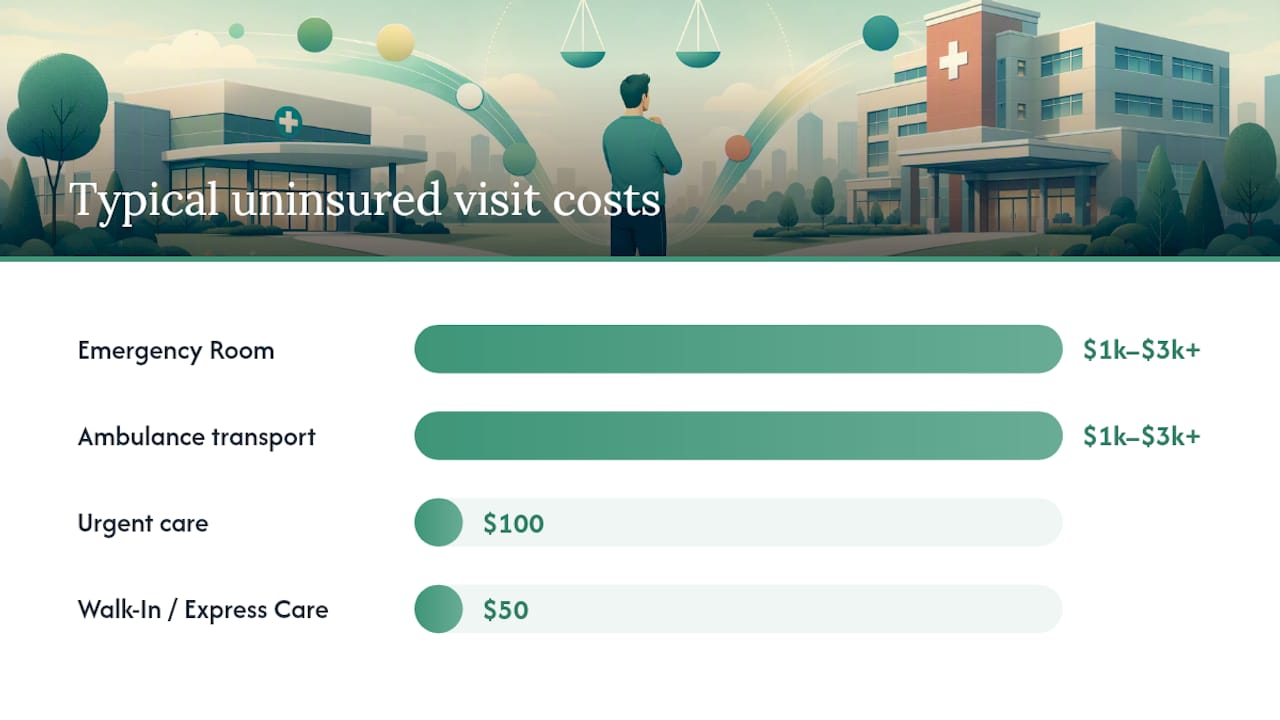
Figures are illustrative ranges for uninsured patients based on commonly reported estimates. Your actual cost depends on insurance, location, and the services provided.
Practical steps for cost-conscious patients:
- Call your insurer before a non-emergency visit to confirm coverage and in-network status.
- Use urgent care instead of the ER for any condition on the urgent care list above.
- Keep all receipts and explanation-of-benefits documents for potential appeals.
- Ask about self-pay discounts if you're uninsured; many facilities offer them.
How symptom checkers fit into responsible triage
Yale Medicine's position reflects a broader clinical consensus: digital triage tools are valuable when they escalate correctly, and dangerous when they don't. The evidence suggests that symptom checkers can reduce unnecessary ED visits for minor complaints, but their value depends entirely on how well they handle red flags.
A responsible symptom checker does three things well. First, it asks structured questions that surface red flags: sudden onset, severity, associated symptoms like sweating or confusion. Second, it gives a clear, actionable recommendation rather than a vague "consult a doctor." Third, it defaults to the ER when the picture is unclear rather than defaulting to reassurance.
Pro Tip: Treat a symptom checker's output as a starting point, not a final answer. If the tool says urgent care but your gut says something is very wrong, go to the ER. Clinical tools support judgment; they don't replace it.
Peacehealthai's symptom checker is built on this principle. Users describe their symptoms in detail, and the tool returns a recommended care level with the reasoning behind it. For non-life-threatening but unclear symptoms, it's a fast, low-cost first step. For anything that triggers a red flag in the algorithm, it routes directly to ER or 911. Exploring symptom checker alternatives can also help you understand what separates a well-designed tool from a generic one.
This article provides general health information, not medical advice. Always consult a qualified healthcare professional or contact emergency services for urgent health concerns.
When should you see your primary care doctor instead?
The ER and urgent care are both designed for acute, time-sensitive problems. Primary care is for everything else, and for the follow-up that happens after an acute visit.
See your primary care physician (PCP) when:
- Symptoms are mild, have been present for days or weeks, and are not worsening
- You need chronic condition management (diabetes, hypertension, asthma maintenance)
- You want a physical exam, preventive screening, or lab work that isn't urgent
- You've just been discharged from the ER or urgent care and need follow-up
After an urgent care visit: Most urgent care centers recommend following up with your PCP within 3–7 days for anything beyond a simple infection or minor injury. If you received a new diagnosis, started a new medication, or had imaging that needs review, that follow-up is not optional.
After an ER visit: The ER stabilizes you and sends you home or admits you. It does not manage your ongoing care. A follow-up with your PCP or a specialist within 48–72 hours is standard for most discharge instructions. Skipping it is one of the most common reasons people end up back in the ER within a week.
Scripps Health recommends contacting your PCP before visiting urgent care when possible. A quick phone call or patient portal message can sometimes resolve the question entirely, or your PCP's office may have same-day sick appointments you didn't know about.
How location and time of day affect your options
Geography and the clock both shape what care is actually available to you, and ignoring them leads to poor decisions.
Time of day: Most urgent care centers close by 9 or 10 PM. After hours, your practical options narrow to the ER, telehealth, or waiting until morning. For a non-urgent problem, waiting is often the right call. For anything on the red-flag list, the ER is always open. Telehealth fills the gap well for minor complaints at 2 AM when urgent care is closed and the ER feels like overkill.
Urban vs. rural access: In dense urban areas, you may have multiple urgent care centers within a few miles and short ER wait times at off-peak hours. In rural areas, the nearest urgent care may be 30 minutes away and the nearest ER an hour. In those settings, telehealth becomes more important as a first-line triage tool, and calling 911 for serious symptoms is even more critical because transport time is longer.
Pediatric-specific access: Not all urgent care centers treat young children, and some have age cutoffs (often 2 or 3 years old). If you have a sick infant or toddler, call ahead before driving to urgent care. Many children's hospitals have dedicated pediatric urgent care or after-hours nurse lines that can triage by phone. A pediatric ER is better equipped for children than a general urgent care center for anything beyond the most straightforward complaints.
Peak hours: ER wait times are longest on weekend evenings and Monday mornings. Urgent care centers fill up fast on weekend afternoons. If your condition allows flexibility, mid-morning on a weekday is typically the fastest time to be seen at either setting.
Key Takeaways
The clearest rule in emergency triage: life-threatening or rapidly worsening symptoms go to the ER or 911; non-life-threatening same-day problems go to urgent care; minor or unclear symptoms are a job for telehealth or a symptom checker first.
| Point | Details |
|---|---|
| ER for red flags only | Chest pain, stroke signs, severe bleeding, breathing trouble, and loss of consciousness require the ER or 911 immediately. |
| Urgent care for acute, stable problems | Sprains, minor fractures, UTIs, fever, and infections are handled faster and cheaper at urgent care than the ER. |
| Insurance and billing matter | Up to 60% of ED visits may be nonurgent; some insurers deny coverage for non-emergent ER use, so call your insurer when unsure. |
| Prepare before you go | Bring your medication list, allergy list, insurance card, and a symptom timeline to speed triage and reduce errors. |
| Peacehealthai for unclear symptoms | The Peacehealthai symptom checker gives fast, structured triage guidance for non-emergent symptoms and escalates to ER when red flags appear. |
The gap between triage theory and what people actually do
Most triage guides present the decision as clean and logical. In practice, people delay calling 911 because they're worried about the cost. They drive themselves to the ER during a possible stroke because they don't want to "make a fuss." They sit in an urgent care waiting room for two hours with a complaint that a telehealth visit could have resolved in 15 minutes.
The real problem isn't that people don't know the rules. It's that fear, cost anxiety, and uncertainty about severity all interfere with applying them. That's why the default-to-ER rule for genuine uncertainty is so important. It's not about being dramatic. It's about the asymmetry of consequences: an unnecessary ER visit costs money and time; a missed heart attack or stroke costs far more.
Symptom checkers, used correctly, address the uncertainty problem. They don't replace clinical judgment, but they give people a structured way to think through what they're experiencing before panic or denial takes over. The key word is "correctly." A tool that consistently reassures people away from the ER when they have red flags is worse than no tool at all. One that escalates appropriately and explains why is genuinely useful.
Peacehealthai is built around that second model. The goal isn't to keep users away from doctors. It's to help them get to the right level of care, faster, with less second-guessing.
Not sure where to go? Peacehealthai can help you decide in seconds
When symptoms don't fit neatly into "obviously fine" or "obviously serious," most people waste time searching the internet and still feel uncertain. Peacehealthai's AI-powered symptom checker cuts through that. You describe what you're feeling, and the tool returns a clear recommendation: ER, urgent care, telehealth, or primary care, with the reasoning behind it.
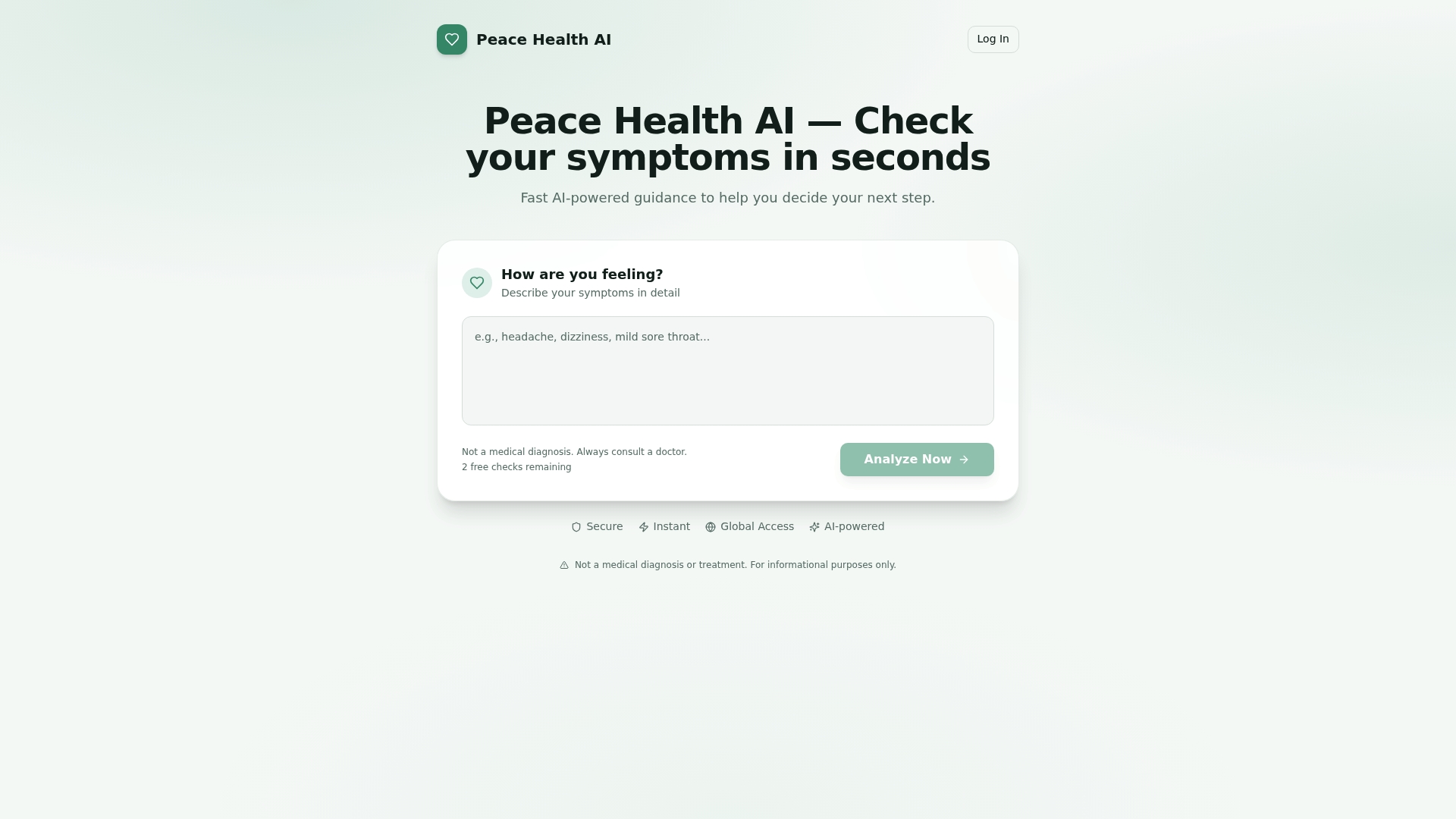
It's not a diagnosis. It's structured triage guidance built to surface red flags fast and route you to the right care level without the guesswork. For non-emergent symptoms that have you wondering whether to drive somewhere at midnight, check your symptoms now and get a clear next step in under two minutes.