
How do allergies and colds actually compare?
The fastest way to tell allergies from a cold comes down to three things: what triggered it, how long it lasts, and whether your eyes itch. Allergies are an immune system overreaction to harmless substances like pollen or dust. Colds are viral infections, most often caused by rhinovirus, and they spread from person to person. Allergies do not.
Mayo Clinic puts the duration gap plainly: colds typically clear up in a few days to two weeks, while allergy symptoms can drag on for weeks or months as long as the allergen is present.
| Feature | Allergies | Common Cold |
|---|---|---|
| Cause | Allergens (pollen, dust, pet dander) | Viruses (rhinovirus most common) |
| Contagious | No | Yes |
| Fever | Never | Sometimes |
| Itchy, watery eyes | Usually | Rarely |
| Nasal mucus | Thin and clear | Thickens, turns yellow |
| Sneezing pattern | Rapid bursts | Less frequent |
| Duration | Weeks to months | A few days to two weeks |
| Body aches | No | Common |
Quick distinguishing features at a glance:
- Itchy eyes almost always point to allergies, not a cold
- Fever rules out allergies and points strongly toward a viral infection
- Symptoms that return every spring or fall suggest seasonal allergies
- A cold that "moves through the family" confirms it's contagious, so viral
- Thick, discolored mucus after several days is a cold pattern, not an allergy pattern
What triggers allergies versus what causes a cold
Allergies and colds start in completely different places. Allergens like pollen, dust mites, and pet dander prompt the immune system to release histamine, producing the familiar sneezing and congestion. The immune system is reacting to something harmless as though it were a threat. Colds, by contrast, are genuine infections caused by viruses, and your body's response is appropriate.

Seasonality is a useful clue. Tree pollen peaks in spring, grass pollen through summer, and ragweed dominates fall. If your symptoms reliably appear during those windows, allergies are the more likely explanation. Colds circulate year-round but spike in fall and winter when people spend more time indoors together.
Common allergy triggers:
- Tree, grass, and weed pollen
- Dust mites in bedding and carpets
- Pet dander from cats, dogs, and other animals
- Mold spores, indoors and outdoors
- Cockroach particles (a common indoor allergen)
What causes a cold:
- Rhinovirus (responsible for the majority of common colds)
- Other respiratory viruses spread through droplets or hand contact
- Close contact with an infected person in enclosed spaces
Symptom checklist: what overlaps and what doesn't
No single symptom definitively diagnoses one condition over the other. Pattern and timing are what matter, particularly in cases that recur every season.

| Symptom | Allergies | Cold |
|---|---|---|
| Runny nose | Yes (thin, watery) | Yes (thickens over days) |
| Sneezing | Rapid bursts | Occasional |
| Nasal congestion | Yes | Yes |
| Itchy eyes | Usually | Rarely |
| Sore throat | Sometimes (from drainage) | Common |
| Fever | Never | Sometimes |
| Body aches | No | Common |
| Fatigue | Mild | Moderate to severe |
| Cough | Sometimes | Common |
| Symptom onset | Immediate with allergen exposure | Gradual over one to two days |
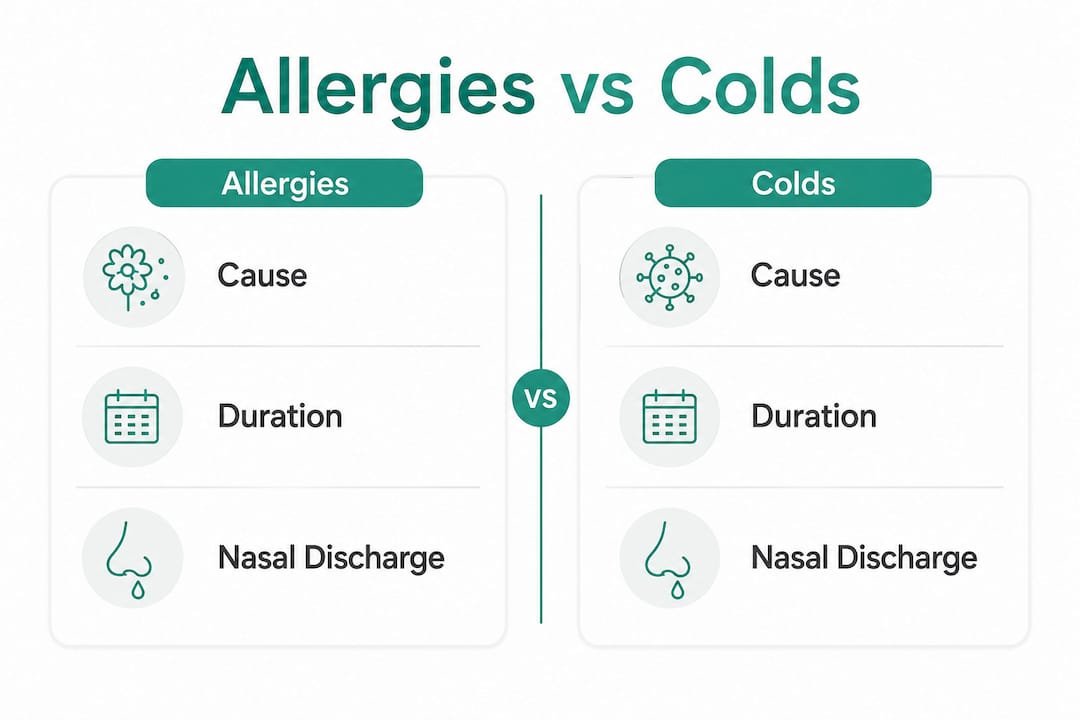
Allergy symptoms appear almost instantly after exposure and stay consistent as long as the allergen is around. Cold symptoms build gradually, peak around day 3 or 4, then fade. Mucus color is a reliable clue: allergy mucus stays thin and clear, while cold mucus thickens and turns yellow or green as the infection progresses.
Symptoms that strongly indicate allergies:
- Itchy, red, or watery eyes
- Rapid sneezing bursts
- Symptoms tied to specific locations or seasons
- No fever at any point
Symptoms that strongly indicate a cold:
- Fever, even a low-grade one
- Body aches and chills
- Gradual onset over 24–48 hours
- Mucus that changes color after a few days
Parents should note that children average about 6 colds per year. If a child's symptoms stretch past three weeks without clearing, allergies or another underlying trigger become more likely.
What to do for allergies at home, and how to manage cold symptoms
Home care for both conditions is effective when you match the treatment to the cause.
For cold symptoms:
- Rest and stay hydrated with water, broth, or warm tea
- Use a humidifier to ease congestion and soothe irritated airways
- Take OTC pain relievers like acetaminophen or ibuprofen for fever and aches
- Saline nasal sprays help clear congestion without side effects
For allergy symptoms at home:
- Keep windows closed on high-pollen days and check local pollen forecasts before spending time outside
- Shower after outdoor exposure to rinse pollen from skin and hair
- Use a saline rinse or neti pot to flush allergens from nasal passages. When making a rinse at home, use distilled or boiled water only, never tap water
- Non-sedating antihistamines like cetirizine (Zyrtec), loratadine (Claritin), and fexofenadine (Allegra) are the preferred OTC options
- OTC corticosteroid nasal sprays such as Flonase or Rhinocort reduce congestion effectively
Pro Tip: Start antihistamines before your allergy season peaks, not after symptoms hit. Preventive use keeps histamine from building up in the first place, so you spend less time miserable and more time functional.
One caution worth knowing: OTC decongestant nasal sprays like Afrin should not be used for more than three days. Beyond that, they cause rebound congestion, meaning your nose gets more stuffed up than before you started.
When should you see a doctor for allergies or a cold?
Most colds and mild allergy flare-ups resolve without a doctor visit. But certain signs call for professional attention.
See a doctor for cold symptoms if:
- Fever lasts more than 4 days or spikes above 103°F
- Symptoms worsen after day 10 instead of improving
- You develop severe ear pain, facial pressure, or difficulty breathing
- A child under 3 months has any fever at all
See a doctor for allergy symptoms if:
- OTC medications stop working or symptoms interfere with sleep and daily life
- You develop wheezing, chest tightness, or recurring sinus infections
- Symptoms persist year-round without a clear seasonal pattern
Anaphylaxis is a medical emergency. Symptoms include swelling of the lips or throat, severe shortness of breath, and a rapid drop in blood pressure. If any of these appear after allergen exposure, call 911 immediately. Carry an epinephrine auto-injector (EpiPen) if a doctor has prescribed one, and use it at the first sign of a severe reaction.
For persistent or worsening allergies, an allergist can confirm triggers through skin or blood testing and discuss immunotherapy, a long-term treatment that gradually desensitizes the immune system to specific allergens.
How Peacehealthai helps you figure out what you're dealing with
Telling allergies from a cold on your own is genuinely tricky, especially when symptoms overlap or you're trying to figure out what's going on with your child at 11 PM. Peacehealthai's AI-powered symptom checker lets you describe exactly what you're feeling and get instant, structured guidance on what it might mean and what to do next.
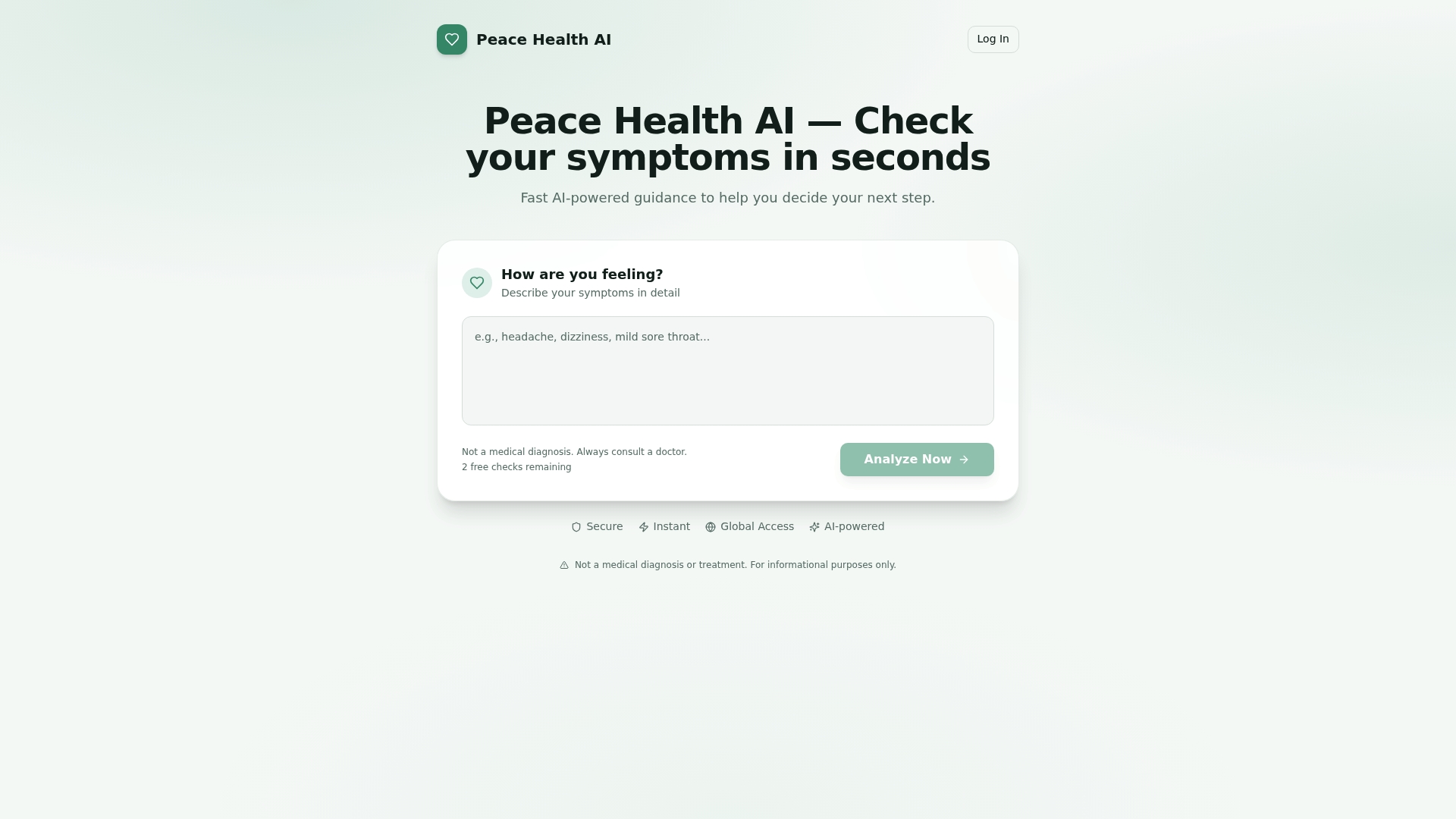
You type in your symptoms, and the tool walks you through the likely explanations, flags patterns that suggest allergies versus a viral infection, and tells you when the situation warrants a doctor call. Features include symptom history tracking, early alerts for recurring symptom patterns, and a health chat for follow-up questions. For parents especially, having that kind of immediate, organized feedback at any hour is genuinely useful.
Pro Tip: Log your symptoms in Peacehealthai over several days rather than just once. The symptom history feature picks up patterns, like symptoms that spike on high-pollen days, that a single check-in would miss.
How allergies and colds affect your daily life
Both conditions can disrupt sleep, concentration, and productivity, but in different ways. Cold symptoms tend to be more intense for a shorter stretch, often knocking you out for a few days before fading. Allergy symptoms are usually less severe individually, but they grind on. Weeks of interrupted sleep from congestion, constant sneezing during work calls, and itchy eyes that make screen time miserable add up fast.
Untreated seasonal allergies can worsen into sinusitis or trigger asthma flare-ups. For children, persistent allergy symptoms affect school attendance and focus in ways that often get misread as behavioral issues. Getting the diagnosis right, whether through a doctor or a tool like Peacehealthai, is the first step toward actually managing either condition rather than just enduring it.
Key Takeaways
Allergies and colds share overlapping symptoms but differ clearly in cause, duration, and specific signs like fever and eye itchiness, making pattern recognition the most reliable way to tell them apart.
| Point | Details |
|---|---|
| Fever means cold, not allergies | Fever never occurs with allergies; its presence points to a viral infection. |
| Duration is a strong clue | Colds clear in a few days to two weeks; allergy symptoms last weeks or months. |
| Itchy eyes signal allergies | Itchy, watery, red eyes are a hallmark of allergies and rare with colds. |
| Start antihistamines early | Taking antihistamines before peak season prevents histamine buildup and reduces symptoms. |
| Anaphylaxis needs 911 | Throat swelling, severe breathing difficulty, or rapid BP drop after allergen exposure requires emergency care. |