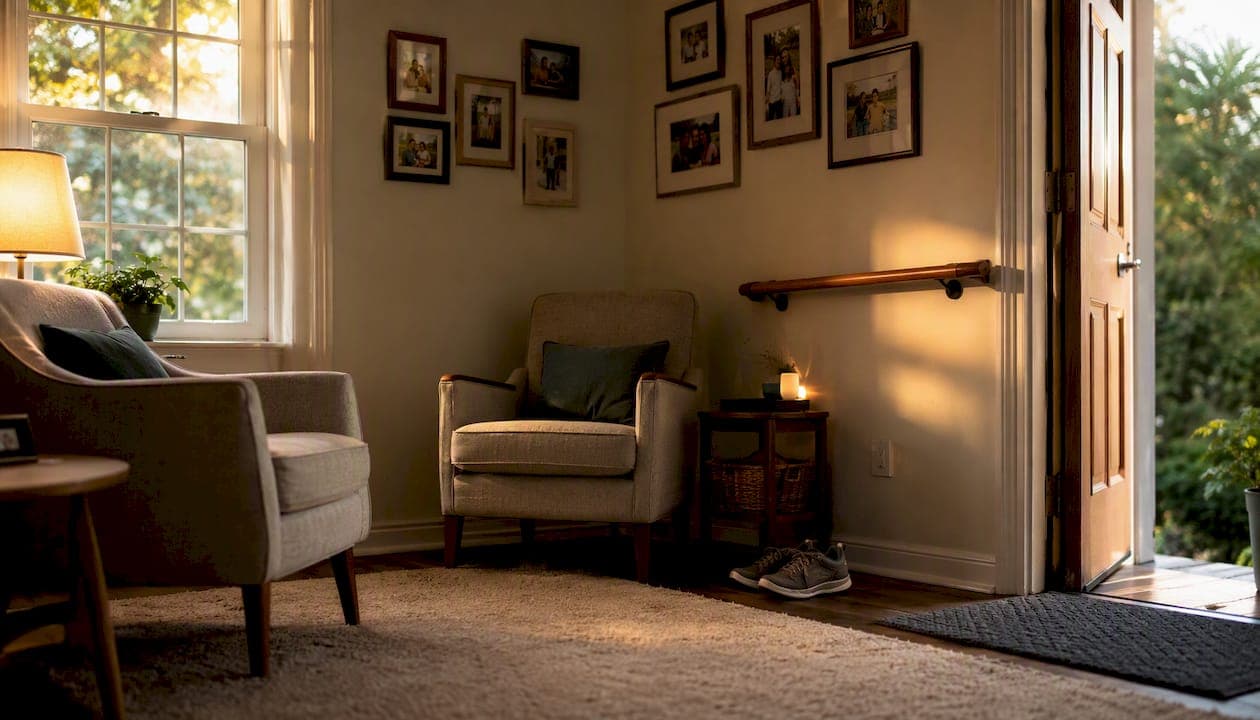
Use this printable, room-by-room falls prevention checklist to fix the highest-risk home hazards now. Room-by-room home modifications — handrails, wall-anchored grab bars, non-slip mats, and clear walkways — substantially reduce fall risk, and the CDC STEADI program provides the clinical framework behind every recommendation here.
Six things you can do today:
- Remove loose throw rugs or secure them with non-slip backing
- Add nightlights along the path from bedroom to bathroom
- Install wall-anchored grab bars in the shower and near the toilet
- Check that stair handrails are secure and run the full length of the stairs
- Clear walkways of clutter, cords, and anything that could catch a foot
- Ask your doctor or pharmacist to review any medications that cause dizziness or drowsiness
Print or save this checklist and work through it room by room. The CDC's falls data confirms that environmental hazards and medication side effects are among the most preventable contributors to older-adult falls — which means most of the risk is fixable.
Key Takeaways
A room-by-room falls prevention checklist paired with basic balance screening and ongoing symptom tracking addresses the three main causes of older-adult falls: environmental hazards, medical risk factors, and undetected medication side effects.
| Point | Details |
|---|---|
| Fix the environment first | Remove loose rugs, add nightlights, install grab bars, and secure handrails — same day where possible. |
| Screen for balance and gait | Use the TUG, 30-second chair stand, and 4-stage balance test; see a clinician if any result is abnormal. |
| Review medications | Ask a pharmacist or physician to assess sedating or blood-pressure drugs that raise fall risk. |
| Track symptoms between visits | Log dizziness, near-falls, and medication changes daily; bring that record to every appointment. |
| Peacehealthai for monitoring | Peacehealthai's symptom tracker logs daily health data and exports a history for clinical review. |
Table of Contents
- What home-wide fixes reduce the most fall risk?
- Bathroom checklist: the highest-risk room in the house
- Stairs and steps: what to check and fix
- Kitchen checklist: reach less, risk less
- Bedroom and living-area checklist: safe paths day and night
- Outdoors, entrances, and walkways: seasonal fixes that matter
- Medical risk factors, medication review, and balance screening
- How to use and customize this checklist
- Track symptoms and medication side effects between visits
- Why Peacehealthai emphasizes continuous monitoring
- Peacehealthai as a symptom-tracking companion to this checklist
- Sources
What home-wide fixes reduce the most fall risk?
A handful of house-wide changes remove the majority of common hazards before you even get to room-specific work.
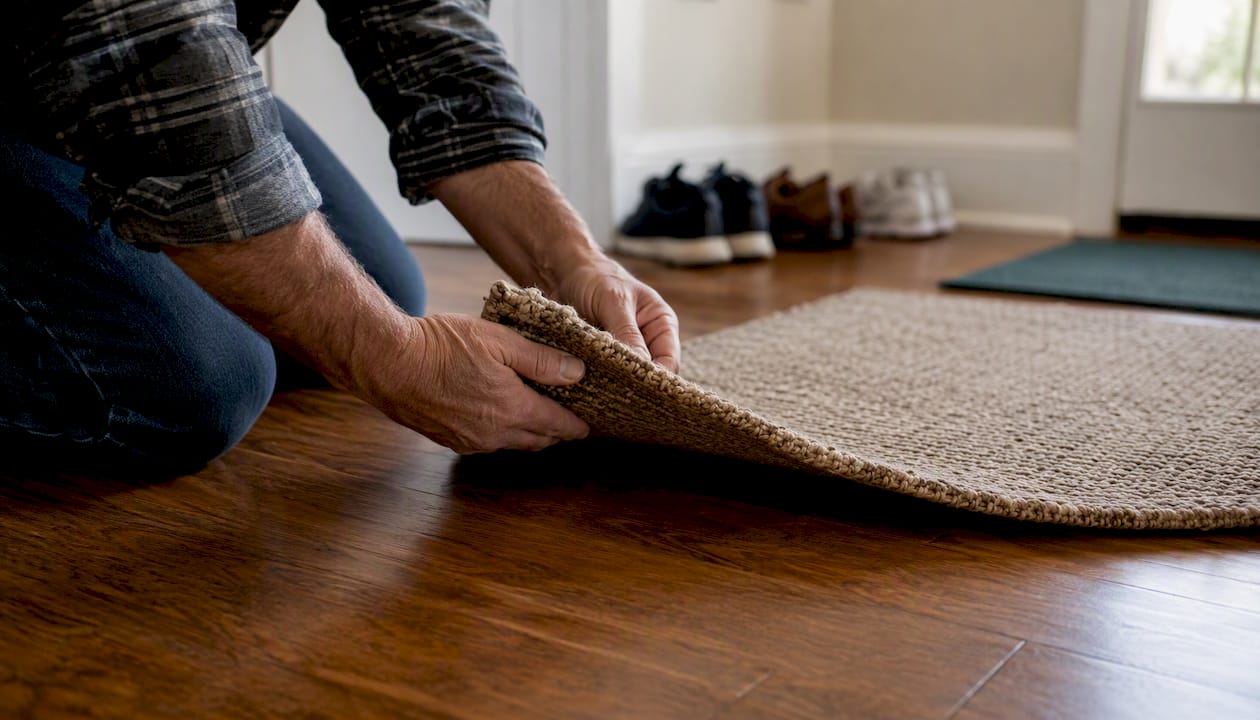
Floors and surfaces: Check every floor for slick finishes, waxed surfaces, and uneven thresholds between rooms. Loose rugs are among the most common trip hazards — remove them entirely or secure every edge with double-sided tape or non-slip backing. Keep all walking paths free of cords, shoes, and stacked items.
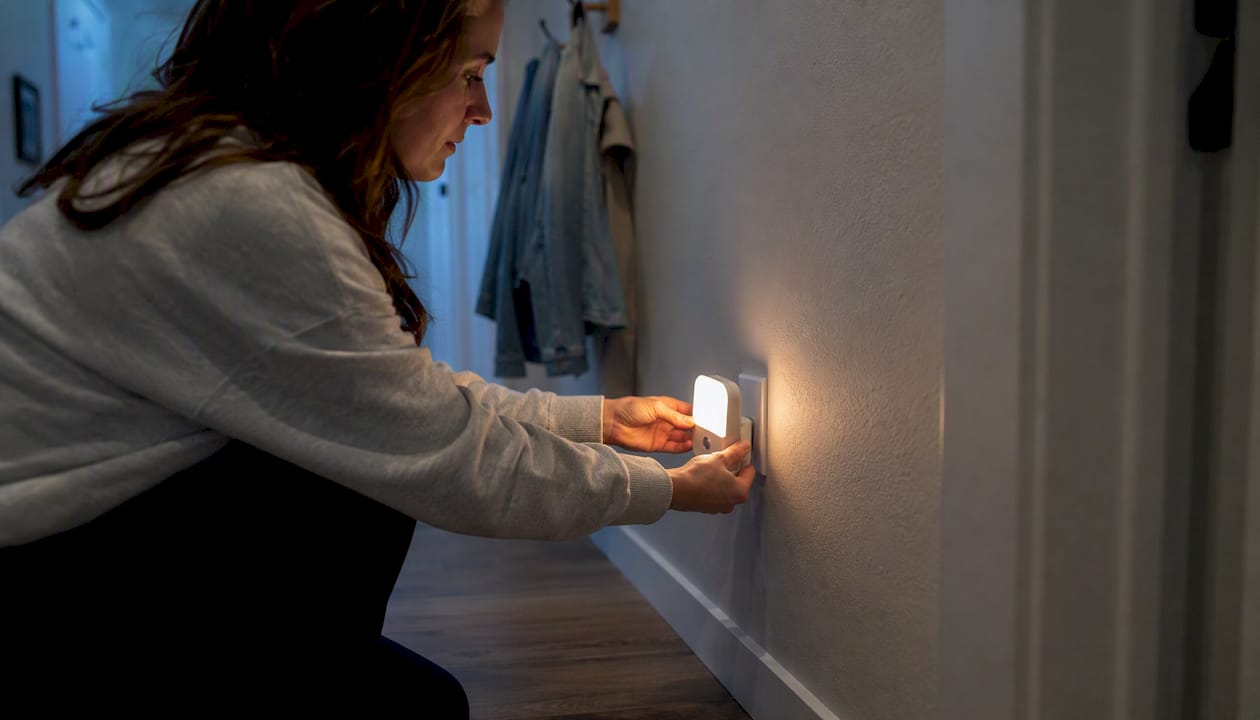
Lighting: Poor lighting is a quiet contributor to falls, especially at night. Install nightlights in hallways, bathrooms, and near stairs. Place light switches at both the top and bottom of every stairway so no one navigates steps in the dark.
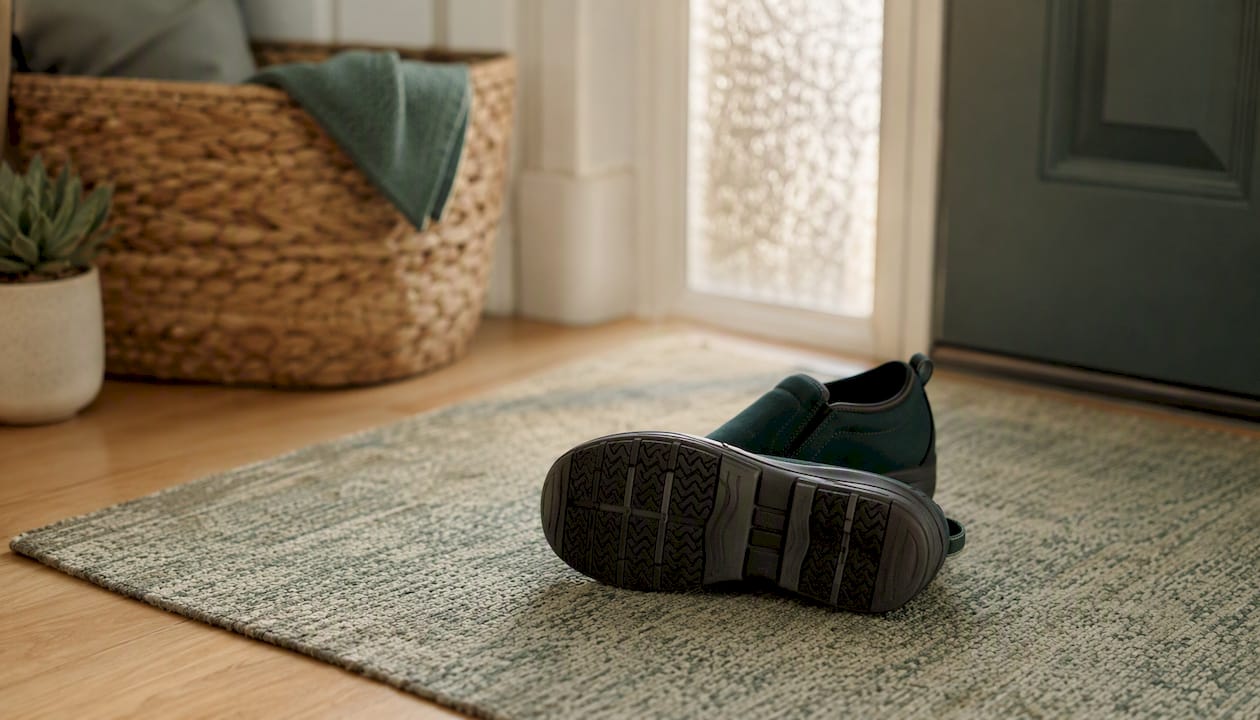
Footwear: Wear stable, closed-heel shoes with non-skid soles inside the house. Socks alone on hardwood or tile floors are a slip waiting to happen. Slippers without a firm sole are nearly as risky.
Pro Tip: Before standing up from a chair or bed, pause for two to three seconds. Rushing to answer a phone or doorbell is one of the most common behavioral triggers for falls — the sudden postural change can cause dizziness before your body has adjusted.
Bathroom checklist: the highest-risk room in the house
Bathrooms combine wet surfaces, confined spaces, and awkward movements — that combination makes them the single highest-risk room and the place to start.
- Grab bars: Install wall-anchored grab bars rated for load-bearing support inside the shower and next to the toilet. Towel racks and shower rods are not engineered to hold a person's weight and should never be used for support.
- Non-slip surfaces: Place non-slip mats or adhesive strips on the shower or tub floor. Use a bath mat with a suction-backed or non-slip base just outside the tub.
- Shower seat and handheld showerhead: A fold-down shower seat reduces the need to stand for extended periods. A handheld showerhead lets you bathe seated safely.
- Raised toilet seat: If getting up from a low toilet is difficult, a raised seat or toilet safety frame adds meaningful support.
- Nightlight: Place a nightlight along the path from the bedroom to the bathroom — most nighttime falls happen on this route.
- Spills: Wipe up water immediately. Keep a small towel or bath mat at the tub edge for this purpose.
Pro Tip: Have grab bars installed by a licensed handyperson or contractor who can locate wall studs. A bar that pulls free under load is more dangerous than no bar at all.
Stairs and steps: what to check and fix
Secure handrails and consistent step surfaces prevent most stair-related falls. Work through this list before anything else on the stairs.
- Handrails securely installed on the stairway's sides, running the full length without gaps
- Handrails firmly anchored — no wobble when you grip and pull
- Light switches positioned at the top and bottom of the stairs
- Non-slip treads on each step, especially on bare wood
- Step edges clearly visible — add contrasting tape if edges are hard to see
- No loose carpet, runners, or uneven risers
- Nothing stored on the stairs, even temporarily
The STEADI Algorithm identifies gait and balance problems as key screening targets — and stairs are where those problems become dangerous fastest. If any step is broken, uneven, or the handrail needs structural repair, call a contractor rather than patching it yourself.
Statistic: The CDC's falls data identifies falls as a leading cause of injury and injury-related death among older adults in the United States — making stair safety one of the highest-impact fixes in any home.
Kitchen checklist: reach less, risk less
Kitchen hazards are preventable with reachable storage and non-slip surfaces. The goal is to eliminate the need to climb, stretch, or rush.
- Store everyday dishes, glasses, and food items within easy reach, avoiding high shelves or the floor
- Use a stable step stool with a top handrail if you must reach higher; never stand on a chair
- Wipe up spills immediately — cooking oils and water on tile floors are especially slippery
- Secure any kitchen rugs with non-slip backing or remove them
- Check that task lighting over the stove and counters is bright enough to see clearly
- Move heavy pots and appliances to lower cabinets to avoid overhead lifting
Pro Tip: Slide-out cabinet shelves and lazy Susans are inexpensive upgrades that put items within reach without any climbing. Hardware stores carry stable step stools with a top handrail — that top rail is the feature that matters most.
Bedroom and living-area checklist: safe paths day and night
Clear night paths and reachable essentials reduce nighttime falls, which tend to happen when someone is groggy, moving quickly, and navigating in low light.
- Clear a direct, unobstructed path from the bed to the bathroom
- Place nightlights along that path — one in the bedroom, one in the hallway
- Keep a phone or call device within reach of the bed
- Use a stable bedside chair or furniture edge for support when dressing
- Secure or remove low rugs near the bed and in the living area
- Remove cords, footstools, and low furniture from walking paths
- Keep frequently used items — remote, glasses, medications — at arm's reach without bending or stretching
Mattress and chair height matters more than most people realize. If your feet don't rest flat on the floor when seated, the bed or chair is too high; if you struggle to stand up, it may be too low. When rising from bed or a chair, sit at the edge for a moment before standing to let blood pressure stabilize and reduce orthostatic dizziness.
Outdoors, entrances, and walkways: seasonal fixes that matter
Maintaining entrances and walkways prevents many outdoor falls and unsafe home-entry incidents — and the risks shift with the seasons.
- Repair cracked or uneven walkways and steps; fill gaps before winter
- Add handrails to outdoor steps, even a single step at the front door
- Keep paths clear of leaves, garden tools, hoses, and debris
- Install motion-activated or dusk-to-dawn lighting at all entrances
- Use non-slip doormats secured at all edges; replace worn ones
- Check that door thresholds are flush or have a beveled edge — raised thresholds catch feet
Pro Tip: Before the first freeze, stock ice melt or sand near the door and identify which shoes have the best grip for icy conditions. Prepare a winter kit: ice melt, a long-handled scraper, and a plan for who clears the path if you cannot.
Medical risk factors, medication review, and balance screening
Medical risk factors and medication side effects are major, addressable contributors to falls. Screening identifies who needs a clinical referral before a fall happens.
Key medical risk domains
- Medications: Sedating antihistamines, sleep aids, antidepressants, antipsychotics, and anticholinergic drugs all raise fall risk. Diuretics and blood pressure medications can cause orthostatic hypotension.
- Vision and hearing: Uncorrected vision loss disrupts depth perception and balance. Hearing loss affects spatial orientation.
- Orthostatic hypotension: A drop in blood pressure upon standing causes dizziness and is a direct fall trigger.
- Cognitive impairment: Clinical guidelines note that cognitive impairment meaningfully increases fall risk and fall-related injury, making cognition screening part of any thorough evaluation.
- Urinary urgency and nocturia: Rushing to the bathroom at night is a high-risk scenario.
- Foot problems: Bunions, neuropathy, and poorly fitting shoes all affect gait stability.
Simple screening tests (STEADI-aligned)
The STEADI Screen → Assess → Intervene framework uses three standardized tests that caregivers can observe and clinicians can score formally:
- Timed Up and Go (TUG): Rise from a chair, walk 10 feet, turn, walk back, and sit. Taking longer than 12 seconds suggests increased fall risk and warrants referral to a physical therapist.
- 30-second chair stand: Count how many times the person can stand from a chair without using their arms in 30 seconds. A low count for age indicates lower-body weakness.
- 4-stage balance test: Stand with feet together, then semi-tandem, then tandem, then on one foot — each for 10 seconds. Inability to hold any stage for 10 seconds signals balance impairment.
The clinical fall risk checklist used in practice documents falls history, medication review, these three test results, vision checks, and orthostatic hypotension screening together. If a person has had two or more falls in the past year, one fall with injury, or fails any screening test, schedule a clinical assessment with a physician, physical therapist, or occupational therapist promptly. A pharmacist can review the full medication list for deprescribing opportunities — this step is frequently skipped and can meaningfully lower fall-related injury risk.
How to use and customize this checklist
A simple, repeatable workflow makes checklist use sustainable rather than a one-time event.
- Print or save the checklist and walk through each room with the older adult or caregiver present.
- Mark each item as "Fixed," "Needs repair," or "Needs professional help."
- Assign responsibility: note who handles each fix — self, family member, or contractor — and set a target date.
- Prioritize by timeline:
- Same day: Remove loose rugs, clear walkways, add nightlights.
- Within 1–2 weeks: Secure handrails, install non-slip mats, reorganize storage.
- Within 1 month: Schedule contractor work (grab bars, stair repairs) and clinical referrals.
- Document medication changes and any new symptoms between now and the next medical appointment — bring that record to the visit.
- Repeat the checklist every 6 months or after any fall, hospitalization, or new medication.
Keep a simple log: date, item fixed, who did it. That record helps occupational therapists and physicians understand what environmental changes have already been made.
Track symptoms and medication side effects between visits
Tracking dizziness or recurrent symptoms helps clinicians identify medication or orthostatic causes and prevent future falls before they happen.
What to log:
- Fall events and near-falls (date, time, location, what you were doing)
- Dizziness episodes: note the time of day and whether you were sitting, standing, or just rising
- New medications or dose changes
- Vision changes or new headaches
- Bathroom urgency at night (frequency, urgency level)
A useful tracking workflow takes about 60 seconds a day: note any symptoms, rate their severity briefly, and flag anything new. Over two to four weeks, patterns emerge that a single office visit rarely captures. Before a doctor's appointment, export or print that log so the clinician can see the full picture rather than relying on memory.
Pro Tip: Log symptoms immediately after they happen, not at the end of the day. A dizziness episode at 7 AM after taking a blood pressure medication is a specific, useful data point. "I felt dizzy a few times this week" is not.
Keeping health logs secure matters. Share them only with your care team, and store digital records behind a password or in a secure app.
Why Peacehealthai emphasizes continuous monitoring
Environmental fixes address hazards that exist right now. Continuous symptom monitoring catches the medical risks that are still developing — and those two things work best together.
A grab bar in the shower prevents a slip today. But if a new medication is quietly causing orthostatic hypotension, or if recurring dizziness signals a vision or inner-ear change, no amount of home modification catches that. The gap between medical appointments is exactly where emerging fall risk tends to go unnoticed.
Peacehealthai's approach reflects that reality. The platform's symptom-tracking features let caregivers and older adults log dizziness episodes, near-falls, and medication changes in real time, building a symptom history that clinicians can actually use. A daily 60-second check-in, as described in Peacehealthai's daily health routine, is enough to surface patterns that would otherwise stay invisible until a fall makes them obvious.
The checklist in this article fixes the environment. Monitoring fills the gap between visits. Both are necessary.
Peacehealthai as a symptom-tracking companion to this checklist
Fixing the home environment is step one. Staying ahead of the medical risks that cause falls is step two — and that requires tracking what happens between doctor visits, not just what you remember to mention at the appointment.
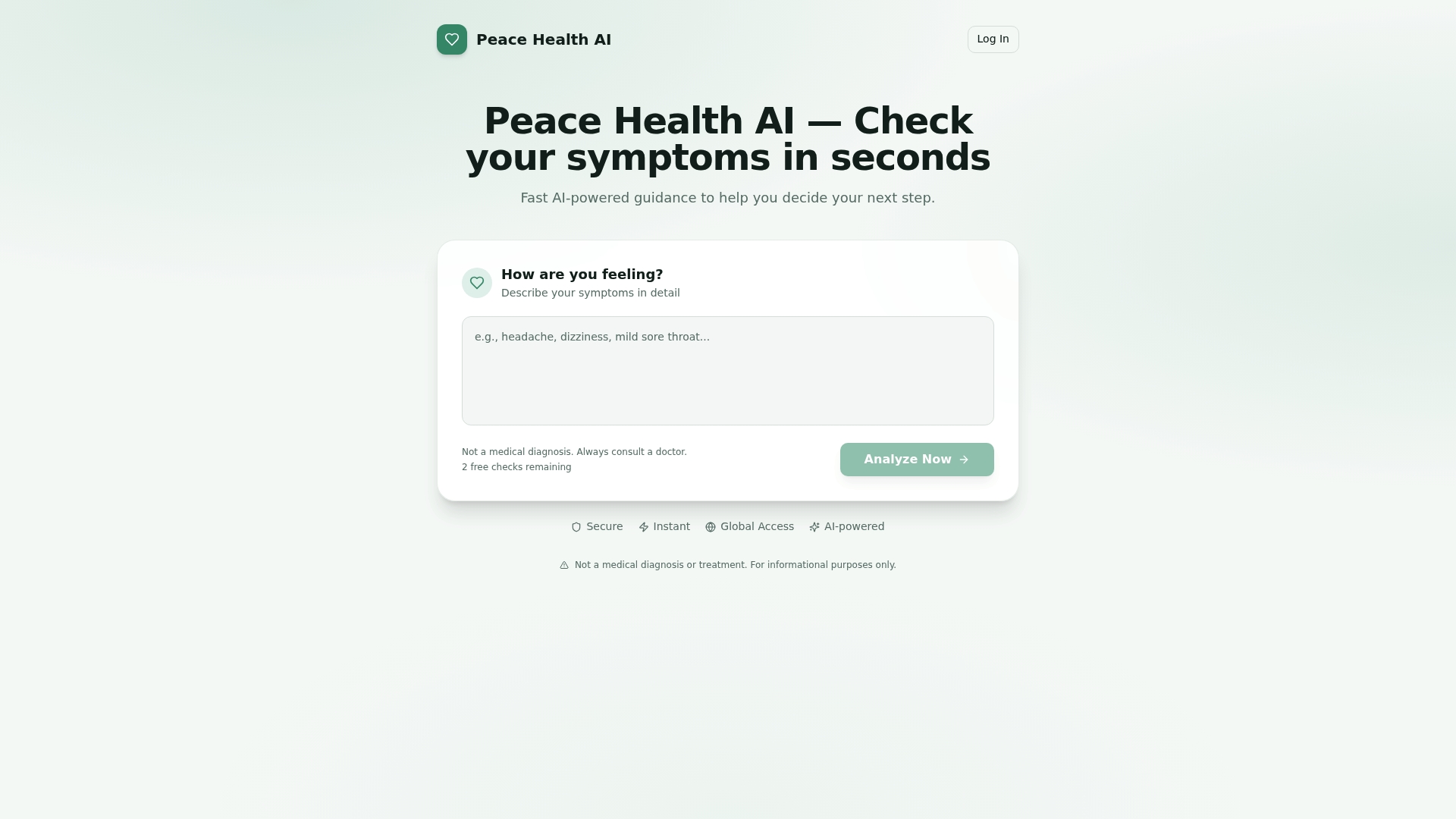
Peacehealthai's AI-powered symptom checker lets caregivers and older adults log dizziness, near-falls, medication changes, and other relevant symptoms in under a minute a day. The platform builds a secure symptom history you can export and bring to any clinical appointment, giving your physician or physical therapist the full picture instead of a rough summary. Features include daily health check-ins, early alerts for repeated symptoms, and AI health chat for immediate guidance on whether a symptom warrants urgent attention.
To start tracking symptoms alongside your home safety checklist, visit Peacehealthai or begin a symptom check now.
This article provides general health information and is not a substitute for professional medical advice. Confirm current fall-risk guidelines and medication recommendations with your physician, pharmacist, or a licensed occupational therapist.
Sources
The checklist and screening guidance in this article draw on the following public-health sources. Each is freely available and worth bookmarking for ongoing reference.