
Get emergency care right now for chest pain, trouble breathing, a severe headache with vision changes, seizures, or thoughts of harming yourself or your baby. Call your clinician promptly for heavy bleeding, fever at or above 100°F, worsening leg pain or swelling, or any symptom that lingers or stops you from functioning.
If any of the following apply to you right now, call 911 or go to the nearest ER:
- Chest pain or sudden shortness of breath
- Seizures or fainting
- Severe headache that won't ease, especially with blurred vision
- Thoughts of hurting yourself or your baby
For everything else on the postpartum symptoms when to worry spectrum, call your OB, midwife, or a nurse line within hours, not days. And whenever you contact any provider, say this first: "I gave birth on [date]. I'm currently postpartum." Without that context, urgent maternal warning signs can be missed entirely.
Key Takeaways
Postpartum complications are treatable when caught early, but only if you act on symptoms rather than waiting to see if they resolve on their own.
| Point | Details |
|---|---|
| Emergency symptoms require 911 or ER | Chest pain, trouble breathing, seizures, severe headache with vision changes, and thoughts of self-harm need emergency care now. |
| Clinician thresholds to know | Fever ≥100.4°F, soaking >1 pad/hour, large blood clots, BP ≥150/100, or one-sided leg swelling all warrant same-day clinician contact. |
| Risk window is up to one year | Serious complications including blood clots, preeclampsia, and mood disorders can develop weeks or months after delivery. |
| Always disclose your delivery date | Tell every provider you were recently pregnant and give your delivery date so obstetric causes aren't missed. |
| Peacehealthai for non-emergency triage | Use the AI symptom checker to organize symptoms and decide next steps, then escalate to in-person care when symptoms are severe or worsening. |
Table of Contents
- What are the urgent maternal warning signs after birth?
- Normal postpartum recovery vs. red flags you shouldn't ignore
- How do you know when postpartum mood changes are a red flag?
- Recognizing infection, blood clots, and hemorrhage after delivery
- What to say when you contact a clinician or go to the ER
- ER, urgent care, telehealth, or symptom checker: which one do you need?
- The part of postpartum care most people underestimate
- Peacehealthai can support your postpartum decision-making
- Sources
What are the urgent maternal warning signs after birth?
The CDC's Hear Her campaign identifies specific warning signs that require immediate action. The first two weeks after delivery carry the highest risk for serious complications, but risks extend well beyond that window.
Go to the ER or call 911 immediately:
- Chest pain or pressure
- Trouble breathing or sudden shortness of breath
- Severe headache that doesn't respond to medication
- Vision changes: blurring, seeing spots, or temporary loss
- Seizures
- Fainting or loss of consciousness
- Thoughts of harming yourself or your baby
- Extreme fatigue that rest does not improve
Call your clinician within hours (not days):
- Fever at or above 100°F
- Soaking more than one pad per hour or passing large clots
- Blood pressure readings at or above 150/100 mmHg
- Leg pain, redness, swelling, or warmth (one leg more than the other)
- Incision site that is red, swollen, separating, or has discharge
- Foul-smelling vaginal discharge
- Persistent severe headache, even without vision changes
The distinction matters. Chest pain and breathing difficulty are March of Dimes emergency-level signs. Fever and heavy bleeding are urgent but can often be assessed by phone first, unless they are severe or worsening fast.
Normal postpartum recovery vs. red flags you shouldn't ignore
Most new parents expect some discomfort. The problem is that pain, fatigue, and mood shifts are so common after birth that genuinely worrying signs get dismissed as "just part of recovery." Complications can occur up to one year after delivery and should never be brushed aside.
| Symptom | Typical pattern | When to worry |
|---|---|---|
| Vaginal bleeding (lochia) | Bright red first few days, fading to pink/brown by 2 weeks | Bleeding increases after improving, soaks >1 pad/hour, or returns bright red after fading |
| Uterine cramping | Moderate cramps for 3–5 days, easing steadily | Cramping worsens after day 5 or is accompanied by fever |
| Incision discomfort (C-section) | Tenderness and itching for 2–4 weeks | Redness, swelling, separation, or discharge from the wound |
| Fatigue | Significant for weeks, improving gradually | Extreme fatigue that rest doesn't touch, or that prevents basic self-care |
| Mood changes | Tearfulness, irritability in first 1–2 weeks | Symptoms lasting beyond 2 weeks or preventing you from caring for yourself or your baby |
According to MSD Manuals, around 1–2 weeks after delivery, the placental site begins to shed its eschar and bleeding typically lightens. A return to bright red bleeding after that point, or bleeding that stays heavy, can signal retained placental tissue or infection.
Common normal symptoms:
- Mild breast engorgement and nipple soreness
- Night sweats as hormones shift
- Baby blues: tearfulness and mood swings in the first week or two
- Mild constipation and hemorrhoids
Red flags that need evaluation:
- Bleeding that worsens after it had been improving
- Fever above 100.4°F at any point
- Pain that gets worse instead of better over time
- Persistent, severe fatigue that doesn't respond to rest
Pro Tip: Track your symptoms with a date and time. "I've had a fever since Tuesday morning and it's now 101.2°F" is far more useful to a clinician than "I've felt off for a few days." Duration and trajectory are what separate normal recovery from a postpartum complication.
How do you know when postpartum mood changes are a red flag?
Baby blues are real and common. Tearfulness, irritability, and emotional swings in the first week or two after birth are a normal response to the hormonal shift after delivery. They typically resolve by 10–14 days on their own.
Act immediately (call 911 or go to the ER) if you or someone you know is experiencing:
- Thoughts of suicide or harming the baby
- Hallucinations or hearing/seeing things that aren't there
- Severe confusion or agitation
- Inability to sleep for days, combined with erratic or dangerous behavior
These are signs of postpartum psychosis, a rare but serious psychiatric emergency. Do not wait.
Call your clinician within 24 hours if:
- Depressive symptoms last more than 2 weeks
- Anxiety or sadness is interfering with sleep, eating, or caring for your baby
- You feel detached from your baby or unable to bond
StatPearls/NCBI recommends that clinicians screen for mood disorders at postpartum visits and advise patients to seek care when depressive symptoms persist beyond two weeks or interfere with daily functioning. If you're not sure whether what you're feeling crosses that line, err on the side of calling.
The 988 Suicide and Crisis Lifeline (call or text 988) is available 24/7 for anyone in mental health crisis. Partners and family members often notice mood changes before the birthing parent does. If someone close to you is worried, take that seriously.
Recognizing infection, blood clots, and hemorrhage after delivery
These three conditions cause a significant share of serious postpartum complications, and all three are treatable when caught early.
Infection signs (call your clinician urgently; go to ER if fever is high and you feel very ill):
- Fever at or above 100°F
- Chills, body aches, or feeling suddenly much worse
- Foul-smelling vaginal discharge
- Redness, warmth, or discharge at a C-section or perineal incision
- Uterine tenderness that worsens rather than improves
Endometritis, an infection of the uterine lining, may require IV antibiotics. Don't wait on a fever.
DVT (deep vein thrombosis) signs (call your clinician same day):
- Swelling, redness, or warmth in one leg
- Pain or tenderness in the calf or thigh, especially on one side
Pulmonary embolism signs (call 911 or go to ER immediately):
- Sudden shortness of breath
- Chest pain, especially with breathing
- Rapid heart rate or feeling faint
Postpartum hemorrhage signs (go to ER now):
- Soaking more than one pad per hour
- Passing clots larger than 2.5 cm (roughly the size of a golf ball)
- Feeling faint, dizzy, or like you might pass out
MSD Manuals notes that late postpartum hemorrhage can happen days or weeks after delivery, not just in the immediate hours after birth. When you arrive at the ER or call your clinician, expect possible blood pressure checks, urine tests, a wound exam, a complete blood count (CBC), and imaging if a clot is suspected.
What to say when you contact a clinician or go to the ER
The single most important thing you can do is lead with your pregnancy history. Providers who don't know you're postpartum may not connect your symptoms to obstetric causes, and that delay costs time.
Say this first: "I gave birth on [date], approximately [X] weeks ago. I had a [vaginal/C-section] delivery. I'm here because [symptom], which started [when] and has been [getting worse/not improving]."
Checklist to have ready:
- Delivery date and gestational age at delivery
- Type of delivery (vaginal, C-section, assisted)
- Any pregnancy complications (preeclampsia, gestational diabetes, prolonged labor)
- Current medications, including any prescribed at discharge
- Home blood pressure readings if you've been monitoring
- A brief symptom log: when it started, how it's changed, what makes it better or worse
Clinicians may order blood pressure checks, urine analysis, a wound or pelvic exam, CBC, blood cultures if infection is suspected, or Doppler ultrasound imaging for a possible DVT or PE. Giving them the full picture upfront means faster, more accurate care. The CDC emphasizes that telling any provider about a recent pregnancy is critical, because postpartum complications are often missed when that history isn't shared.
ER, urgent care, telehealth, or symptom checker: which one do you need?
Go to the ER or call 911 right now if you have:
- Chest pain, trouble breathing, or a racing heart
- Seizures or fainting
- Bleeding that soaks more than one pad per hour
- Signs of pulmonary embolism
- Suicidal thoughts or psychosis symptoms
Call your clinician within hours for:
- Fever at or above 100°F
- Worsening incision or wound
- Leg swelling or tenderness on one side
- Heavy but not emergency-level bleeding
- Persistent severe headache
Telehealth or urgent care is appropriate for:
- Mild symptoms that are stable and not worsening
- Questions about normal recovery milestones
- Breastfeeding concerns or medication questions
A symptom checker like Peacehealthai can help you organize your symptoms and decide whether to escalate, but it is decision support, not a diagnosis. If your symptoms are severe, worsening, or match any emergency criteria above, skip the app and go straight to the ER. Use immediate symptom advice as a starting point for non-emergency questions, then follow up with your provider. When in doubt, the safer choice is always to seek in-person care.
The part of postpartum care most people underestimate
Most postpartum guidance focuses on the first week. The reality is that serious complications, including postpartum preeclampsia, blood clots, and mood disorders, can surface weeks or even months after delivery. A parent who felt fine at their two-week visit can develop a DVT at six weeks or a severe depressive episode at three months.

The "wait and see" instinct is understandable. New parents are exhausted, appointments are hard to schedule, and there's enormous social pressure to seem like you're handling everything fine. But clinical consensus is clear: waiting on persistent or worsening symptoms is a high-risk strategy. Most postpartum complications are treatable when caught early. The window to act is real, and it's wider than most people think.
Partners and caregivers carry a specific responsibility here. Sleep deprivation and physical recovery can dull a new parent's ability to assess their own symptoms accurately. If you're the partner or support person and something feels off, say so directly and help them make the call.
Peacehealthai can support your postpartum decision-making
Sorting through postpartum symptoms at 2 AM, when you're exhausted and unsure whether something warrants a call, is exactly where Peacehealthai's AI-powered symptom checker earns its place. You describe what you're feeling, and the tool gives you immediate, structured guidance on your next steps, whether that's heading to the ER, calling your clinician in the morning, or monitoring a symptom that's within normal range.
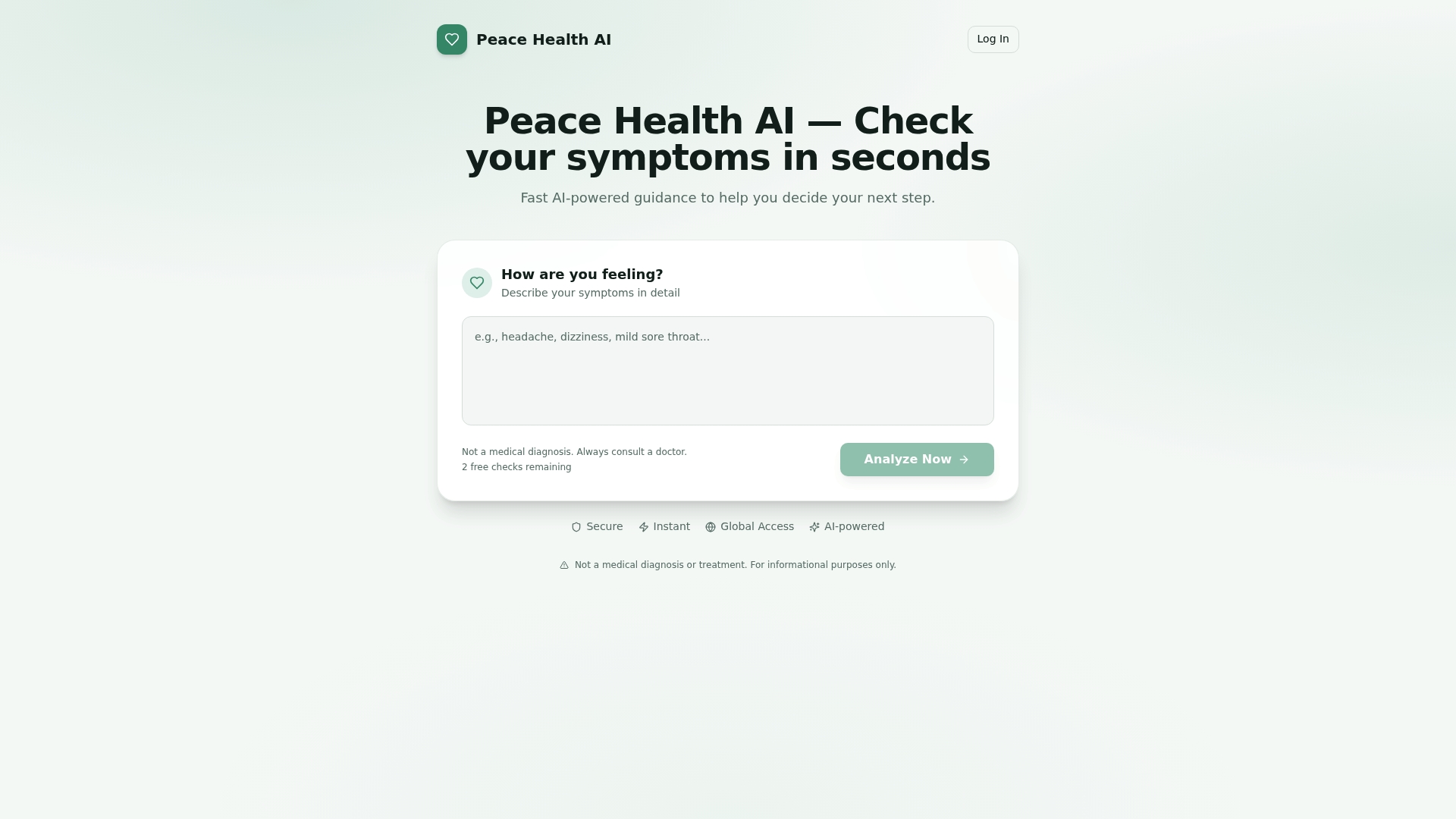
Peacehealthai is not a substitute for emergency services. If you have chest pain, trouble breathing, seizures, or thoughts of harming yourself or your baby, call 911 now. For everything else, the symptom checker helps you cut through uncertainty fast, with features including symptom history tracking, early alerts for repeated patterns, and an AI health chat available whenever you need it.
Check your symptoms now at Peacehealthai and get guidance you can act on.
Sources
These primary sources were used throughout this article. Save or bookmark them for reference.
- Maternal warning signs — CDC
- Postpartum Care of the New Mother - StatPearls - NCBI Bookshelf
- The postpartum experience: Recognizing complications — Mayo Clinic News Network
- Warning signs after birth — March of Dimes
- Postpartum care and associated disorders — MSD Manuals
Consider printing the CDC and March of Dimes pages and sharing them with your partner, a family member, or anyone in your support network. The people around you are often the first to notice when something is wrong.
This article provides general health information only and is not a substitute for professional medical advice. Always consult your healthcare provider or call 911 for urgent symptoms.