
Call 911 or go to the emergency department immediately if your headache fits any of these descriptions:
- Thunderclap onset: Pain that hits maximum intensity within seconds to minutes, often described as the worst headache of your life. This pattern can signal subarachnoid hemorrhage and cannot wait.
- Focal neurologic deficits: New weakness, numbness, slurred speech, or sudden vision changes alongside head pain. These are stroke warning signs.
- Seizure or loss of consciousness: Any blackout or convulsion with a headache requires emergency evaluation, no exceptions.
- High fever with stiff neck: This combination raises immediate concern for meningitis, a potentially fatal infection.
- Headache after serious head trauma: A blow to the head followed by worsening pain can indicate intracranial bleeding.
For everything else, the decision is more nuanced. StatPearls research confirms that while most headaches are benign, a small percentage of ED presentations reflect life-threatening conditions, and recognizing that minority is what this guide is built around. If you have no red flags above but your headache is new, severe, or changing, urgent care or your primary care physician (PCP) is the right next step, not the waiting room at home.
Key takeaways
Seek emergency care immediately for thunderclap onset, focal neurologic deficits, fever with stiff neck, or any headache after serious head trauma; all other concerning patterns warrant same-day contact with a clinician.
| Point | Details |
|---|---|
| Emergency red flags | Call 911 for thunderclap onset, focal weakness, seizure, fever with stiff neck, or post-trauma headache. |
| Non-emergency but urgent | Contact your PCP or urgent care the same day for new severe headaches that fail OTC treatment or show a progressive pattern. |
| SNOOPP screening | One positive SNOOPP item (Systemic, Neurologic, Onset, Older age, Progressive, Positional/Papilledema) means evaluate, not diagnose. |
| ED testing is targeted | CT, MRI, and lumbar puncture rule out hemorrhage and meningitis; they are not routine for uncomplicated primary headaches. |
| Peacehealthai | Use the AI symptom checker to organize and summarize your symptoms before calling your doctor or heading to urgent care. |
Table of Contents
- How to tell if your headache is something serious
- Red flags that mean go to the ER now
- When to call your doctor instead of going to the ER
- What clinicians actually do when you arrive with a headache
- The SNOOPP mnemonic: how clinicians screen for dangerous headaches
- Safe self-care steps and when to re-escalate
- Sources
How to tell if your headache is something serious
Most people have experienced a headache that made them wonder whether it was worth worrying about. The honest answer: the type of headache matters far less than the pattern and accompanying symptoms. Understanding the four most common primary headache types gives you a baseline for recognizing when something falls outside the norm.
Tension-type headache is the most common. It produces a dull, pressing, band-like sensation around the head, usually bilateral, mild to moderate in intensity, and rarely worsened by routine physical activity. Duration ranges from less than an hour to several hours. OTC analgesics like acetaminophen or ibuprofen typically resolve it.
Migraine is more complex. Pain is often unilateral, pulsating, and moderate to severe, frequently accompanied by nausea, vomiting, and sensitivity to light and sound. About one-third of people with migraines experience an aura, which are transient neurologic symptoms (visual disturbances, tingling, speech changes) that precede the pain by 20–60 minutes. A single migraine episode can last several hours to a few days.
Cluster headache is less common but intensely painful. It strikes around or behind one eye, often described as burning or piercing, and comes in clusters of attacks over weeks or months separated by remission periods. Episodes are short but can occur multiple times daily. Restlessness during an attack, rather than the desire to lie still, is a distinguishing feature.

Medication-overuse headache (also called rebound headache) develops when acute pain relievers are used too frequently. Mayo Clinic notes that regular use of analgesics can perpetuate daily pain, creating a cycle that worsens over time. If you are reaching for OTC pain relief more than 10–15 days per month, this pattern deserves a conversation with your doctor.
| Headache type | Onset | Pain quality | Duration | Key associated symptoms | OTC response |
|---|---|---|---|---|---|
| Tension-type | Gradual | Pressing, band-like, bilateral | 30 min – 7 hrs | Mild light/sound sensitivity | Usually good |
| Migraine | Gradual (aura possible) | Pulsating, unilateral | 4 hours | Nausea, vomiting, photophobia | Partial to moderate |
| Cluster | Sudden | Burning/piercing, unilateral, periorbital | 15 minutes | Tearing, nasal congestion, restlessness | Poor |
| Medication-overuse | Daily or near-daily | Variable | Persistent | Worsens with analgesic use | Worsens with overuse |
Primary headaches are benign by definition. They do not require emergency imaging unless a red flag appears alongside them.
Red flags that mean go to the ER now
Each of the following signs points to a potentially dangerous secondary cause. Understanding why each one matters helps you act faster and communicate more clearly when you call 911 or arrive at the ED.
-
Thunderclap headache (worst headache of your life). Pain that peaks within seconds is the classic presentation of subarachnoid hemorrhage (SAH), caused by a ruptured brain aneurysm. SAH carries a high mortality rate if untreated. Action: Call 911 immediately. Tell the dispatcher the headache came on suddenly and reached maximum intensity within seconds.
-
Focal neurologic deficits. New weakness on one side of the body, facial drooping, slurred speech, sudden vision loss in one eye, or numbness in the arm or leg alongside a headache suggests ischemic stroke or hemorrhagic stroke. Time-sensitive treatment (tPA within hours of onset) depends on rapid ED arrival. Action: Call 911. Note the exact time symptoms started.
-
Seizure or loss of consciousness. Either event with a headache points to significant intracranial pathology, including hemorrhage, abscess, or a space-occupying lesion. Action: Call 911. Do not drive yourself.
-
Altered mental status or confusion. Disorientation, unusual behavior, or difficulty following simple commands alongside head pain can indicate encephalitis, meningitis, or severe intracranial hypertension. Action: Call 911.
-
High fever with stiff neck or photophobia. This triad is the textbook presentation of bacterial meningitis. Mass General Brigham guidance explicitly lists high fever and confusion as ED indications. Meningitis can progress to sepsis and death within hours. Action: Go to the ED immediately, not urgent care.
-
Papilledema or sudden vision loss. Swelling of the optic disc (papilledema) indicates elevated intracranial pressure. Sudden vision loss in one or both eyes alongside a headache may signal giant cell arteritis or stroke. Action: ED evaluation today.
-
New severe headache after age 50. MedlinePlus recommends medical evaluation for headaches that start for the first time after age 50. Giant cell arteritis, a large-vessel vasculitis, becomes a real concern in this age group, particularly with scalp tenderness over the temporal arteries. Action: Same-day ED or urgent care evaluation.
-
Progressive worsening over days to weeks. A headache that steadily intensifies over a short period, especially with positional changes, can indicate a growing mass, subdural hematoma, or elevated intracranial pressure. Action: Call your doctor today; go to the ED if the pain is severe or accelerating.
-
Headache after significant head trauma. A blow to the head followed by worsening pain, even hours later, raises concern for epidural or subdural hematoma. The "lucid interval" (a period of feeling fine before rapid deterioration) is a known feature of epidural hematoma. Action: Go to the ED. Do not wait to see if it improves.
When to call your doctor instead of going to the ER
Not every headache that needs attention is an emergency. Several situations call for prompt but non-emergency evaluation, meaning a same-day or next-day call to your PCP or a visit to urgent care.
New persistent headaches without red flags. A headache that has lasted several days, is more severe than your usual pattern, and has not responded to OTC treatment warrants a call to your doctor today. This is not a 911 situation, but it is not something to monitor indefinitely at home either.
Headaches that fail OTC measures. If acetaminophen or ibuprofen at the recommended dose provides no relief after two doses, and this is outside your normal migraine pattern, contact your PCP or urgent care the same day.
Progressive pattern over days to weeks. A headache that keeps getting worse, even slowly, needs evaluation. MedlinePlus specifically flags progressively worsening headaches as a reason to seek medical attention.
Post-concussive worsening without loss of consciousness. A mild head bump followed by a persistent or worsening headache over the next 24–48 hours, without the acute red flags above, still warrants same-day urgent care.
Recurrent headaches that are disrupting your life. If you are having headaches more than twice a week, or if they are affecting work, sleep, or daily function, schedule a routine appointment with your PCP or a neurologist. This is not urgent, but it is necessary.
When you call or arrive, have this information ready:
- When the headache started and how quickly it reached peak intensity
- Where the pain is located and what it feels like (throbbing, pressing, stabbing)
- Any accompanying symptoms (nausea, vision changes, neck stiffness, fever)
- What medications you have taken and whether they helped
- Your history of prior headaches and whether this one feels different
- Any recent illness, travel, head injury, or new medications
- Personal history of cancer, HIV, or immunosuppression
That last point matters more than most people realize. MedlinePlus notes that headaches in people with cancer or weakened immune systems warrant evaluation even without classic red flags, because the differential diagnosis expands significantly.
What clinicians actually do when you arrive with a headache
The ED evaluation for a headache is not random. Every test ordered has a specific purpose tied to ruling out a catastrophic cause.
| Test | What it detects | When it's typically ordered |
|---|---|---|
| Non-contrast CT (head) | Acute intracranial hemorrhage, large mass effect | Thunderclap onset, focal deficits, trauma, altered consciousness |
| MRI (brain, with/without contrast) | Structural lesions, subacute hemorrhage, venous thrombosis, demyelination | Normal CT with persistent concern, progressive headache, papilledema |
| Lumbar puncture (LP) | Subarachnoid hemorrhage (xanthochromia), meningitis (CSF cell count/culture) | Thunderclap headache with normal CT, fever with stiff neck |
| Blood labs (CBC, CRP, ESR) | Infection, inflammation, giant cell arteritis | Fever, age over 50 with new headache, systemic symptoms |
UpToDate's ED evaluation guidance is clear: imaging and testing are targeted to exclude catastrophic events and are not routine for uncomplicated primary headaches. A normal neurologic exam combined with a typical migraine history rarely requires a CT scan.
The sequence in the ED typically runs: brief history and focused neurologic exam, then imaging if indicated, then symptomatic treatment (IV fluids, antiemetics like prochlorperazine or metoclopramide, and analgesics). Many migraine patients receive parenteral treatment in the ED for faster relief, but ED care rarely changes long-term outcomes for chronic migraine. That work happens in outpatient neurology.
Pro Tip: When you arrive at the ED, lead with the onset speed. "This headache went from zero to the worst pain of my life in about 30 seconds" is the single most important piece of information for the triage nurse. It immediately flags thunderclap onset and changes the urgency of your workup.
The SNOOPP mnemonic: how clinicians screen for dangerous headaches
SNOOPP is a structured red-flag checklist used by emergency clinicians and neurologists to identify headaches that may have dangerous secondary causes. The American Headache Society describes it as a practical framework for distinguishing primary headaches from those requiring urgent investigation.
Each letter stands for a category of concern:
| Letter | Stands for | Example that should prompt evaluation |
|---|---|---|
| S | Systemic symptoms or disease | Fever, weight loss, night sweats, or known cancer/HIV |
| N | Neurologic symptoms | New weakness, vision change, speech difficulty, or confusion |
| O | Onset sudden | Headache reaching peak intensity within seconds to minutes |
| O | Older age (new onset after 50) | First-ever headache after age 50 with no prior headache history |
| P | Progressive pattern | Headache that worsens steadily over days or weeks |
| P | Positional, Precipitants, Papilledema | Pain worse lying flat; triggered by coughing/Valsalva; visual blurring from optic disc swelling |
A single SNOOPP item does not mean you have a dangerous condition. It means the headache warrants evaluation rather than watchful waiting at home. Clinicians use SNOOPP to decide whether to pursue urgent imaging or LP, not to make a diagnosis. The LITFL headache red flags resource reinforces this point: one positive item is a reason to evaluate, not an automatic diagnosis.
Knowing this mnemonic makes you a better historian. When you call your doctor or 911, you can say: "My headache came on suddenly, I have some neck stiffness, and I have a fever." That is three SNOOPP items in one sentence, and it will get you seen faster.
Pro Tip: Before calling your doctor or heading to the ED, spend 60 seconds writing down: (1) how fast the headache started, (2) any symptoms that came with it, (3) your temperature if you can take it, and (4) any recent illness or injury. This note, even on your phone, helps clinicians triage you accurately in the first two minutes.
Safe self-care steps and when to re-escalate
For headaches without any red flags, these steps are appropriate while you monitor for changes.
Safe immediate actions:
- Hydrate. Dehydration is a common headache trigger. Drink 16–24 oz of water promptly.
- Take OTC analgesics per label: acetaminophen (500–1,000 mg) or ibuprofen (200–400 mg) at the first sign of pain, not after it peaks.
- Rest in a dark, quiet room if light or sound sensitivity is present. This is particularly effective for migraine.
- Apply a cold pack to the forehead or neck for tension-type or migraine pain.
- Avoid driving if you feel cognitively impaired, have visual disturbances, or are taking sedating medications.
- If you suspect medication-overuse headache, discuss a tapering plan with your doctor before stopping analgesics abruptly.
What to avoid:
- Do not combine multiple OTC pain relievers (acetaminophen plus ibuprofen plus aspirin) without medical guidance.
- Avoid heavy alcohol, which can worsen dehydration and trigger rebound headache.
- Do not delay seeking care because the pain briefly improved. A thunderclap headache that eases slightly is still a thunderclap headache.
- Do not take someone else's prescription migraine medication without your own prescription.
Timebound reassessment rules:
- If a new or worsening severe headache develops within hours, or any red-flag symptom appears, go to the ED immediately.
- If your headache has not improved after the recommended OTC dose and your usual migraine rescue medication has failed, contact your PCP or urgent care the same day, not tomorrow.
- If the headache is mild to moderate, improving, and fits your usual pattern, monitor for 24 hours. If it persists beyond that without improvement, call your doctor.
- If you have had more than two similar headaches in a week, schedule a routine appointment rather than treating each one independently.
Peace Health AI's perspective on headache triage
The most common mistake people make with headaches is treating the pain level as the only variable that matters. Severity alone is a poor triage criterion. A moderate headache with sudden onset and neck stiffness is more alarming than a 9/10 tension headache that matches your usual pattern exactly. The features that matter are onset speed, accompanying symptoms, and whether anything about this headache is different from your baseline.
At Peace Health AI, the approach we advocate is pattern recognition before pain rating. The SNOOPP framework exists precisely because clinicians learned that asking "how bad is it?" is less useful than asking "how did it start, and what came with it?" Patients who arrive at the ED with a clear, structured symptom description get faster, more accurate workups.
A symptom checker cannot replace emergency services. If you have any of the red flags listed in this guide, call 911. What a tool like Peacehealthai can do is help you organize your symptoms clearly before you call your doctor or head to urgent care, so the first two minutes of that conversation are spent on the right information.
When a symptom checker helps you take the right next step
Knowing your headache is serious is one thing. Knowing how to describe it clearly to a clinician is another. Peacehealthai translates your symptom description into an urgency category and a structured summary you can share with your doctor or read aloud to a triage nurse.
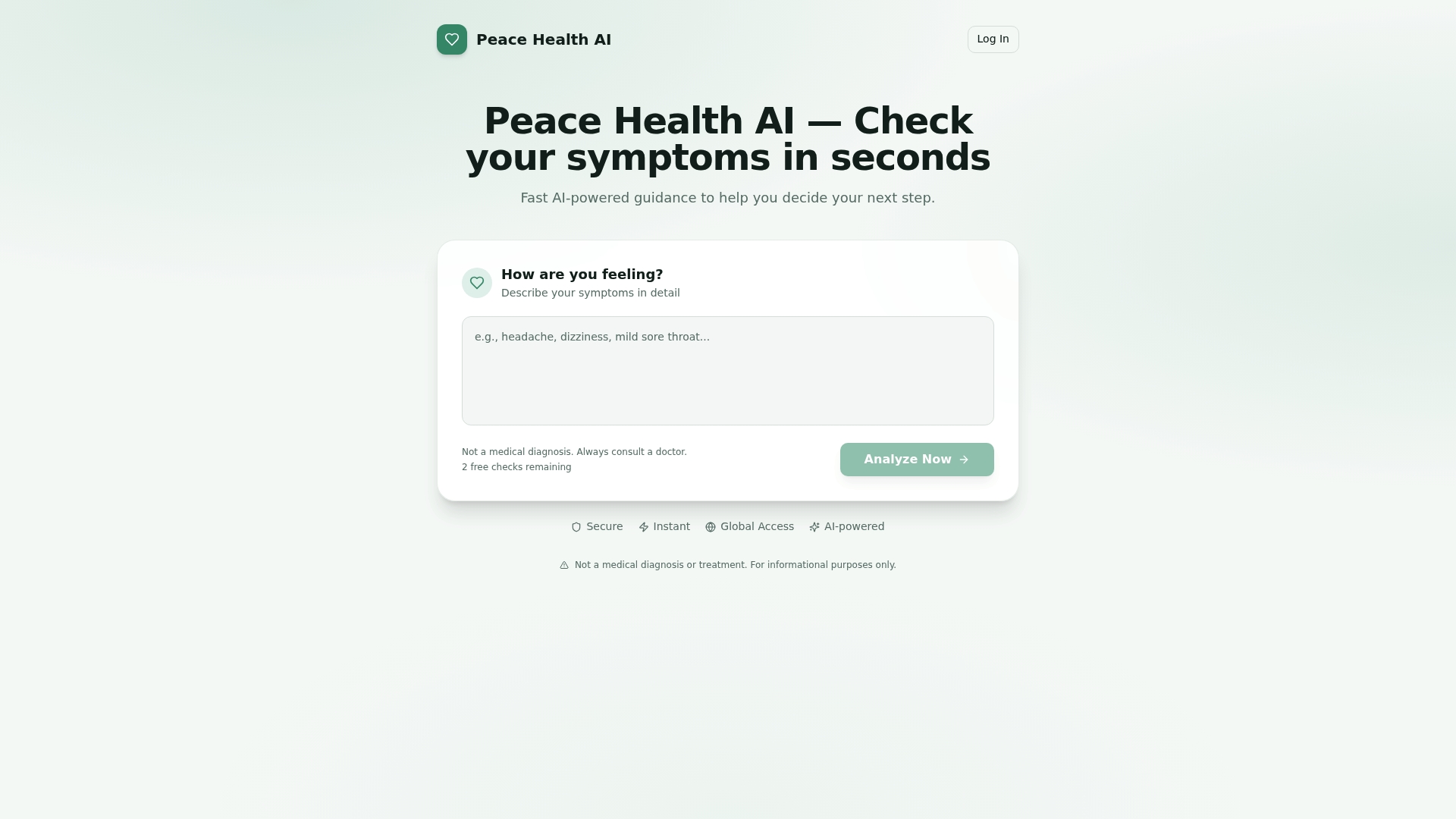
The tool covers both basic and advanced symptom analysis, flags repeated symptom patterns over time with early alerts, and gives you an AI health chat for follow-up questions between appointments. For readers managing recurrent headaches, the symptom history tracking feature means you arrive at every appointment with a documented pattern rather than a rough estimate.
This tool does not replace emergency services. If your headache matches any red flag in this guide, call 911 or go to the ED now. For everything else, start with Peacehealthai to get a clear picture of your symptoms before your next clinical conversation. You can also read more about immediate symptom triage steps on the Peace Health AI blog.
This article provides general health information and is not a substitute for professional medical advice. Always consult a qualified clinician or call 911 for emergency symptoms.
Sources
- MedlinePlus — Headache: When to worry
- StatPearls/NCBI — Acute headache (emergency evaluation summary)
- Harvard Health — Not just another headache
- Mass General Brigham — Urgent care for headache