
Managing your health while traveling starts before you leave home
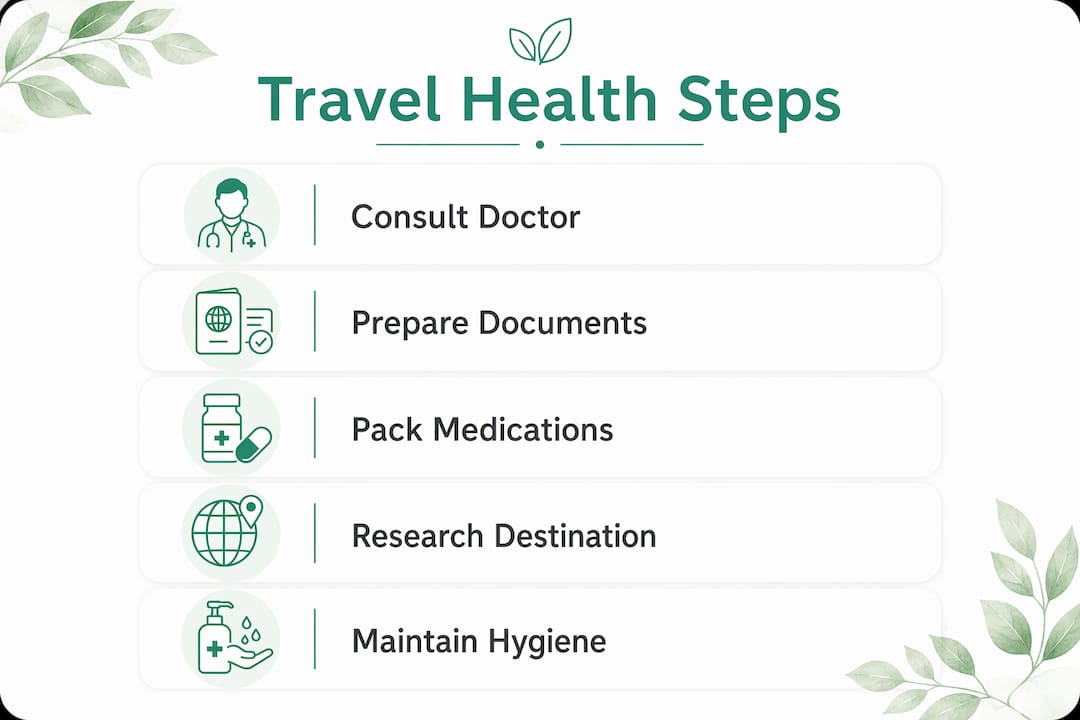
Staying well on the road takes more than packing vitamins. The most effective approach combines pre-trip preparation, consistent hygiene habits, proper medication documentation, and real-time symptom monitoring. Here is what that looks like in practice:
- Schedule a travel clinic visit 4–6 weeks before departure for destination-specific vaccines and advice.
- Pack a travel health kit with prescriptions, first aid supplies, and sunscreen with adequate sun protection factor.
- Carry a doctor's letter listing all medications by generic name.
- Use hand sanitizer with at least 60% alcohol when soap is unavailable.
- Verify that your U.S. medications are legal at your destination before you fly.
- Monitor symptoms in real time using an AI symptom checker like Peacehealthai.
The CDC and U.S. State Department both provide destination-specific health advisories that form the backbone of any solid travel health checklist. Layering an AI tool on top of those guidelines gives you something neither source can offer alone: instant, personalized guidance when something feels off at 2 AM in an unfamiliar city.
Table of Contents
- 1. What you should do before departure to protect your health
- 2. Daily hygiene habits that actually prevent illness on the road
- 3. How to handle medication legality and documentation across borders
- 4. Coping with jet lag, motion sickness, and travel-related physical stress
- 5. How Peacehealthai works as your travel health companion
- Peacehealthai gives you real-time health support wherever you travel
- Key Takeaways
1. What you should do before departure to protect your health
Pre-travel preparation is where most health problems get prevented. The decisions you make in the weeks before your trip determine how well-equipped you are to handle anything that comes up.
- Book a travel clinic appointment at least 4–6 weeks before you leave. Some vaccines need time to build immunity, and a provider can tailor recommendations to your itinerary and medical history.
- Research destination health risks. Check CDC destination pages for disease outbreaks, air quality concerns, and required vaccinations. Travelers with heart disease, asthma, or COPD should discuss air pollution risks with their doctor before visiting high-smog cities.
- Pack a comprehensive health kit. Include all prescription medications plus a few days' extra supply in case of delays, a basic first aid kit, and sunscreen rated SPF 15 or higher.
- Verify your insurance coverage. Most U.S. health insurance plans, including Medicare and Medicaid, do not cover medical costs abroad. Medical evacuation by air ambulance can be very costly depending on location and condition.
- Enroll in STEP. The Smart Traveler Enrollment Program (STEP) through the U.S. State Department lets the government contact you in emergencies and notifies your family if needed.
Pro Tip: Ask your doctor to write a letter on official letterhead listing every medication by its generic name, your diagnoses, and any known allergies. Keep it with your medications in their original labeled containers. This single document can prevent customs delays and help foreign providers treat you accurately.

2. Daily hygiene habits that actually prevent illness on the road
The most common travel illnesses, including traveler's diarrhea and respiratory infections, are largely preventable with consistent daily habits. None of them are complicated.
- Wash hands frequently with soap and water. When that is not available, use sanitizer with at least 60% alcohol content. This single habit cuts your exposure to most contact-transmitted illnesses.
- Choose food and water carefully. Stick to hot, freshly cooked food and sealed bottled beverages. Avoid raw vegetables, unpasteurized dairy, and ice made from tap water in destinations with questionable water quality.
- Protect yourself from the sun every day, not just at the beach. UV exposure increases at altitude and on overcast days. SPF 15+ sunscreen applied consistently is the standard recommendation.
- Use insect repellent. Repellents containing DEET, picaridin, or oil of lemon eucalyptus (OLE) protect against mosquitoes that carry malaria, dengue, Zika, and chikungunya. Wear long sleeves at dusk when mosquito activity peaks.
- Stay hydrated. Dehydration accelerates fatigue, worsens jet lag, and makes you more susceptible to illness. Carry a refillable bottle and drink consistently throughout the day.
- Avoid fresh water swimming in rivers or lakes with unknown sanitation status. Chlorinated pools are generally safe.
3. How to handle medication legality and documentation across borders
This is the area where travelers most often get caught off guard. A prescription that is completely routine in the U.S. can be a controlled substance in another country.
- Check with each destination's embassy before you travel. Some countries prohibit medications that are legal in the U.S., including certain ADHD medications, sleeping pills, narcotic pain relievers, and medical marijuana. Some require government permits.
- Carry medications in original labeled containers. Loose pills in an unmarked bag create problems at customs. The label connects the medication to you and your prescription.
- Bring a doctor's letter. A signed letter on official letterhead listing your conditions and all medications by generic name is critical for narcotics and psychotropic drugs. Foreign providers often do not recognize U.S. brand names.
- Keep a digital copy of your medication list. An AI health tool can help you maintain an accurate, up-to-date record that is accessible anywhere, even if your physical documents are lost.
- Pack extra supply. Bring enough medication for your full trip plus a buffer for delays. Counterfeit drugs are common in some regions; never rely on sourcing medications abroad.
4. Coping with jet lag, motion sickness, and travel-related physical stress
Travel stress is physical, not just mental. Crossing time zones, sitting for long flights, and disrupting your usual routine all create real physiological strain.
Jet lag happens because your internal clock is still set to your home time zone while your body is somewhere else entirely. Rather than forcing an immediate adjustment, plan low-intensity activities for your first day at a new destination. Light exposure, meal timing, and gradual sleep schedule shifts tend to work better than trying to power through exhaustion.
- Align activities with your body clock for the first 24–48 hours. Avoid high-stakes meetings or demanding physical activity immediately after a long flight.
- Maintain hydration and nutrition. Cabin air is dry, and dehydration worsens every symptom of jet lag. Eat regular meals rather than skipping them to stay on schedule.
- Use AI-generated daily insights. Peacehealthai provides personalized nutrition and activity recommendations that adapt to schedule disruptions, helping you maintain a consistent health baseline even when your routine is off.
- Track symptom patterns early. Peacehealthai's symptom history feature flags repeated symptoms before they escalate, which is especially useful when you are in a different time zone and unsure whether what you are feeling is fatigue or something that needs attention.
- Move during long flights. Walk the aisle, stretch, and flex your calves regularly. Flights over four hours increase the risk of deep vein thrombosis, particularly for travelers with chronic conditions.
5. How Peacehealthai works as your travel health companion
When something feels wrong at an unfamiliar destination, the last thing you want is to spend an hour searching for reliable health information. Peacehealthai addresses that gap directly.
The platform's AI-powered symptom checker lets you describe what you are experiencing and receive instant, informational guidance on next steps. That might mean reassurance that your symptoms are consistent with mild dehydration, or a clear signal that you need to find local medical care. Either way, you get a response in seconds rather than hours.
- Symptom history tracking logs your inputs over time, so if a symptom recurs, the system recognizes the pattern and alerts you earlier than you might notice on your own.
- Daily health score analytics give you a snapshot of your overall wellness, which is useful when travel fatigue makes it hard to assess how you are actually doing.
- AI health chat lets you ask follow-up questions and get context-specific guidance rather than generic search results.
- Personalized nutrition and activity insights help you stay on track with health goals like fat loss, muscle gain, or general wellness even when your schedule is disrupted.
- Subscription tiers range from a free basic plan to advanced options with priority response speed and deeper analytics, so you can choose the level of support that fits your travel style.
Peacehealthai is also built for secure global access, which matters when you are relying on it from a hotel in Tokyo or a layover in Frankfurt. The interface is straightforward enough to use when you are tired, stressed, or not feeling well.
Peacehealthai gives you real-time health support wherever you travel
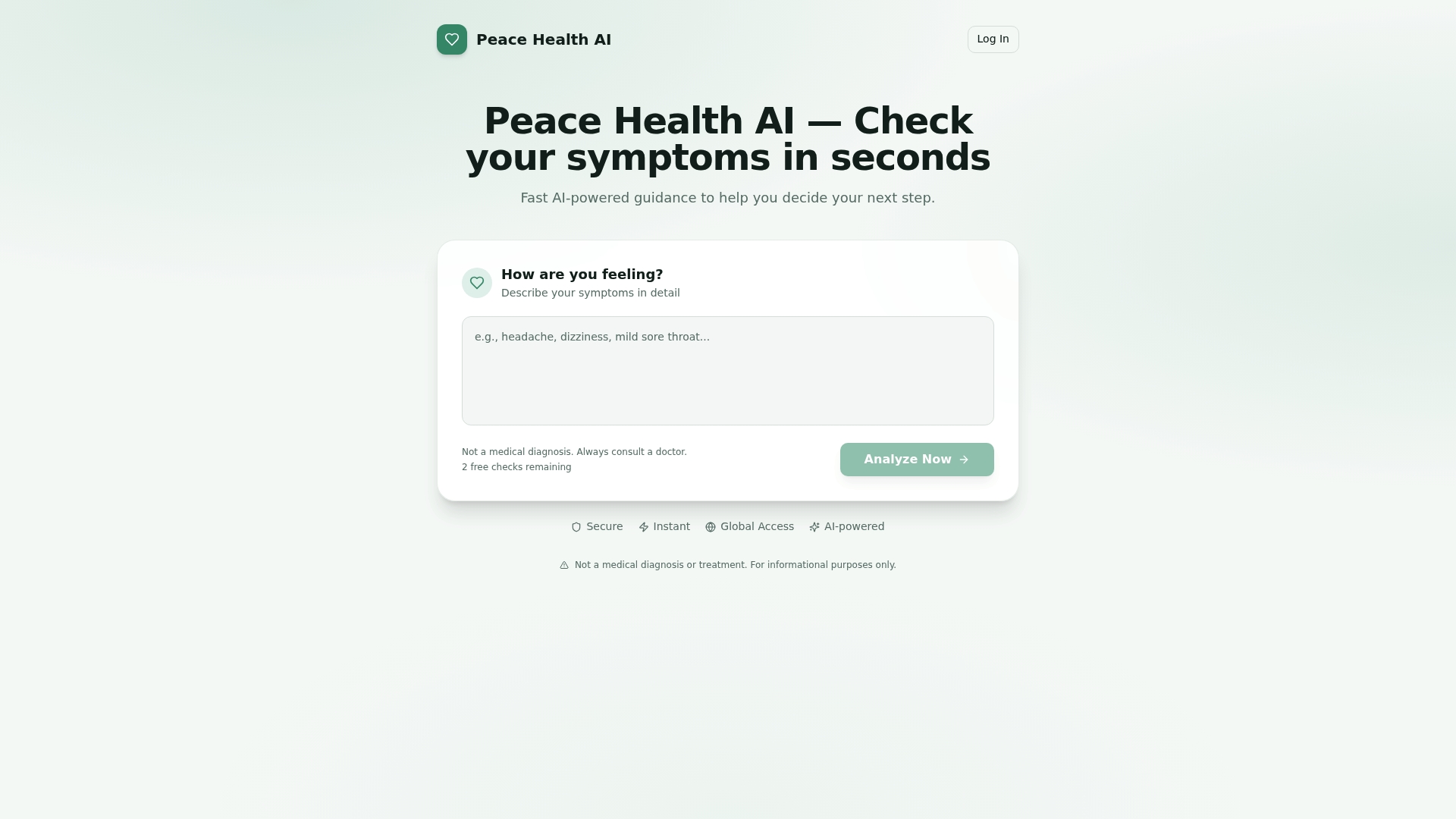
Most travel health resources tell you what to do before you leave. Peacehealthai is what you reach for when something happens mid-trip and you need an answer now, not a doctor's appointment next Tuesday.
The symptom checker gives you instant, AI-generated guidance based on exactly what you describe. No waiting rooms, no hold music, no generic advice. You get a clear next step, whether that is rest and hydration or a prompt to seek local care. Combined with symptom history tracking, daily health scores, and personalized wellness coaching, it covers the full arc of a trip, from pre-departure baseline to post-travel monitoring.
Plans start free, with advanced tiers available for travelers who want priority response speed and deeper health analytics. Check your symptoms now or explore all plans to find the right fit before your next trip.
Key Takeaways
Effectively managing health while traveling requires preparation before departure, consistent hygiene habits on the road, proper medication documentation, and real-time symptom monitoring with AI support.
| Point | Details |
|---|---|
| Start preparation early | Visit a travel clinic 4–6 weeks before departure for vaccines and destination-specific advice. |
| Verify medication legality | Check with each destination's embassy; some U.S. prescriptions are prohibited or require permits abroad. |
| Carry insurance with evacuation coverage | Air ambulance evacuation can cost $20,000–$200,000; standard U.S. plans including Medicare rarely cover costs abroad. |
| Use AI symptom tracking | Symptom history and daily health scores help you catch patterns before minor issues become serious. |
| Peacehealthai for real-time guidance | The AI symptom checker provides instant, personalized next-step recommendations accessible anywhere in the world. |