
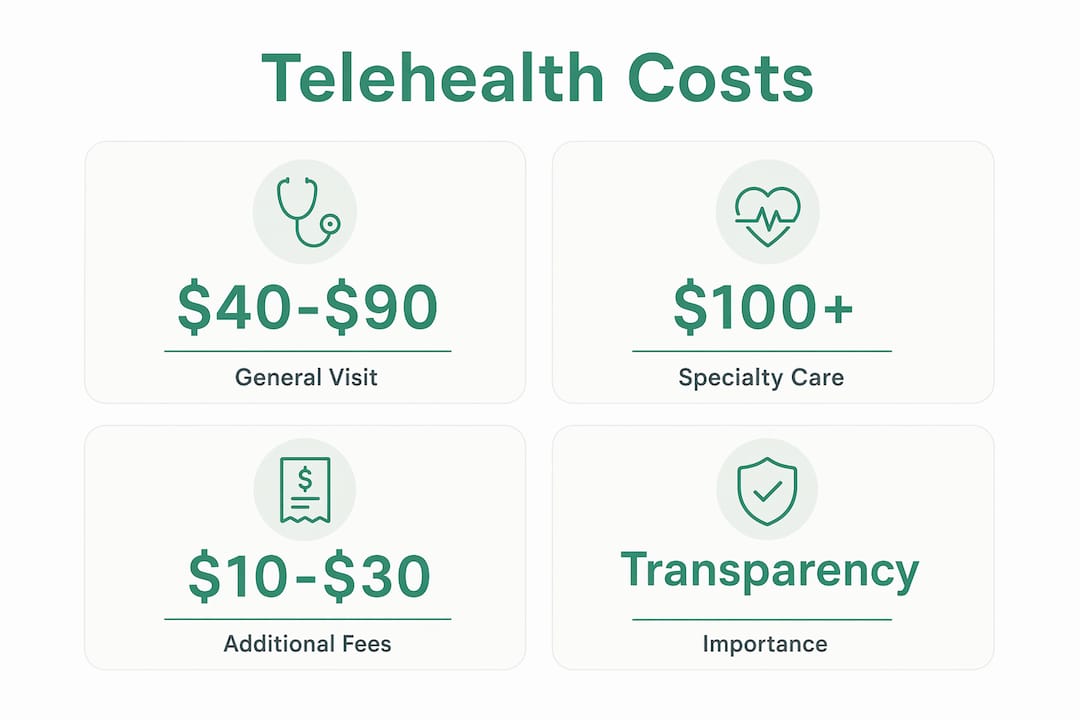
Without insurance, a general telehealth visit in the U.S. typically costs a moderate amount out of pocket. Specialty visits cost more, with mental health therapy and psychiatry tending to be higher priced. The catch most people miss? That visit fee covers the consultation only. Labs, prescriptions, and follow-ups are billed separately and can easily double your total.
Table of Contents
- How much does telehealth cost without insurance?
- What actually drives the price of a telehealth visit
- Hidden fees that can surprise you after the visit
- How to get a firm price before you book
- Practical ways to lower your out-of-pocket telehealth costs
- When telehealth makes sense — and when it doesn't
- Key Takeaways
- The real cost of telehealth transparency
- Peacehealthai helps you decide before you pay
- Sources and further reading
How much does telehealth cost without insurance?
Out-of-pocket telehealth fees vary more than most people expect and differ depending on the provider type and service. Telehealth visits are generally less expensive than comparable in-person visits for non-emergency issues. Subscription models may offer cost advantages if you expect multiple visits per month, as monthly membership plans cover unlimited or discounted visits and may break even after about one visit per month. For anyone managing chronic conditions or with a family, subscriptions may often be the more economical choice, as monthly plans typically cost $50–$200 for unlimited or discounted visits.

What actually drives the price of a telehealth visit
Not all telehealth visits are priced the same, and knowing what moves the number helps you shop smarter.
- Provider type: A physician-led visit typically costs more than one handled by a nurse practitioner (NP) or physician assistant (PA). For simple issues like a UTI, sinus infection, or refill, an NP-led visit gets the job done at a lower price.
- Visit complexity: New patient intake costs more than a follow-up. A straightforward prescription renewal is the cheapest visit type on most platforms.
- Specialty vs. general care: Mental health, psychiatry, and dermatology command higher fees than primary care because of licensing requirements and session length.
- Platform pricing model: Per-visit platforms charge each time; subscription platforms spread cost across the month. Some platforms mix both, charging a membership fee plus a reduced per-visit copay.
- State licensing: Telehealth providers must be licensed in your state. In states with fewer licensed providers on a given platform, availability may be limited and pricing can differ.
Hidden fees that can surprise you after the visit
The advertised visit fee is rarely the full story. Labs and prescriptions are billed separately from the consultation, and those costs can dwarf the visit itself.
- Lab work: Common self-pay lab tests run $20–$200 depending on the panel. A basic metabolic panel or STI screen ordered through a telehealth visit goes to a third-party lab, not the platform.
- Prescriptions: Medication cost is entirely separate from the visit fee. Generic drugs can cost under $10 with a discount card; specialty or brand-name drugs can run $100–$500+ per fill.
- Follow-up visits: Most platforms charge a full visit fee for each appointment. A few offer reduced-rate follow-ups within a set window, but you need to ask.
- Messaging and admin fees: Some platforms charge for secure messaging outside a scheduled visit or for completing prior authorization paperwork.
- Cancellation and no-show fees: Missing a visit within the cancellation window can trigger a fee. Some platforms charge up to $50 for last-minute cancellations, even for self-pay patients.
Pro Tip: Before confirming any telehealth appointment, ask the platform to provide a written cost estimate that lists the visit fee plus any likely ancillary charges — labs, prescriptions, and follow-up fees. A reputable platform will give you this without hesitation.
How to get a firm price before you book
Getting a clear number upfront takes about five minutes if you know what to ask.
- Check the pricing page directly. Most platforms publish self-pay rates. Look for a "no insurance" or "self-pay" option explicitly listed.
- Simulate the booking flow. Go through the scheduling steps without confirming. Reputable platforms display the exact out-of-pocket fee before you hit confirm.
- Contact support before booking. Use the platform's chat or phone line to ask about labs, prescriptions, and follow-up fees. This takes two minutes and can save you a lot.
- Request a written estimate. Ask for a breakdown in writing: visit fee, any likely lab costs, and the cancellation policy.
Sample questions to ask:
- "What is the self-pay visit fee for a [general care / mental health / dermatology] visit?"
- "If the provider orders labs, where are they sent and what do they cost without insurance?"
- "Is there a fee for follow-up messages or a second visit within 30 days?"
- "What is your cancellation policy and is there a fee for missing an appointment?"
- "Will I see the total cost before I confirm the booking?"
A platform that can't answer these questions clearly is a platform worth skipping.
Practical ways to lower your out-of-pocket telehealth costs
A few targeted moves can cut your total bill meaningfully.
- Use a subscription when visits are frequent. If you expect two or more visits per month, a $50–$200/month membership almost always beats per-visit pricing. One visit at $89 per month vs. a $75 membership covering unlimited visits is an easy call.
- Choose NP or PA-led visits for simple issues. For a UTI, cold, or refill, a clinician-review workflow costs less and handles the same scope of care.
- Use federally qualified health centers (FQHCs). Community health centers offer sliding-scale fees based on income and often provide telehealth services. The Health Resources & Services Administration (HRSA) maintains a locator at findahealthcenter.hrsa.gov.
- Cut prescription costs with discount programs. GoodRx and similar discount tools can reduce generic drug costs by 80% or more at many pharmacies. The visit fee stays the same; the pharmacy bill doesn't have to.
- Ask about bundled pricing. Some platforms will bundle a visit plus a basic lab panel at a reduced rate. It's not always advertised, but it's worth asking.
- Use FSA or HSA funds. Telehealth visits are generally FSA/HSA eligible, which effectively lowers your cost by your marginal tax rate.
When telehealth makes sense — and when it doesn't
Telehealth is a strong self-pay option for a specific set of situations. Knowing the boundaries saves you money and keeps you safe.
Good fits for telehealth self-pay:
- Cold, flu, or sinus infection symptoms
- UTI or yeast infection (established symptoms)
- Minor skin rashes or acne (photo review)
- Prescription refills for stable, ongoing conditions
- Anxiety or mild depression (initial consult or ongoing therapy)
- General triage: "Do I need to go in or can I wait?"
Most of these resolve in one visit. Scheduling is typically same-day to 72 hours for on-demand platforms, compared to days or weeks for in-person primary care or specialist appointments.
Not appropriate for telehealth:
- Chest pain, difficulty breathing, or signs of stroke
- Injuries requiring physical exam, imaging, or stitches
- Conditions requiring lab confirmation before treatment (some STIs, strep)
- Mental health crises requiring immediate intervention
- Pediatric emergencies
Telehealth works well as a supplement to primary care, not a permanent replacement. For chronic condition management, HHS guidance recommends treating telehealth as one layer of care, not the whole system.
Key Takeaways
Out-of-pocket telehealth visits in the U.S. typically cost $40–$90 for general care, but labs, prescriptions, and follow-ups are billed separately and can significantly raise the total.
| Point | Details |
|---|---|
| Typical visit range | General self-pay telehealth runs $40–$90; specialty visits (mental health, psychiatry) run $100–$200. |
| Hidden costs add up | Labs ($20–$200), prescriptions, and follow-up fees are billed separately from the visit fee. |
| Get the price in writing | Ask for a written cost estimate covering the visit, likely labs, and the cancellation policy before confirming. |
| Subscriptions save money | Monthly plans ($50–$200/month) break even after roughly one to two visits and suit frequent users. |
| Peacehealthai as a first step | Use the Peacehealthai symptom checker to assess urgency before paying for a telehealth visit. |
The real cost of telehealth transparency
Most people focus on the visit fee and stop there. That's the wrong place to stop. The visit fee is the floor, not the ceiling, and the gap between the two is where surprise bills live.
What actually matters is whether a platform tells you the full expected cost before you confirm. That's a baseline standard now, not a premium feature. Any platform that buries lab fees, charges for follow-up messages without disclosing it, or hits you with a cancellation fee you didn't know existed has a transparency problem worth taking seriously.
At Peacehealthai, the position is straightforward: before you spend anything on a telehealth visit, you should know whether the visit is even necessary. An AI symptom check takes two minutes and can tell you whether your symptoms point toward something that needs same-day care, a scheduled visit, or watchful waiting at home. That step costs nothing and can save you $75 or more on a visit you didn't need. The right question isn't just "how much does telehealth cost?" It's "do I need it right now?"
Peacehealthai helps you decide before you pay
Before you book a telehealth visit and pay out of pocket, it's worth knowing whether your symptoms actually warrant one.
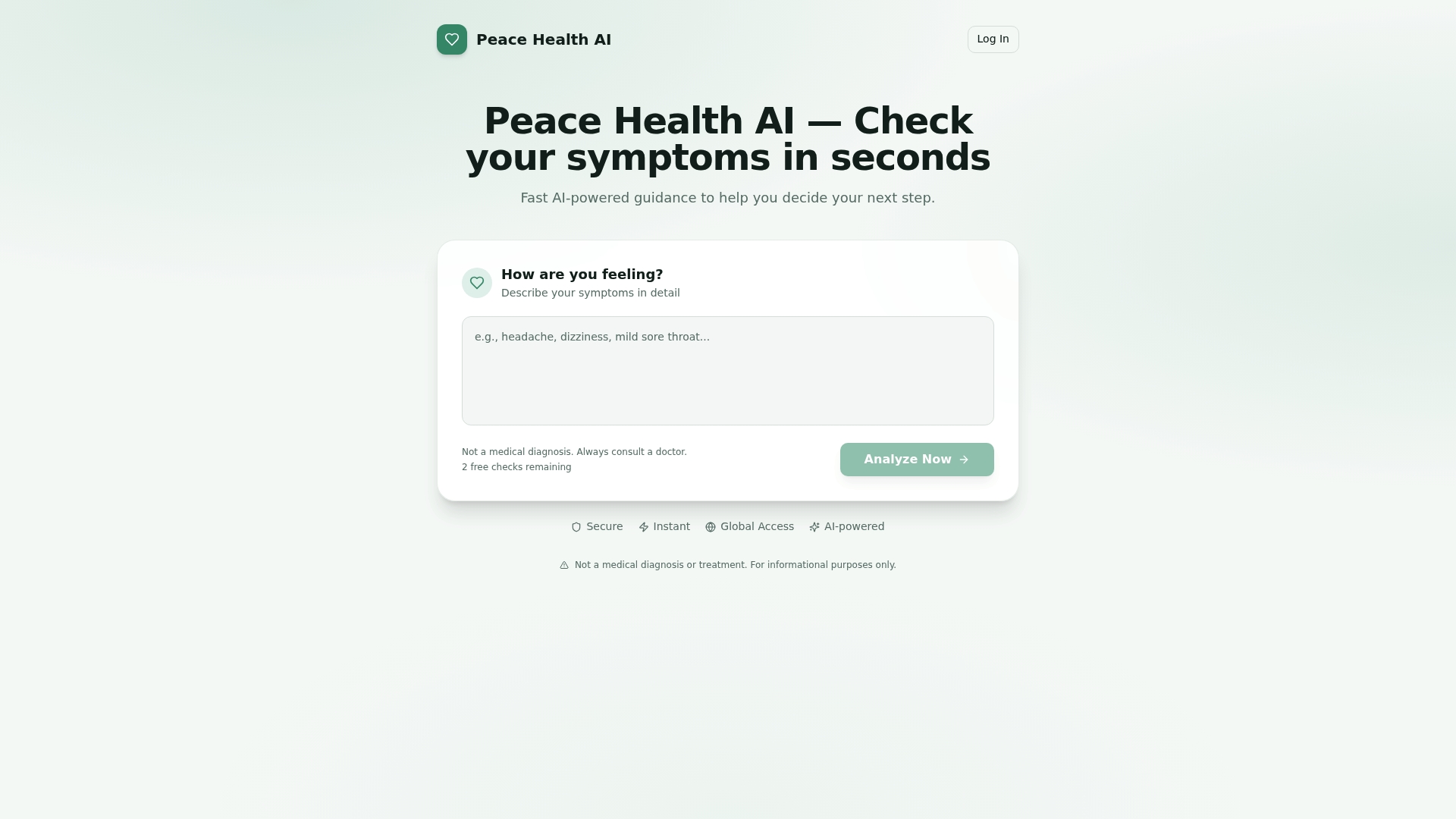
Peacehealthai's AI symptom checker gives you instant triage based on what you're feeling right now. Describe your symptoms, get a clear read on urgency, and find out whether you need same-day care, a scheduled visit, or something you can manage at home. No appointment, no fee, no waiting.
- Instant symptom triage: Know within minutes whether your symptoms are urgent, non-urgent, or manageable at home.
- Visit urgency guidance: Get a clear recommendation on the right level of care before spending $40–$90 on a general telehealth visit you may not need.
- Care-path suggestions: Understand whether telehealth, an in-person visit, or self-care is the right next step for your situation.
Check your symptoms now before booking your next telehealth visit.
Sources and further reading
These sources back the pricing figures and guidance in this article. Check them directly to verify current rates and policies.
- HHS Telehealth Payment Guidance: Federal guidance on telehealth payment options for uninsured patients, including community health centers and sliding-scale resources.
- Teladoc Health Billing FAQs: Platform-specific pricing for self-pay visits, cancellation policies, and what to expect before confirming a visit.
- Zocdoc Telehealth Cost Guide: Overview of per-visit and subscription pricing models with break-even guidance.
- NuGen Medicine Telehealth Cost Breakdown: Detailed self-pay price ranges by visit type, including specialty care and hidden fee breakdowns.
- HRSA Health Center Finder: Locate federally qualified health centers offering sliding-scale telehealth services near you.
Always request a written cost estimate from any platform before confirming a booking, and check the platform's pricing page directly for the most current self-pay rates.
This article is general information, not medical or financial advice. Confirm current pricing and care options with your chosen platform or a qualified healthcare provider for your specific situation.