
AI fitness coaching delivers adaptive workout plans, nutrition guidance, and habit tracking through machine learning — and when paired with a symptom checker, it becomes a genuinely safer tool for people managing real health concerns. The short answer: yes, it can work for you, but only if the platform you choose includes symptom-aware triage and clear escalation to a clinician when something feels wrong.
Here is what that looks like in practice:
- Symptom-aware coaching adjusts your plan based on how you actually feel, not just what you logged last Tuesday.
- Progressive overload and calorie-deficit programming are the evidence-based foundations — any serious AI coach builds on both.
- Red-flag symptoms (chest pain, sudden weakness, high fever with confusion) always override the workout. No algorithm should tell you otherwise.
- Peacehealthai combines a symptom checker with goal-based coaching, daily nutrition insights, and symptom history tracking — making it a practical starting point for health-conscious users.
Pro Tip: Before your first AI-coached session, run a quick symptom check. If anything flags as moderate or above, schedule a clinician visit before starting a new program.
Table of Contents
- What does AI fitness coaching actually do?
- How to choose an AI fitness coach for your goal
- When should you use a symptom checker alongside fitness coaching?
- How AI coaching handles real-life disruptions
- What privacy and clinical oversight should you expect?
- What do paid tiers actually add?
- Who should use AI fitness coaching right now?
- Key Takeaways
- A health-first perspective on AI coaching
- Try Peacehealthai's symptom-aware coaching today
- Useful sources
What does AI fitness coaching actually do?
The critical difference between a static workout generator and a true AI fitness coach is an active feedback loop. A static generator prints a plan once and never looks at it again. A real AI coaching system re-tunes weights, volume, and exercise selection after every logged session, incorporating recovery signals like poor sleep or soreness to prevent overtraining.
Core features you should expect:
- Adaptive weekly plans that shift based on logged performance
- Progressive overload tracking (auto-adjusting load as you get stronger)
- Nutrition integration with calorie and macro targets
- Wearable device sync for heart rate and readiness data
- Conversational logging via text or voice
- Real-time intensity adjustments based on recovery inputs
How the feedback loop works, step by step:
| Stage | What happens |
|---|---|
| Onboarding | You input goals, fitness level, equipment, and any injuries |
| Daily brief | The AI surfaces today's session with suggested weights and reps |
| Session log | You enter results via text, voice, or one-tap confirmation |
| Model update | The AI parses your inputs and recalibrates next week's volume |
| Recovery check | Subjective signals (sleep, soreness) reduce intensity when needed |
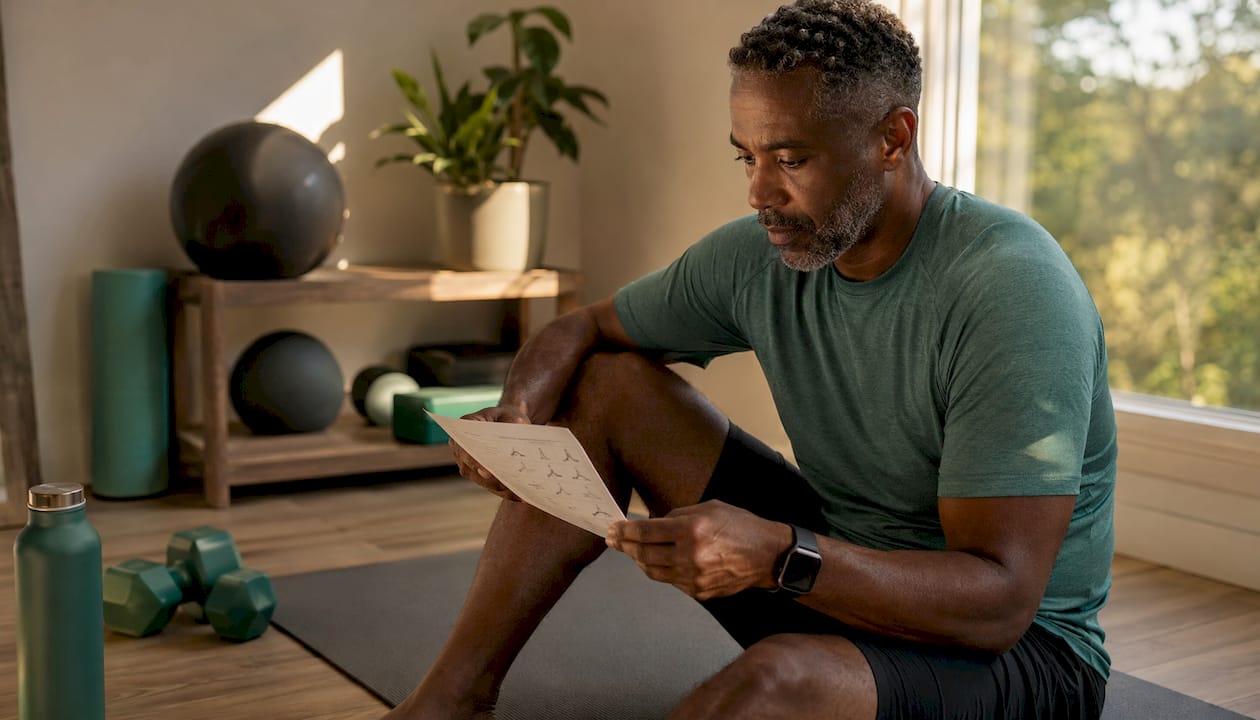
Conversational logging is a major usability win here. You can type something like "four sets of five deadlifts at 185, felt heavy" and the system updates your history and future programming automatically, no manual form entry required. Voice-guided interfaces take this further, with automatic rep counting that lets you focus on form while the AI logs progress in real time.
The technical building blocks are machine learning personalization, rule-based safety filters, and readiness scoring. What matters practically: the model is only as good as the data you feed it. Vague inputs produce vague adjustments.
How to choose an AI fitness coach for your goal
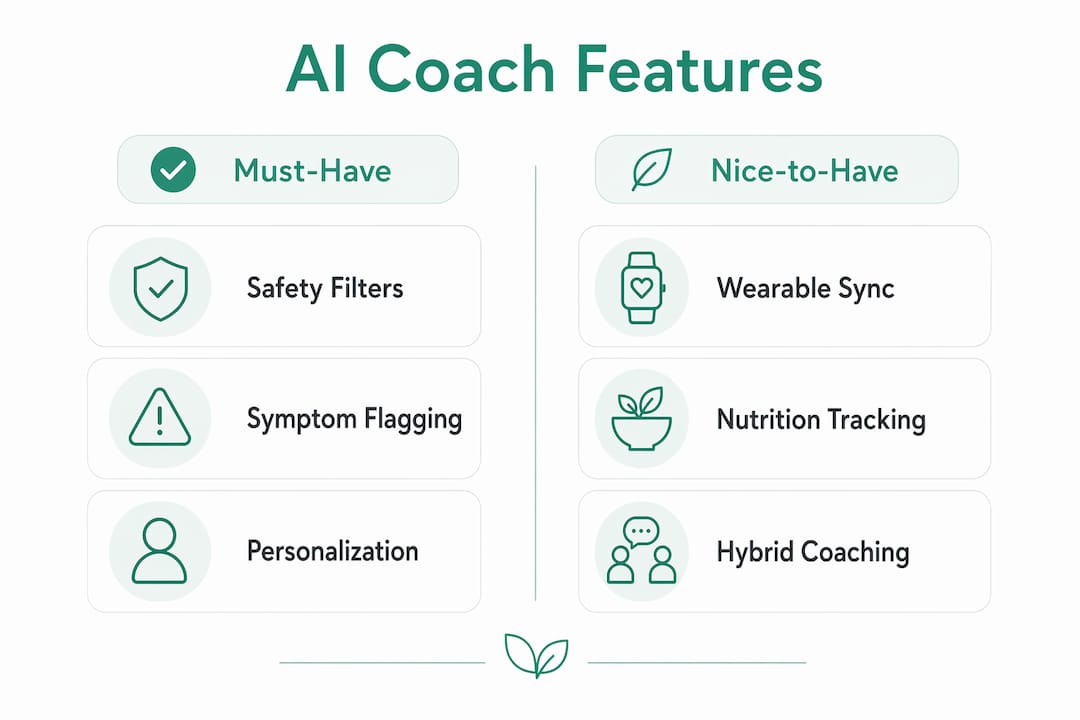
Your primary goal determines which features actually matter. Calorie-deficit integration is critical for fat loss; progressive overload tracking is the non-negotiable for muscle gain; clinician-reviewed programming matters most for rehab.
Decision checklist before you commit to any platform:
- Does it align with your specific goal (fat loss, hypertrophy, rehab, general wellness)?
- Is there documented clinical oversight or a medical advisory board?
- Does it integrate symptom checking or flag contraindicated exercises?
- How does it adapt after each session — weekly, daily, or not at all?
- What privacy and data-security protections are in place?
- Can you log via text or voice, or only through manual form entry?
Questions worth asking any vendor directly: "Does your system flag exercises I should avoid given a reported symptom?" and "Who reviewed the safety rules in your model?"
Priority matrix by goal:
| Goal | Must-have feature | Nice-to-have |
|---|---|---|
| Fat loss | Calorie deficit + macro tracking | Wearable sync for calorie burn |
| Muscle gain | Progressive overload auto-adjustment | Volume periodization phases |
| Rehab / injury | Clinician-reviewed exercise modifications | Symptom-checker integration |
| General wellness | Recovery scoring + habit tracking | Daily nutrition insights |
The trade-off between fully automated systems and hybrid coach-supervised models comes down to accountability and medical complexity. Automated platforms scale well for healthy adults with straightforward goals. If you have a chronic condition, recent surgery, or recurring symptoms, a hybrid model with actual clinician touchpoints is worth the added cost.
When should you use a symptom checker alongside fitness coaching?
A symptom checker changes the risk calculus for everyday training decisions. Instead of guessing whether that knee ache is normal soreness or something worth addressing, you get structured triage that can flag contraindicated exercises, suggest rest, or recommend a clinician follow-up.
Decision flow for common scenarios:
- Mild, non-urgent symptoms (minor muscle soreness, mild fatigue): use a symptom checker, adjust workout intensity downward, and monitor for 24–48 hours.
- Moderate or persistent symptoms (joint swelling, recurring headaches during exercise, unusual shortness of breath on easy effort): pause training and schedule a telehealth or primary care visit.
- Red-flag symptoms (listed above): emergency care, full stop.
Peacehealthai's symptom checker is built for exactly this triage workflow — fast structured input, immediate guidance, and a clear escalation path when the situation warrants it.
Pro Tip: Log your symptoms in the same session as your workout notes. A structured symptom history is far more useful to a clinician than "I've been feeling off lately." Peacehealthai tracks this history automatically across sessions.
How AI coaching handles real-life disruptions
Life does not follow a training block. Business trips, poor sleep, minor injuries, and schedule chaos are the norm, not the exception. AI models that incorporate recovery signals adjust volume and intensity to prevent overtraining — but only if you actually tell them what is going on.
Scenarios where conversational logging makes the difference:
- Travel: Tell the AI you have no gym access and 30 minutes. It swaps to a bodyweight session calibrated to your current training load.
- Poor sleep: Log "slept five hours, feel sluggish" and a well-designed system drops intensity by 10–20% and shortens the session.
- Minor injury: Report a tweaky shoulder and the AI removes overhead pressing, substitutes lateral raises or cable work, and flags the pattern if it recurs.
- Schedule crunch: Miss a session and the AI redistributes volume across the remaining days rather than leaving a gap.
What to enter for the best AI response:
- Sleep duration (actual hours, not estimated)
- Perceived exertion from the last session (easy / moderate / hard)
- Any specific pain or discomfort and its location
- Equipment available today
Short, structured inputs beat long explanations. "Left knee ache, bodyweight only, slept six hours" gives the AI everything it needs to reshape the day.
What privacy and clinical oversight should you expect?
Many consumer fitness apps are not HIPAA-covered entities. That matters because it affects how your health data can be stored, shared, and used. Before you hand over symptom logs and medical history, verify these protections exist.
Privacy checklist:
- Data encryption in transit and at rest
- Explicit consent required for medical data use
- Option to delete your data on request
- Third-party audit or SOC-type security statement
- Clear policy on whether data is sold to third parties
Clinical trust signals worth verifying:
| Signal | What to look for |
|---|---|
| Medical advisory board | Named clinicians with verifiable credentials |
| Published validation | Accuracy claims with cited methodology |
| Safety rule transparency | Documented contraindication logic |
| Symptom checker accuracy | Stated sensitivity/specificity or clinical review process |
If a platform cannot answer "who reviewed your safety rules?" with a name or a published document, treat that as a gap. For users managing chronic conditions or following clinician-supervised treatment plans, pairing AI coaching with clinician-led weight management resources add a meaningful layer of oversight that no app alone can replace.
What do paid tiers actually add?
Free tiers typically offer template-based plans with limited personalization. Paid subscriptions unlock the adaptive engine that makes AI coaching genuinely useful.
What paid plans commonly add:
- Deeper symptom-checker analysis with priority response speed
- Advanced health score analytics and trend tracking
- Nutrition integration with daily macro targets
- Wearable device sync (heart rate, sleep, readiness)
- Symptom history tracking and early-alert flags for recurring patterns
- AI health chat for real-time coaching questions
Peacehealthai's tiered plans follow this model, with higher tiers unlocking priority analysis and advanced features.
When to upgrade: If you are managing a chronic condition, recovering from injury, or frequently using symptom triage, the priority response speed and deeper analysis at paid tiers are worth it. For basic fitness goals with no medical concerns, a free tier is often adequate to start.
Pro Tip: Start on a free tier for two weeks. If you find yourself hitting feature walls — wanting nutrition integration, faster symptom responses, or wearable sync — that is your signal to upgrade, not a sales pitch.
Who should use AI fitness coaching right now?
AI fitness coaching works best for time-poor adults without red-flag medical issues, people who need accountability between clinician visits, and anyone who wants personalized programming without a $100–$300 per-session trainer fee.
Who benefits most:
- Adults with clear fitness goals (fat loss, muscle gain, general wellness) and no acute medical concerns
- People managing mild chronic conditions who want structured activity guidance alongside clinical care
- Anyone who has struggled to stick with static workout programs
Three steps to get started:
- Try a symptom-aware tool. Run a check on Peacehealthai before your first session to establish a baseline and flag anything worth addressing.
- Log workouts and symptoms conversationally. Short, structured entries every session build the data the AI needs to personalize effectively.
- Escalate when the symptom checker flags concerns. The system is designed to tell you when a clinician is the right next step — follow that guidance.
In the first two to six weeks, expect the AI to calibrate. Your plan will shift noticeably after the first few logged sessions as the model learns your actual performance versus your stated starting point.
Pro Tip: Track one metric that matters to you — weekly training volume, average sleep, or body weight — from day one. Regular tracking over several weeks tells a clearer story than memory.
Key Takeaways
AI fitness coaching works best as a symptom-aware, safety-conscious tool that adapts to your real life, not just your logged reps.
| Point | Details |
|---|---|
| Feedback loop is everything | True AI coaches re-tune your plan after every session; static generators do not. |
| Match features to your goal | Fat loss needs calorie-deficit integration; muscle gain needs progressive overload tracking. |
| Symptom checking changes safety | Use structured triage for mild symptoms; escalate to a clinician for moderate or red-flag concerns. |
| Verify privacy and oversight | Confirm data encryption, deletion rights, and named clinical reviewers before sharing health data. |
| Peacehealthai is the starting point | Its symptom checker, goal-based coaching, and tiered plans make it a practical first step for health-focused users. |
A health-first perspective on AI coaching
The fitness app market is full of platforms that promise personalization but deliver glorified spreadsheets. The real gap is not in workout programming — it is in what happens when something feels wrong mid-cycle. Most platforms have no answer for that. They assume you are healthy, motivated, and injury-free, which describes almost nobody past the first month of a new program.
The more useful framing is this: AI fitness coaching is a decision-support tool, not a replacement for clinical judgment. When it works well, it reduces the cognitive load of planning, keeps you accountable between clinician visits, and flags patterns in your symptoms and performance that you might otherwise miss. When it fails, it is usually because the platform has no safety layer — no symptom checker, no contraindication logic, no escalation path.
Peacehealthai's approach treats symptom awareness as a core feature, not an afterthought. That is the right architecture for anyone whose health situation is more complicated than "generally healthy adult wanting to lose ten pounds." Privacy controls, symptom history tracking, and clear escalation guidance are not premium add-ons. They are the baseline for a tool that touches your health data.
Try Peacehealthai's symptom-aware coaching today
Most fitness apps assume you are already healthy. Peacehealthai starts where you actually are — with a fast, structured symptom check that tells you whether today is a training day, a rest day, or a clinician visit.
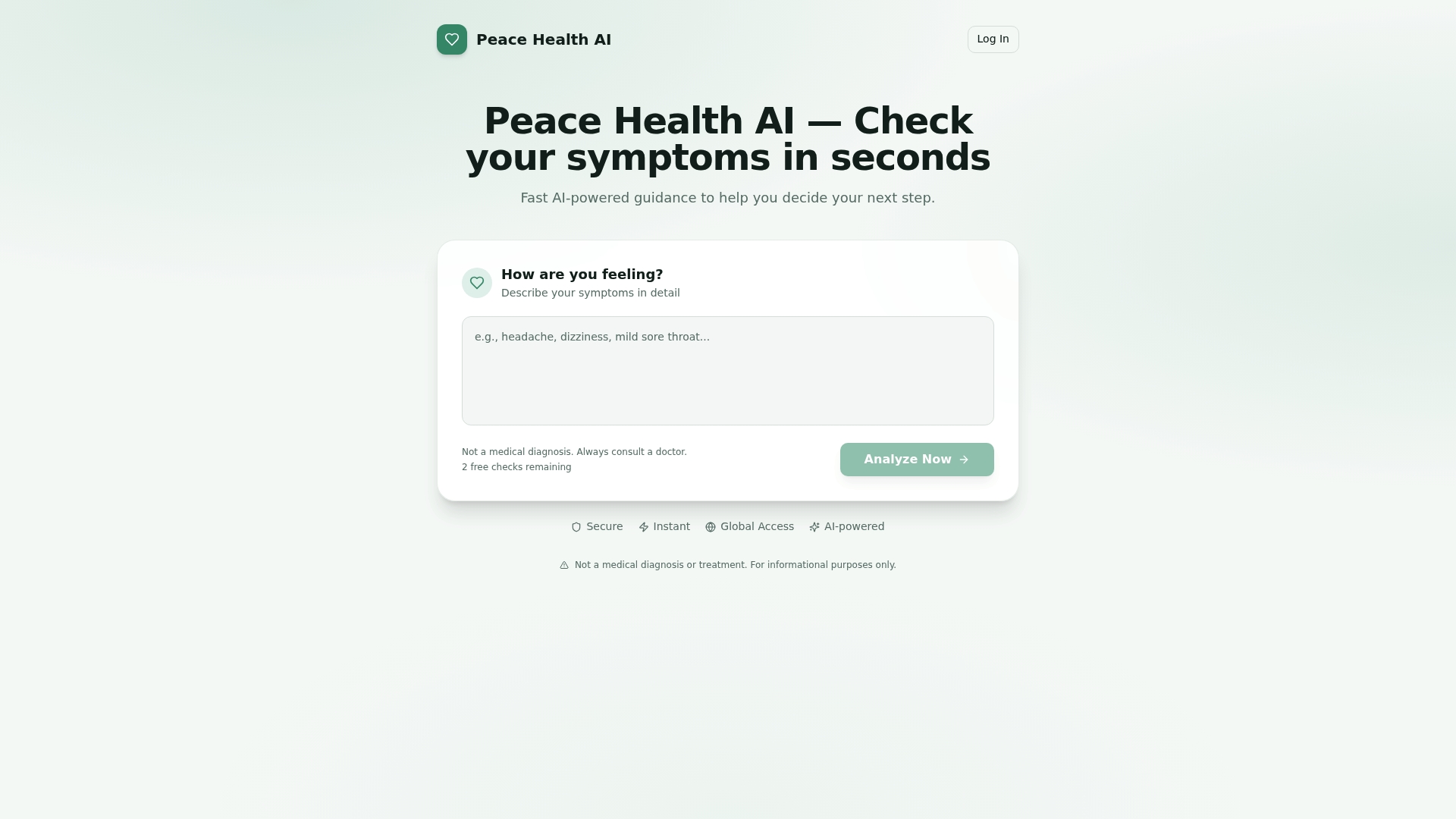
From there, the platform layers in daily nutrition and activity insights, goal-based coaching for fat loss, muscle gain, or general wellness, symptom history tracking with early alerts for recurring patterns, and tiered plans with priority analysis at higher subscription levels. Your health data stays private, with clear consent controls and deletion options built in.
Check your symptoms, explore your plan options, and start your first AI-coached week with a clear picture of where you stand.
Useful sources
- Peacehealthai — AI-Powered Symptom Checker: Primary source for feature claims including symptom history tracking, goal-based coaching, AI health chat, and tiered plan structure.
- Peacehealthai — Symptom Checker: Direct entry point for symptom triage; supports safety and escalation guidance throughout this article.
- Pricing & Plans — Peacehealthai: Source for tiered subscription model and priority analysis features.
- Kin — Your AI Fitness Coach: Evidence for conversational logging mechanics and the scalable accountability model.
- Hale Fitness: Source for recovery signal integration and overtraining prevention in adaptive AI models.
- Microsoft Copilot — AI Workouts: Supports claims about adaptive conversational prompts and readiness scoring for real-life disruptions.
- Rizin — Workout Plans: Source for goal-specific programming priorities (fat loss vs. muscle gain feature requirements).
- Ray — AI Personal Trainer: Evidence for voice-guided, hands-free coaching and automatic rep counting.
"The hard part of training isn't getting a starting plan — it's progressing it correctly for months without stalling or overtraining." This principle applies equally to AI coaching: the platform that adapts continuously is the one worth paying for.
This article provides general health and fitness information only, not medical advice. Confirm any health-related decisions with a qualified clinician or your primary care provider before starting a new exercise program.