
When nausea hits, the fastest relief usually comes from the same short list: bland starches like bananas, plain rice, applesauce, and dry toast; small, cold or room-temperature portions; clear fluids sipped slowly; and ginger in any form you can tolerate. Harvard Health confirms that bland, low-fat, low-fiber foods are the right starting point because they move through the stomach with the least friction.
Start here right now:
- Sip water slowly, a few ounces at a time, or suck on ice chips
- Try one plain cracker or a piece of dry toast
- Brew weak ginger tea or chew a ginger chew
- Step away from strong cooking smells or open a window
- Stay upright, sitting or standing, for at least two hours after eating
If you notice blood in your vomit, severe abdominal pain, or signs of dehydration, skip to the red-flag section below before anything else.
Key Takeaways
Bland, low-fat foods eaten in small, frequent portions alongside slow fluid intake are the most reliable dietary approach to managing nausea safely at home.
| Point | Details |
|---|---|
| Start with BRAT-style foods | Bananas, plain rice, applesauce, and dry toast are the safest first foods when nauseous. |
| Sip fluids slowly | Begin with ice chips or small sips of water; add clear broth or diluted electrolyte drinks once tolerated. |
| Eat several small meals throughout the day | Small, frequent portions prevent both an empty and an overfull stomach, both of which worsen nausea. |
| Avoid fat, spice, and strong smells | Greasy, spicy, and strong-smelling foods slow the stomach and can trigger or worsen nausea. |
| Peacehealthai for symptom triage | Use the AI symptom checker to identify patterns and get structured guidance when nausea is recurring or unclear. |
Table of Contents
- 1. What to eat when you're nauseous: the best foods by group
- 2. What to drink when you're nauseous
- 3. Foods and drinks that tend to make nausea worse
- 4. How to eat when you feel nauseous: timing, temperature, and posture
- 5. Quick remedies backed by evidence
- 6. When to seek medical care: red flags to watch for
- 7. Eating through a stomach bug or food poisoning
- What Peace Health AI thinks about nausea and symptom triage
- Personalized nausea guidance with Peacehealthai
- Sources
1. What to eat when you're nauseous: the best foods by group
The goal when you feel nauseous is simple: give your stomach something it can handle without triggering more distress. UCSF Health recommends smaller portions, low-fat choices, and avoiding strong cooking odors as the core dietary strategy.
Bland starchy foods (start here)
- Bananas — soft, easy to digest, and a natural source of potassium lost through vomiting
- Plain white rice — virtually no fat, no odor, and gentle on an irritated stomach lining
- Applesauce — easier than a whole apple; the pectin is soothing and the texture is manageable
- Dry toast or plain crackers — the classic first food for a reason; saltines absorb stomach acid and are almost odorless
- Plain boiled or baked potato — skip the butter; the starch is filling without being heavy
- Plain oatmeal or plain noodles — good options as appetite starts to return
Cold or room-temperature foods
Cold foods have weaker aromas than hot ones, which is why chilled yogurt, popsicles, and cold sandwiches are often better tolerated when you feel nauseous. A low-fat yogurt straight from the refrigerator is easier to get down than a warm bowl of soup, at least in the early hours.
Light protein and broths (introduce these later)
Once you can keep crackers and water down, clear chicken or vegetable broth adds sodium and warmth without fat. Poached chicken, a plain scrambled egg, or low-fat yogurt are the next step up. Avoid anything fried, sauced, or heavily seasoned.
Pro Tip: If cooking smells are triggering your nausea, choose pre-packaged, room-temperature options like individually wrapped crackers, shelf-stable applesauce cups, or a cold banana. No cooking required, no steam, no odor.
2. What to drink when you're nauseous
Dehydration is the biggest physical risk when nausea leads to vomiting, so fluids come before food. Cleveland Clinic advises starting with ice chips or small sips of water, then progressing to clear liquids once you can tolerate them.
Best drinks to try, in order:
- Ice chips or a few sips of cold water every 5–10 minutes
- Weak ginger tea or peppermint tea (both can calm the stomach)
- Clear broth (low-sodium chicken or vegetable)
- Diluted electrolyte solution (half water, half Pedialyte or a similar product)
- Flat ginger ale (let it go fully flat before drinking; the carbonation in fizzy drinks can worsen bloating)
Avoid early on: full-strength juice, caffeinated drinks, alcohol, and carbonated beverages straight from the can.
| Time after vomiting | What to try |
|---|---|
| — | Ice chips or 1–2 oz of water every 5–10 minutes |
| 30–60 minutes | Small sips of water or weak ginger/peppermint tea |
| 1–2 hours | Clear broth or diluted electrolyte drink if water stays down |
| 2–4 hours | Plain crackers or dry toast alongside continued fluids |
| 4+ hours | Bland foods (BRAT-style) if appetite allows |
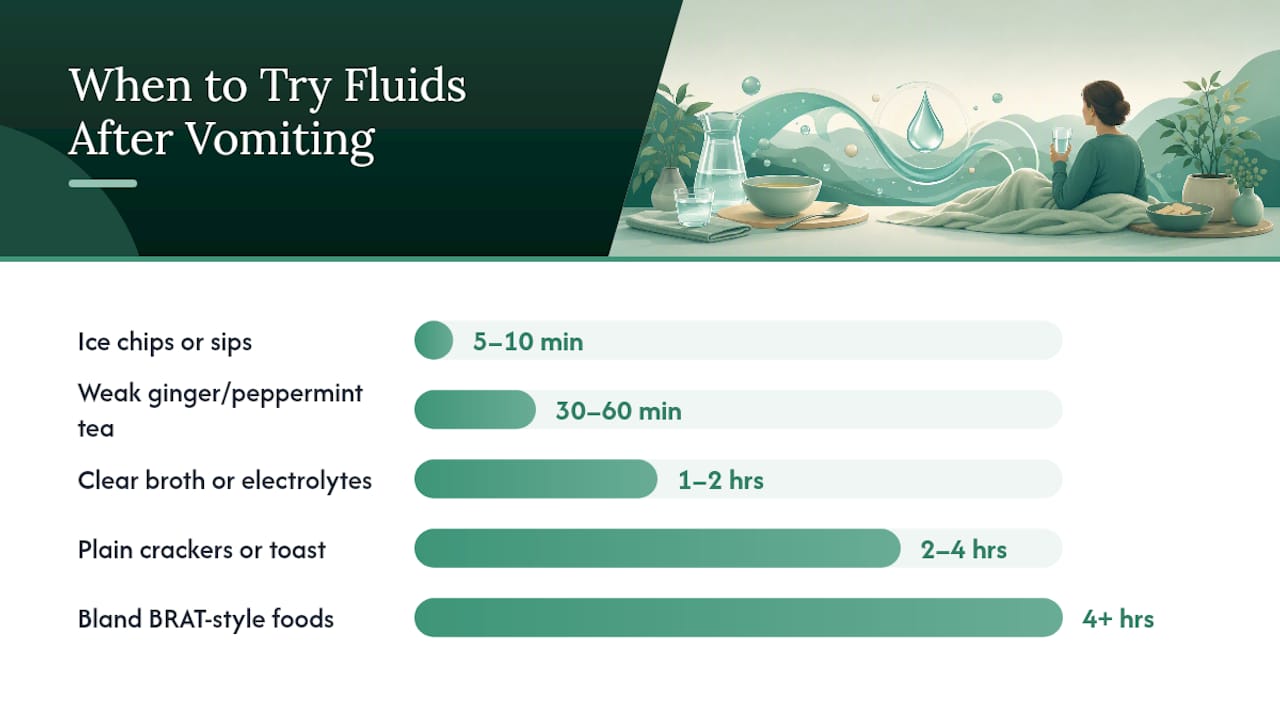
Scripps Health notes that sipping fluids slowly and stepping outside for fresh air are among the simplest and most effective measures for mild, short-term nausea.
3. Foods and drinks that tend to make nausea worse
Some foods actively slow gastric emptying or trigger the gag reflex through smell alone. Cutting these out is as important as choosing the right foods.
- Greasy or fried foods — fat slows the stomach and increases the chance of reflux
- Heavy, fatty meals — same mechanism; a large burger or cream-based pasta is the opposite of what a queasy stomach needs
- Very spicy foods — irritate the stomach lining and can worsen nausea and heartburn
- Strong-smelling foods — garlic, onion, fish, and anything with a powerful aroma can trigger the nausea reflex even before you take a bite
- Alcohol — directly irritates the stomach lining and worsens dehydration
- Caffeine — can increase stomach acid and worsen nausea, especially on an empty stomach
- Very sweet foods and drinks — high sugar content can slow gastric emptying and cause bloating
- Full-fat dairy — milk, cheese, and cream are harder to digest and often poorly tolerated after vomiting or during a gastrointestinal illness; Mayo Clinic recommends avoiding full-fat dairy for several days after gastroenteritis-related vomiting
4. How to eat when you feel nauseous: timing, temperature, and posture
What you eat matters, but how you eat it matters just as much. MedlinePlus clinical guidance recommends 6–8 small meals or snacks throughout the day instead of three large ones. An empty stomach and an overfull stomach both trigger nausea, so the goal is to keep a small, steady amount of food moving through.
Key strategies:
- Eat every 1.5–2 hours in small amounts rather than waiting until you're hungry
- Drink fluids 30–60 minutes before or after a meal, not during, to avoid overfilling the stomach
- Choose cold or room-temperature foods over hot ones when possible
- Stay upright for at least two hours after eating; lying flat increases reflux risk
- Eat slowly and chew thoroughly; rushing a meal puts extra pressure on the stomach
| Time | Example food or drink |
|---|---|
| 7 AM | 4–5 plain crackers + small sips of water |
| 9 AM | Half a banana or a small cup of applesauce |
| 11 AM | Small bowl of plain white rice or plain oatmeal |
| 1 PM | Cup of clear broth + 2–3 plain crackers |
| 3 PM | Low-fat yogurt (cold, plain) or a popsicle |
| 5 PM | Small portion of plain boiled potato or plain noodles |
| 7 PM | Clear broth or weak ginger tea + a few crackers |
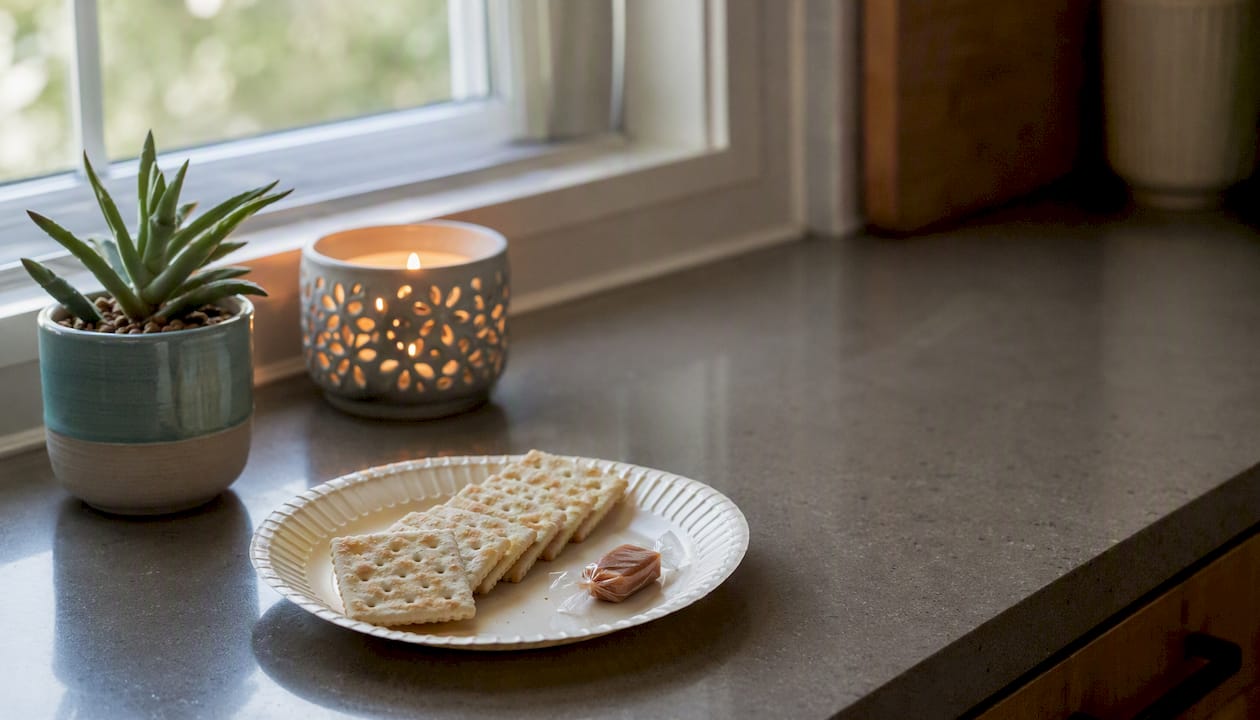
Pro Tip: Keep a small bag of plain crackers and a ginger chew on your nightstand or in your bag. Eating a cracker before getting out of bed in the morning can prevent the spike in nausea that comes from an empty stomach, especially for morning nausea.
5. Quick remedies backed by evidence
Food choices help, but a few non-food remedies have real clinical support and are worth trying alongside a bland diet.
Ginger
Gingerol compounds in ginger are credited by clinicians for calming the digestive system. Healthline summarizes multiple trials and reviews supporting ginger's anti-nausea effects across contexts including pregnancy, postoperative recovery, and motion sickness. Practical forms: ginger tea (steep fresh slices in hot water for 5 minutes), ginger chews, or flat ginger ale. A typical studied dose is 1–1.5 grams of ginger per day, though check with your clinician during pregnancy before using supplements.
Peppermint
Inhaling peppermint oil or drinking peppermint tea can reduce nausea for some people. One caution: if you have acid reflux or GERD, peppermint can relax the lower esophageal sphincter and worsen symptoms. Stick to peppermint tea rather than concentrated oil if reflux is a concern.
Acupressure at the P6 wrist point
The P6 (Neiguan) point sits about two finger-widths below the wrist crease on the inner forearm. Pressing it firmly for 1–2 minutes, or wearing a Sea-Band acupressure wristband, has shown modest benefit in peer-reviewed antiemetic research for postoperative and pregnancy-related nausea. It carries no side effects and is worth trying.
OTC options
For motion sickness, dimenhydrinate (Dramamine) and meclizine (Bonine) are widely available without a prescription. For general nausea, bismuth subsalicylate (Pepto-Bismol) can help settle the stomach. Ask a pharmacist before combining OTC antiemetics with other medications, and avoid aspirin-containing products in children.
A note on safety: Ginger is generally considered safe during pregnancy for morning sickness, but supplement doses above 1 gram per day should be discussed with your OB or midwife. Peppermint oil should not be used near infants or young children.
6. When to seek medical care: red flags to watch for
Most nausea resolves on its own with rest and a bland diet. These symptoms mean you need a clinician, not just crackers.
Go to the ER or call 911 if you have:
- Blood or material that looks like coffee grounds in your vomit
- Severe abdominal pain or chest pain alongside vomiting
- Signs of serious dehydration: no urination for 8+ hours, extreme dizziness, rapid heart rate, or confusion
- Fainting or loss of consciousness
Call your doctor or go to urgent care if:
- You cannot keep any fluids down for more than 24 hours
- You have a high fever (above 103°F) with vomiting
- Nausea began after starting a new medication or after chemotherapy
- You are pregnant and cannot keep food or fluids down at all (possible hyperemesis gravidarum)
- Symptoms have lasted more than 48 hours without improvement
What to tell triage: how long you have been vomiting, how many times per hour, whether you can keep water down, and any recent travel, new medications, or known exposures.
This guide is informational and does not replace emergency care. When in doubt, call your clinician or 911.
7. Eating through a stomach bug or food poisoning
Gastrointestinal infections and food poisoning follow a predictable pattern: vomiting first, then a window where fluids and bland foods can gradually return. The approach differs slightly from general nausea because the gut lining is actively inflamed.
Mayo Clinic's guidance on gastroenteritis is clear: sip fluids constantly, avoid full-fat dairy and sugary drinks, and wait until vomiting has stopped or significantly slowed before introducing solid food. When you do eat, start with crackers, toast, bananas, plain rice, and plain chicken. Nothing rich, nothing fatty, nothing with a strong smell.
A few practical points specific to food poisoning and stomach bugs:
- Oral rehydration solutions (ORS) like Pedialyte replace electrolytes more effectively than plain water alone, which matters when vomiting has been frequent
- Avoid dairy for 48–72 hours after a stomach bug; temporary lactose intolerance is common after gastroenteritis because the gut enzyme that digests lactose is temporarily reduced
- Probiotics (Lactobacillus strains, found in plain yogurt or supplements) may help shorten the duration of diarrhea associated with gastroenteritis, though introduce yogurt only after vomiting has stopped
- Return to a normal diet gradually over 24–48 hours rather than jumping back to regular meals as soon as you feel better; the gut needs time to recover
If symptoms include bloody diarrhea, high fever, or vomiting that lasts more than 24 hours, contact a clinician. Food poisoning from certain bacteria (Salmonella, E. coli O157:H7) can require medical treatment.
What Peace Health AI thinks about nausea and symptom triage
The advice in this article covers the most common scenarios, but nausea is one of those symptoms that can mean a dozen different things. Morning nausea in someone who is not pregnant can point to low blood sugar, anxiety, acid reflux, a medication side effect, or something less obvious. Motion sickness nausea and chemotherapy-induced nausea need different management than a 24-hour stomach bug.
The piece of conventional wisdom worth questioning here is the idea that nausea is always self-limiting and always needs the same response. It usually is, and the BRAT approach usually works. But the pattern matters: nausea that comes back every morning, nausea tied to a specific medication, or nausea that arrives with other symptoms deserves more than crackers and ginger tea. It deserves a closer look at what is actually driving it.
Peacehealthai is built for exactly that kind of triage. The symptom checker lets you describe what you are experiencing in detail, including when it started, what makes it better or worse, and what else is going on, and it returns structured guidance on likely next steps. That is not a replacement for a clinician, but it is a faster, more organized starting point than a general web search.
Personalized nausea guidance with Peacehealthai
Nausea that does not fit a simple pattern is worth checking more carefully. Peacehealthai's AI-powered symptom checker lets you describe your symptoms in plain language and receive structured, evidence-informed guidance on what might be causing them and what to do next. For someone dealing with recurring nausea, the symptom history feature tracks patterns over time, which can be genuinely useful when talking to a doctor.
The tool is available at every tier, including a free option, and takes less than two minutes to use. It does not replace clinical care, and it will tell you clearly when your symptoms warrant a doctor visit. For nausea that is mild and situational, it can help you decide whether crackers and rest are enough, or whether something else is going on. Check your symptoms now and get a clear next step.
Sources
The clinical guidance in this article draws from the following authoritative sources:
- When you have nausea and vomiting: MedlinePlus Medical Encyclopedia
- Diet modifications for nausea and vomiting | UCSF Health
- Is the BRAT diet the best choice for an upset stomach? | Harvard Health
- How to Get Rid of Nausea: Fast Relief Tips and Causes - Scripps Health
- What Should You Eat or Drink After Throwing Up? | Cleveland Clinic
- Gastroenteritis: First aid | Mayo Clinic
This article is general information, not a substitute for advice from a qualified doctor. Consult a qualified healthcare professional about your own circumstances before acting on anything here.