
A wellness coaching app is a software application that delivers personalized guidance, goal tracking, and behavioral support to help you build healthier habits and improve your overall well-being. The category splits into two main models: AI-supported apps that provide always-on coaching through machine learning, and clinician-referred programs that pair you with licensed practitioners for structured, diagnosis-specific work. Both models address the core problem that short clinical appointments rarely produce lasting behavior change on their own. Choosing the right health coaching app depends on your goals, your budget, and how much structure you need. This article covers what these tools do, how they differ, and how to get the most from whichever personal wellness app you choose.
What does a wellness coaching app actually do?
A wellness coaching app provides four core functions: personalized coaching, habit tracking, mood monitoring, and goal setting. These features work together to give you a feedback loop that a gym membership or a diet book simply cannot replicate.
Personalized coaching is the defining feature that separates these apps from generic fitness trackers. Advanced AI wellness apps can remember detailed personal histories, including your meal preferences, past injuries, and schedule constraints, then adjust recommendations without you repeating yourself each session. That kind of continuity is what makes daily guidance feel relevant rather than generic.

Habit and mood tracking give you data on your own patterns. When you log how you feel after poor sleep or a stressful workday, the app can surface connections you would not notice on your own. Over time, those patterns become the foundation for real behavior change.
Pricing structures vary widely. AI wellness apps typically offer free tiers, monthly subscriptions around $9.99, and annual plans near $95.90. Some apps price higher, with monthly plans reaching $19.99 and annual plans around $99.99. That range means you can find a fitness and wellness app that fits almost any budget.
Pro Tip: Start with a free tier or a short trial before committing to an annual plan. Spending a week with the app's daily prompts tells you more about fit than any feature list.
AI-supported vs. clinician-referred coaching: what is the difference?
The two models serve different needs, and confusing them leads to frustration. Here is a direct comparison.
| Criteria | AI-supported apps | Clinician-referred programs |
|---|---|---|
| Availability | 24/7, on demand | Scheduled sessions with a practitioner |
| Cost | $0–$20/month | Higher; may qualify for HSA/FSA funding |
| Program structure | Flexible, self-paced | Fixed duration, often 3-month engagements |
| Focus areas | General wellness, habits, mood | Nutrition, sleep, activity, stress tied to diagnoses |
| Emotional depth | Moderate, AI-driven | Deep; uses tools like the EQ-i 2.0 assessment |
| Best for | Daily habit support, accessibility | Chronic conditions, deeper behavioral work |
AI-supported apps excel at scale and accessibility. They are always available, cost less, and work well for people who want consistent nudges toward healthier habits without a clinical need driving the engagement.
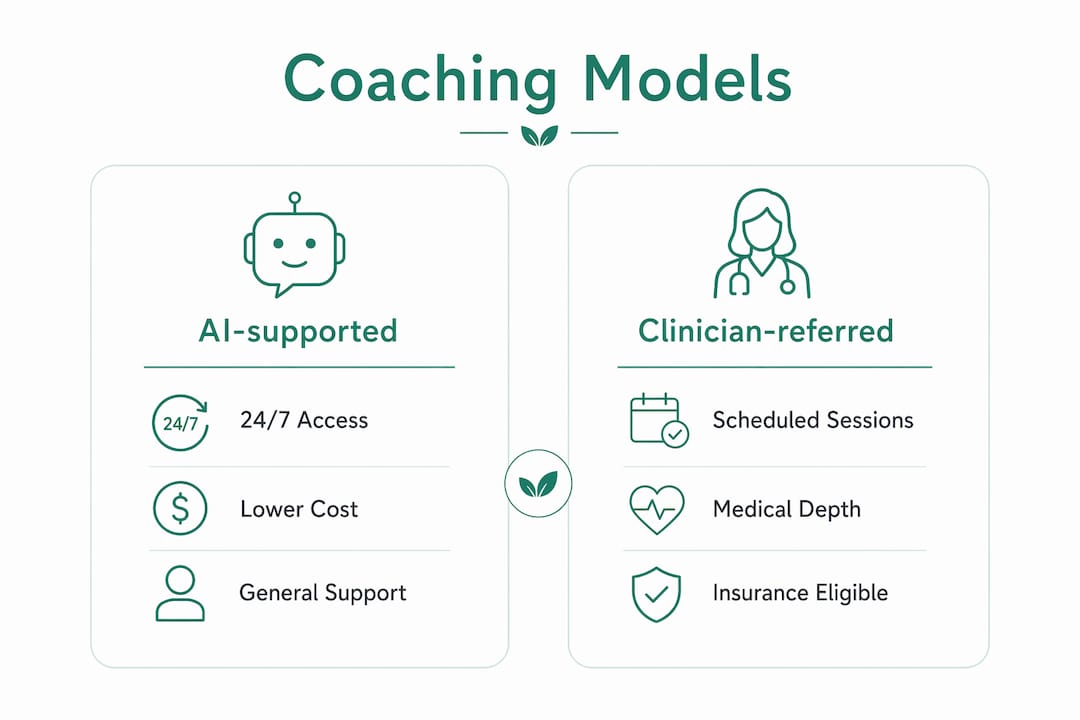
Clinician-referred programs go deeper. Structured coaching tied to medical diagnoses can qualify for HSA or FSA funding with a medical necessity letter, which meaningfully lowers the real cost. These programs also use emotional intelligence frameworks. The EQ-i 2.0 assessment, for example, is included in baseline evaluations for some programs to reveal why a person struggles with habit retention beyond the physical level. That insight is hard for any algorithm to replicate.
Pro Tip: If you have a chronic condition like Type 2 diabetes or hypertension, ask your doctor whether a clinician-referred coaching program qualifies for HSA or FSA reimbursement before paying out of pocket.
How to choose the best wellness coaching app for your goals
Picking the right online wellness coaching tool comes down to five practical criteria. Work through them in order before you spend a dollar.
-
Define your primary goal. Weight management, stress reduction, sleep improvement, and general fitness each call for different feature sets. A wellness tracking app built around sleep data will not serve you well if your main goal is stress management.
-
Identify your preferred coaching style. Some people respond to daily check-in prompts and AI-generated feedback. Others need a human voice and accountability from a real practitioner. Knowing which you are saves months of trial and error.
-
Use trial sessions before committing. Trial or discovery sessions are the single most effective way to assess whether a coaching style fits your needs. They also help you define how often you need sessions, which prevents open-ended commitments that drain your budget without results.
-
Evaluate data privacy and integrations. Check whether the app connects to Apple Health, Google Fit, or your wearable device. Also read the privacy policy to understand how your health data is stored and shared. This matters more for health data than for almost any other category of personal information.
-
Compare pricing structures honestly. A $9.99 monthly plan sounds low, but $119.88 per year adds up. Annual plans often cut that cost significantly. Factor in what you actually use: if you skip the app for two weeks at a time, a monthly plan with no commitment beats a discounted annual lock-in.
Pro Tip: Avoid wellness program apps that offer only generic content with no personalization layer. If the app gives the same advice to everyone regardless of their goals or history, it is a content library, not a coaching tool.
How to get the most from your wellness app every day
Consistent daily use separates people who see results from those who abandon the app after two weeks. The habits below make the difference.
-
Set one measurable goal per week. Broad goals like "get healthier" give the app nothing to work with. Specific targets like "walk 7,000 steps on four days this week" create trackable progress and a clear win to build on.
-
Log mood and energy daily, not just workouts. Sustainable wellness comes from integrating consistent daily routines with movement science, not from chasing quick fixes. Mood data reveals the emotional triggers that derail physical habits, which is information no workout log captures.
-
Schedule your coaching sessions like appointments. Treat a 10-minute check-in with your app the same way you treat a meeting. Blocking time on your calendar prevents the "I'll do it later" pattern that kills consistency.
-
Use reminders strategically, not constantly. Three targeted reminders per day work better than ten generic ones. Set reminders at the moments when you historically skip your habits: right after lunch, or 30 minutes before bed.
-
Pair app use with professional support when needed. Self-leadership and nervous system regulation are central to lasting behavioral change. If you notice that emotional stress consistently derails your habits, a clinician-referred program or a therapist alongside your app will produce better outcomes than the app alone.
-
Review your weekly data before setting the next week's goal. Most wellness apps surface weekly summaries. Reading them takes five minutes and tells you which habits are sticking and which need a different approach.
Key Takeaways
A wellness coaching app works best when you match its model, AI-supported or clinician-referred, to your specific health goals and then use it consistently with measurable weekly targets.
| Point | Details |
|---|---|
| Two distinct models exist | AI apps offer 24/7 access; clinician-referred programs provide structured, diagnosis-linked support. |
| Pricing varies widely | Monthly plans range from free to about $19.99; annual plans reduce costs significantly. |
| Trial sessions prevent waste | Test any coaching style before committing to avoid costly, open-ended engagements. |
| Emotional intelligence matters | Tools like the EQ-i 2.0 reveal why habits fail, going beyond physical recommendations alone. |
| Daily consistency drives results | Logging mood, scheduling sessions, and setting weekly targets produce measurable habit change. |
What I have learned from watching people use these apps
Trayvon here. After years of watching people pick up and drop wellness apps, the pattern is clear: most people fail not because the app is bad, but because they treat it like a passive tool rather than an active coaching relationship.
The biggest misconception I see is that a wellness app will do the work for you. It will not. What it does is lower the friction between your intention and your action. That is genuinely valuable, but only if you show up consistently. The people who get real results treat their daily check-in as non-negotiable, the same way they treat brushing their teeth.
The second thing I have noticed is that emotional intelligence is the hidden variable. People who struggle with habit retention almost always have an unexamined emotional trigger driving the behavior they want to change. Generic wellness advice never touches this. That is why I respect the clinician-referred model, even for people who think they just need a "fitness app." The EQ-i 2.0 framework is not therapy, but it surfaces patterns that pure habit tracking misses entirely.
My honest advice: start with a trial session, whether that is a free week in an AI app or a discovery call with a practitioner. Commit to nothing until you feel the coaching style actually fits how you think and work. The best wellness app is the one you will actually open tomorrow morning.
— Trayvon
Peacehealthai and your personal wellness goals
Peacehealthai offers an AI-powered platform that gives you fast, reliable guidance based on your specific health concerns, without the wait of a traditional appointment.
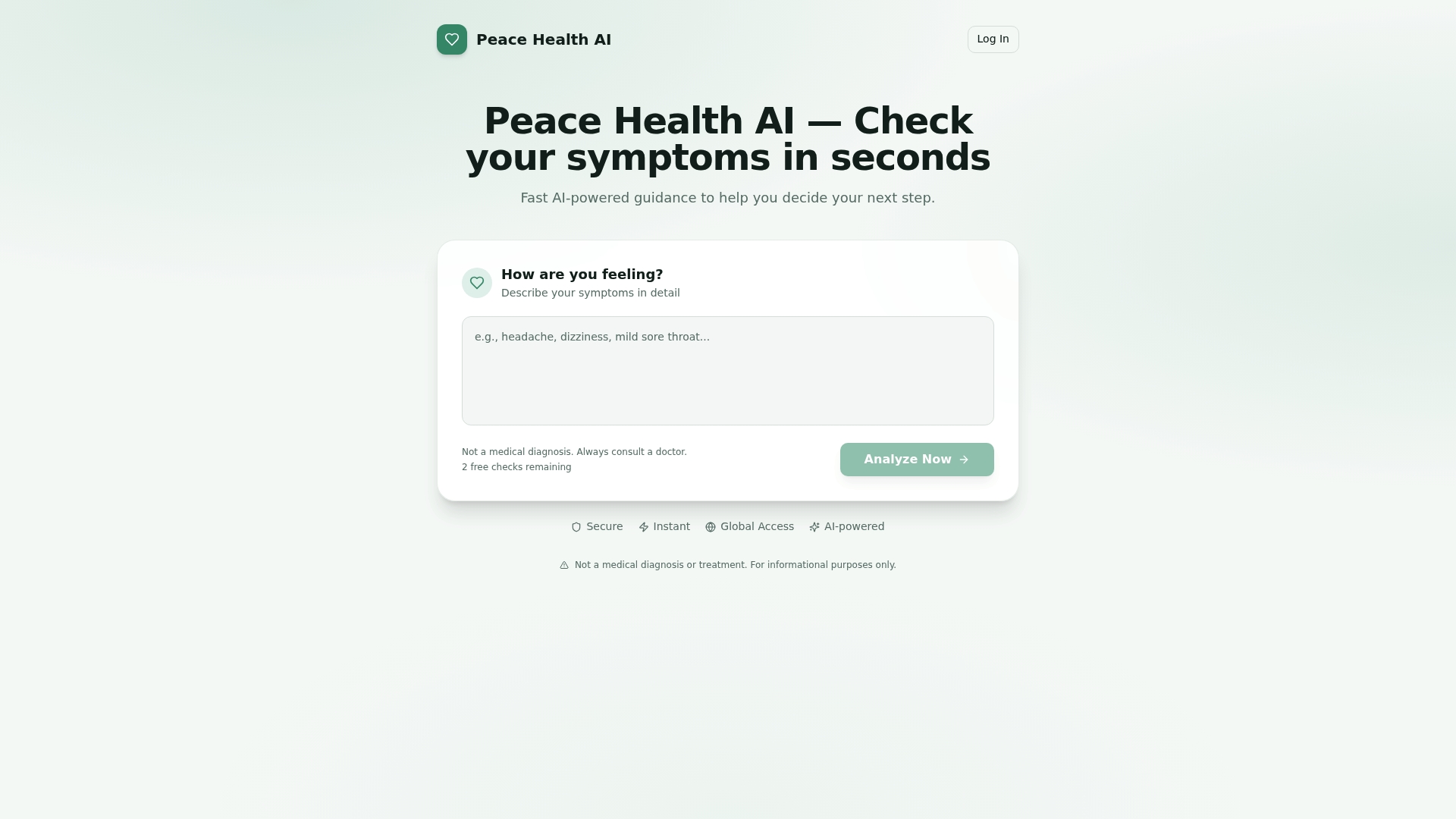
When you are unsure whether a symptom needs attention or want to understand your next step before booking a doctor, Peacehealthai's AI symptom checker gives you a clear, personalized answer in minutes. The platform is built for people who want timely health information on their own terms, with secure global access and a straightforward interface. If you are ready to see what features are available, the full feature overview covers everything the platform offers. For pricing details, the plans page lists current subscription options so you can find the right fit before committing.
FAQ
What is a wellness coaching app?
A wellness coaching app is a digital tool that delivers personalized health guidance, habit tracking, and goal support through your smartphone or browser. It functions as an on-demand coaching resource, replacing or supplementing traditional in-person wellness consultations.
How much does a health coaching app typically cost?
Pricing ranges from free tiers to monthly plans around $9.99–$19.99, with annual subscriptions offering lower per-month costs, often near $95.90–$99.99 per year. Some clinician-referred programs qualify for HSA or FSA reimbursement with a medical necessity letter.
What is the difference between an AI wellness app and a clinician-referred program?
AI wellness apps provide always-on, self-paced support for general habit and mood tracking, while clinician-referred programs run structured engagements, typically three months, tied to specific medical diagnoses and led by licensed practitioners.
How do I know if a wellness app is right for me?
Start with a trial session or free tier to test whether the coaching style fits your goals and preferences before committing to a paid plan. Assess whether the app personalizes its guidance or delivers the same content to every person.
Can a wellness tracking app replace a doctor or therapist?
A wellness tracking app supports healthy habits and daily behavior but does not replace clinical care, diagnosis, or mental health treatment. Use it alongside professional support, especially if you are managing a chronic condition or significant emotional health challenges.