
Comparing symptom checker software is time-consuming when each tool hides advanced features or support behind paid plans. Many symptom checkers restrict access to full symptom analysis, AI chat, or privacy controls unless you pay for a premium membership or subscription. This comparison highlights price, feature availability, and privacy for three K Health alternatives so individuals can choose the best fit without committing to a paid account first.
Table of Contents
Peace Health AI
At a Glance
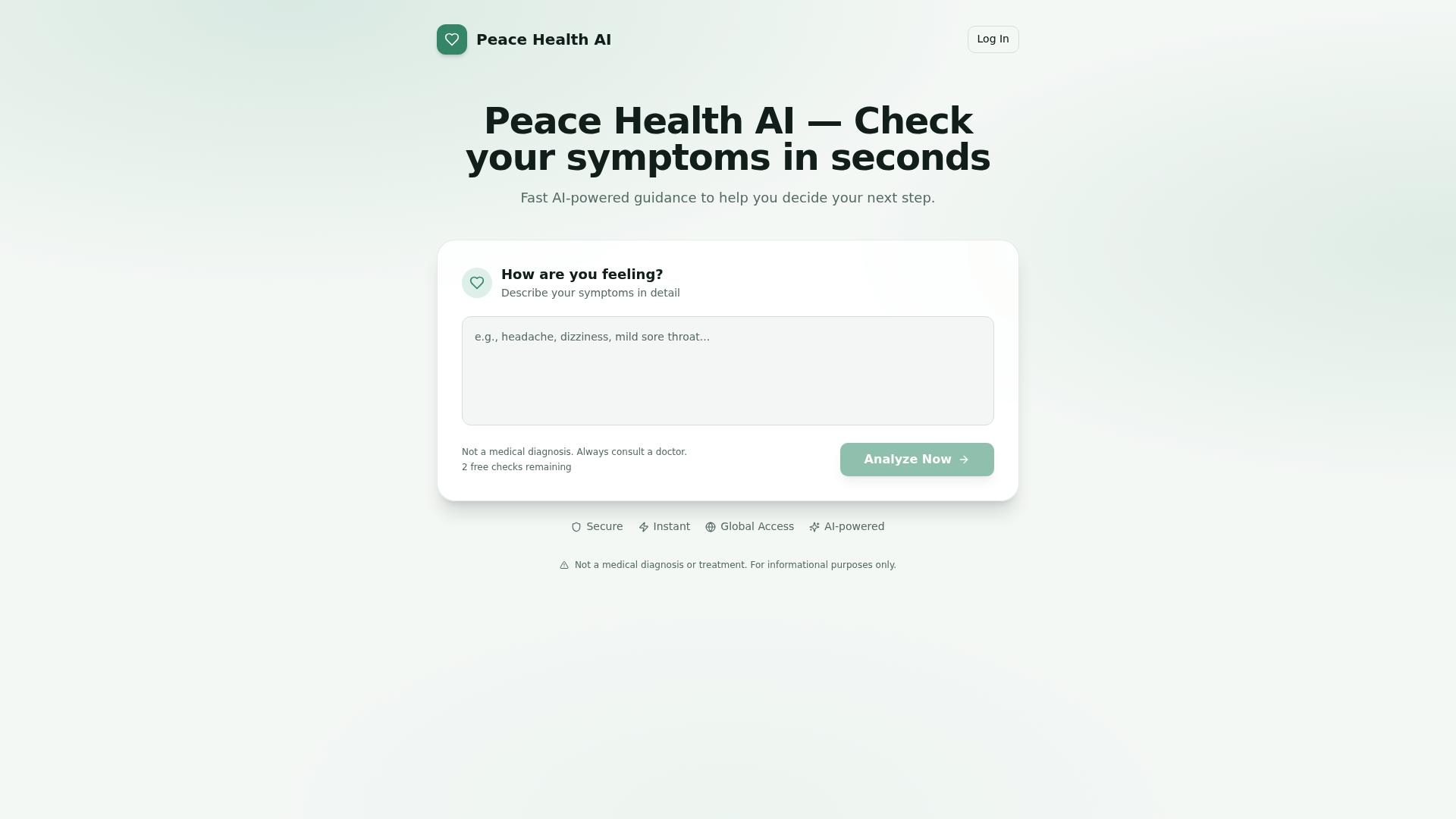
Peace Health AI's marketing materials state the system accepts detailed symptom descriptions and returns instant recommendations on next steps. The platform offers free, Pro, and All Access membership tiers that unlock progressively deeper analysis. That structure aims to give people quick guidance before they decide to book clinic time.
Core Features
The community platform starts with a basic symptom checker that runs a limited number of checks for nonpaying members. Pro and higher members receive condition breakdowns and more detailed insights, plus a symptom history log for tracking recurring complaints. All Access members get AI chat support and an AI Health Score that breaks down nutrition, activity, and hydration.
Key Differentiator
Higher-tier subscriptions include pattern recognition and planned beta features that let members spot symptom trends across multiple sessions. That emphasis on trend detection separates routine single-check answers from ongoing tracking for repeated complaints. Subscribers who monitor recurring issues will find the pattern recognition particularly useful for spotting changes over time.
Pros
Multiple membership tiers make the platform reachable for casual members while offering paid subscribers deeper analysis. The product delivers condition breakdowns and symptom history that help members track recurring problems across visits. Higher plans add conversational AI support and a composite health score covering nutrition, activity, and hydration, which helps members move from a one-off check to ongoing monitoring. The vendor also highlights privacy and secure global access for members.
Cons
- Limited checks in the free plan; detailed analysis requires a paid subscription.
Who It's For
This community platform fits people who want quick, AI-assisted symptom guidance before they contact a clinic. It suits members tracking recurring symptoms who need a simple symptom history and trend view. It also works for those willing to pay for conversational AI help and a consolidated health score.
Unique Value Proposition
All Access members receive an AI Health Score that isolates nutrition, activity, and hydration contributors to a single score. That score gives members a compact snapshot they can compare over time, reducing the time needed to spot worsening patterns. For people monitoring a chronic issue, this replaces manual spreadsheets and shortens the decision loop about when to seek care.
Real World Use Case
A member wakes with mild chest tightness and uses the symptom checker for a quick assessment. The platform logs the entry into their symptom history and, using pattern recognition for returning complaints, highlights whether the event matches earlier entries. The member uses the AI chat in All Access to refine next steps and decide whether to call their clinic.
Website: https://peacehealthai.org
Ada Health Symptom Checker
At a Glance
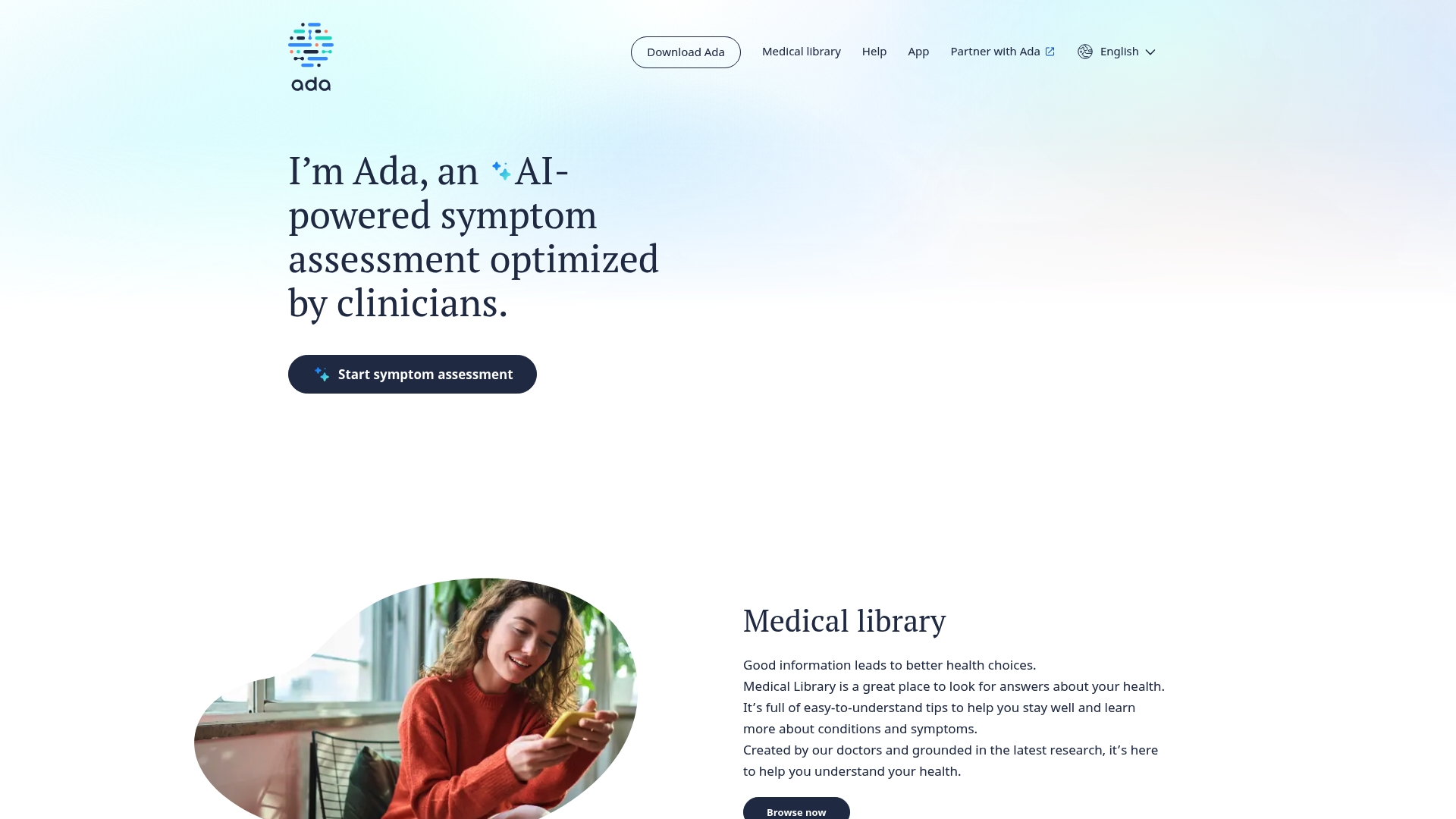
Ada reports more than 15 million users and support for seven product languages. That scale makes the app easy to try in multiple countries. The interface focuses on guided question flows that help people describe symptoms clearly. The app also links to further reading so users can follow up with a clinician if needed.
Core Features
Ada combines an AI-powered symptom assessment engine with a medical library that explains conditions and tests. The vendor advertises clinical studies supporting the checker’s accuracy. The app keeps conversations confidential and offers symptom tracking so you can compare how signs evolve over time.
Key Differentiator
Ada pairs algorithmic reasoning with clinical evidence to tailor suggestions to the individual. That mix targets users who want more than a generic checklist and prefer a logic-driven assessment. Its language coverage and large audience give it practical reach for people outside the United States.
Pros
The app uses detailed, progressive questions that resemble a clinician’s intake and help surface relevant possibilities. Ada supports symptom tracking over time and links people to additional health resources when a next step is needed. Ada's marketing materials list ratings above 4.75/5 on Android and 4.8/5 on iOS, which the company uses to signal user trust and satisfaction.
Cons
- Customer service responsiveness and follow-up have been reported as unreliable.
- Appointment booking can experience technical problems according to user reports.
- Accuracy is not perfect and some users report inconsistent assessments.
When It May Not Fit
If you require guaranteed, consistent triage for urgent conditions, this app may not be the right primary tool. If you depend on flawless appointment booking or rapid vendor support, you will likely need a backup process. Teams that must meet strict clinical governance without additional verification should treat Ada as a preparatory resource rather than a definitive decision tool.
Who It's For
You should consider Ada if you want a quick, guided way to turn symptoms into clearer questions before seeing a clinician. It fits tech-savvy adults and families who value privacy and want concise explanations of possible causes. It also suits people who prefer to track symptoms over days or weeks and share that history with a provider.
Real World Use Case
A person with persistent mild symptoms used Ada to map onset, intensity, and related signs. The app suggested likely next steps and pointed to resources the person could read before an appointment. That information helped the person decide to book a visit and present a clearer symptom timeline to the clinician.
Website: https://ada.com
Buoy Health
At a Glance
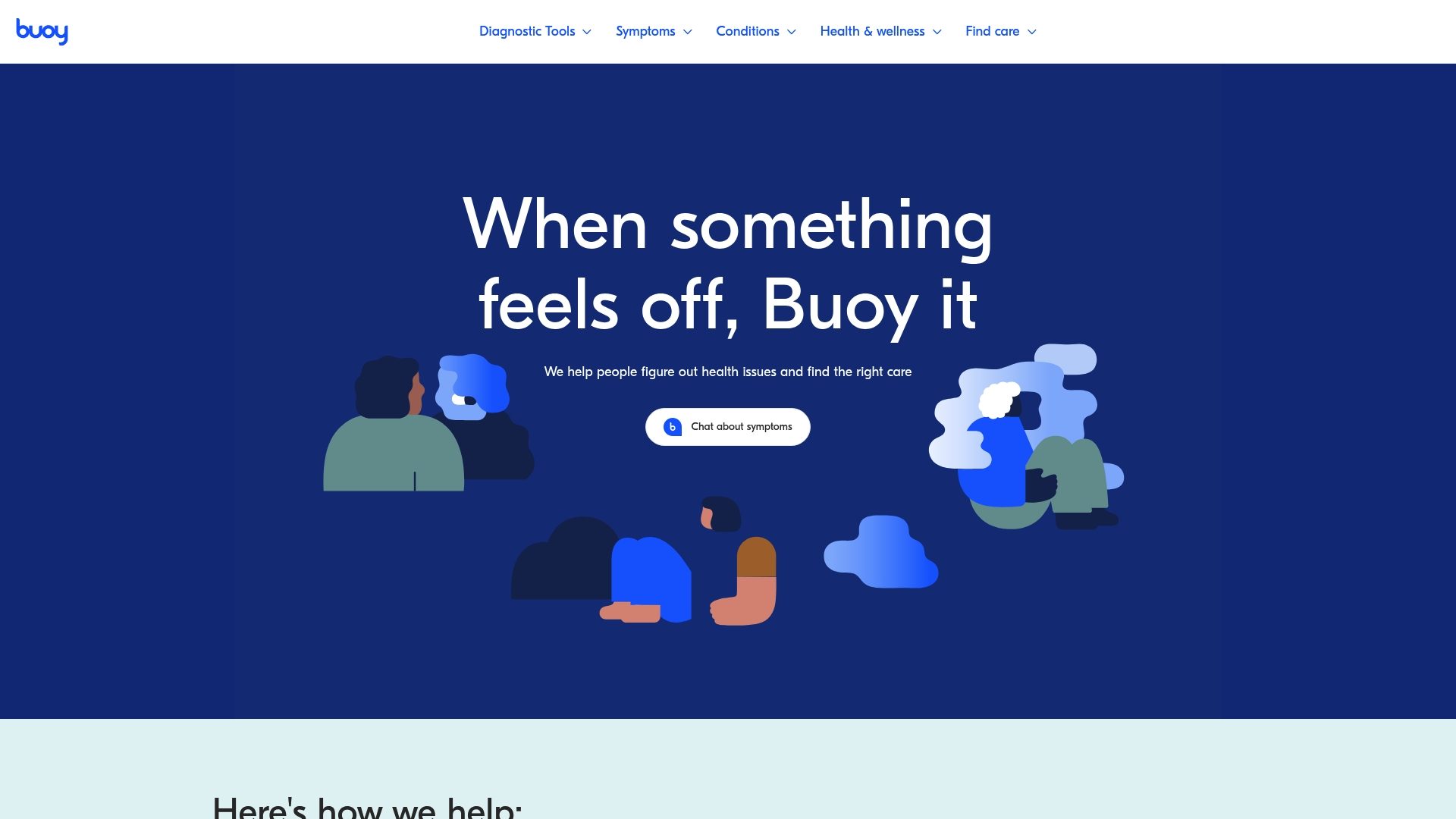
Buoy reports HITRUST certification for data privacy while combining clinician input and medical illustration. The symptom flow asks tailored questions and narrows possible causes with follow up prompts. Editorial review by physicians and researchers supports clearer explanations for common concerns. The result is an experience focused on quick triage and clearer next steps.
Core Features
Buoy runs an AI-driven symptom assessment that asks tailored medical questions and follows lines of inquiry based on your answers. The platform pairs clinician reviewed articles and visual medical illustrations to explain conditions and likely causes. It also offers guided care navigation to suggest appropriate providers or services when the assessment indicates further care.
Key Differentiator
A chief distinction is the mix of clinician reviewed editorial content with adaptive questioning that personalizes the assessment to the individual. This editorial network informs the wording of follow up questions and the explanatory articles shown after a check. That editorial grounding separates Buoy from symptom checkers that rely on scripted decision trees alone.
Pros
The question set is detailed and probes context that often matters for differential suggestions. Clinician reviewed content raises confidence in the background information and explains why certain next steps matter. Guidance reads as clear next step recommendations, not just a list of possibilities. That certification above supports secure handling of personal health data and reassures people who worry about privacy.
Cons
-
Some users perceive the platform as a marketing tool, especially when care or product options appear alongside guidance.
-
The tool is less effective for complex or rare medical conditions that need specialist evaluation.
-
It is not a replacement for in person medical diagnosis or treatment in emergency or complicated cases.
When It May Not Fit
If you have a long standing complex condition, Buoy may not capture the nuance clinicians need. People who require a definitive diagnostic workup should seek in person evaluation rather than relying on this tool. Do not use Buoy for emergency situations that require immediate medical attention.
Who It's For
Individuals who want fast, structured guidance for common symptoms will find this useful. It fits adults who prefer starting care navigation with a digital triage tool. People who value clinician reviewed explanations and visual aids will get the most from it.
Real World Use Case
A person with a headache and mild nausea answers Buoy's tailored questions and receives likely causes with simple explanations. The tool suggests home care tips and flags red flags that warrant seeing a clinician. If symptoms worsen, the tool points to appropriate next steps or provider types.
Website: https://buoy.com
Comparison of alternatives
Tracking recurring symptoms and trend recognition is an area where Peace Health AI clearly excels, surpassing the capabilities demonstrated by Ada Health and Buoy Health. However, evaluating all three solutions reveals unique strengths suitable for different user requirements.
Symptom Tracking Capability
Peace Health AI incorporates detailed symptom history logs and trend detection for recurring symptoms, presenting users with insights over time. This feature is particularly beneficial for individuals looking to monitor and compare their symptoms across multiple entries for recurring health concerns. Ada Health, on the other hand, facilitates quick guided assessments along with simple symptom tracking features but lacks elaborate long-term tracking capabilities. Buoy Health uses targeted questioning to provide immediate symptom-based recommendations but does not extend its features into historical tracking or analysis.
Language Accessibility
Ada Health distinguishes itself with language support across seven options, making it accessible to international users in multilingual scenarios. For global audiences, this capability ensures Ada provides a symptom checker that adapts to their communication needs without language barriers. Peace Health AI, while offering trend-based symptom tracking, primarily focuses on delivering its functionality uniformly without emphasizing language variations. Buoy Health similarly limits accessibility to one language, focusing more on usability and clinical integration.
Best fit
- Peace Health AI suits members needing constant symptom tracking and follow-up guidance. Its focus on historical tracking and trend recognition helps users make informed healthcare decisions.
- Ada Health is best for users prioritizing international language coverage for assessments. Multilingual support ensures broader applicability.
- Buoy Health fits individuals who require clinician-reviewed recommendations with visual aids. Guided care navigation and tailored questioning support immediate triage needs under physician-reviewed content.
Our pick
Peace Health AI is an excellent choice when prioritized capabilities include effective ongoing symptom history logging and trend-based analysis. For users focused on such features, this platform stands apart by helping users recognize patterns and inform their healthcare decisions. Alternative solutions Ada Health and Buoy Health cater to language coverage and immediate consultation scenarios, providing substantial value depending on user-specific healthcare interaction models.
People seeking an AI-driven symptom checker with advanced trend analysis capabilities can compare available options based on features and pricing.
| Product | Core Feature | Key Differentiator | Best For | Pricing | Notable Limitation |
|---|---|---|---|---|---|
| Peacehealthai | Symptom tracker and AI Health Score | Trend recognition across sessions | Recurring symptoms monitoring | Free, Pro, All Access | Limited checks in free plan |
| Ada Health | AI symptom assessment and medical library | Algorithmic reasoning with clinical support | Tech-savvy adults and families | Price not published | Customer service responsiveness reported inconsistent |
| Buoy Health | Tailored symptom questions and editorial content | Clinician-reviewed visual explanations | Common symptoms initial guidance | Price not published | Less effective for rare or complex conditions |
Choosing the Right Alternative to K Health for Your Symptom Guidance
Many people who seek K Health alternatives want a tool that offers fast, clear symptom guidance without the wait of traditional care. Peacehealthai meets that need by providing an AI-powered symptom checker designed for quick insights and easy tracking of symptoms over time. It supports multiple membership levels so you can pick a plan that fits your need for deeper analysis or AI chat support.
Peacehealthai helps you monitor repeated symptoms with pattern recognition and offers an AI Health Score that breaks down nutrition and hydration. This feature helps users spot health trends without manually tracking details. Find out how Peacehealthai makes symptom checking straightforward and private at Peace Health AI.
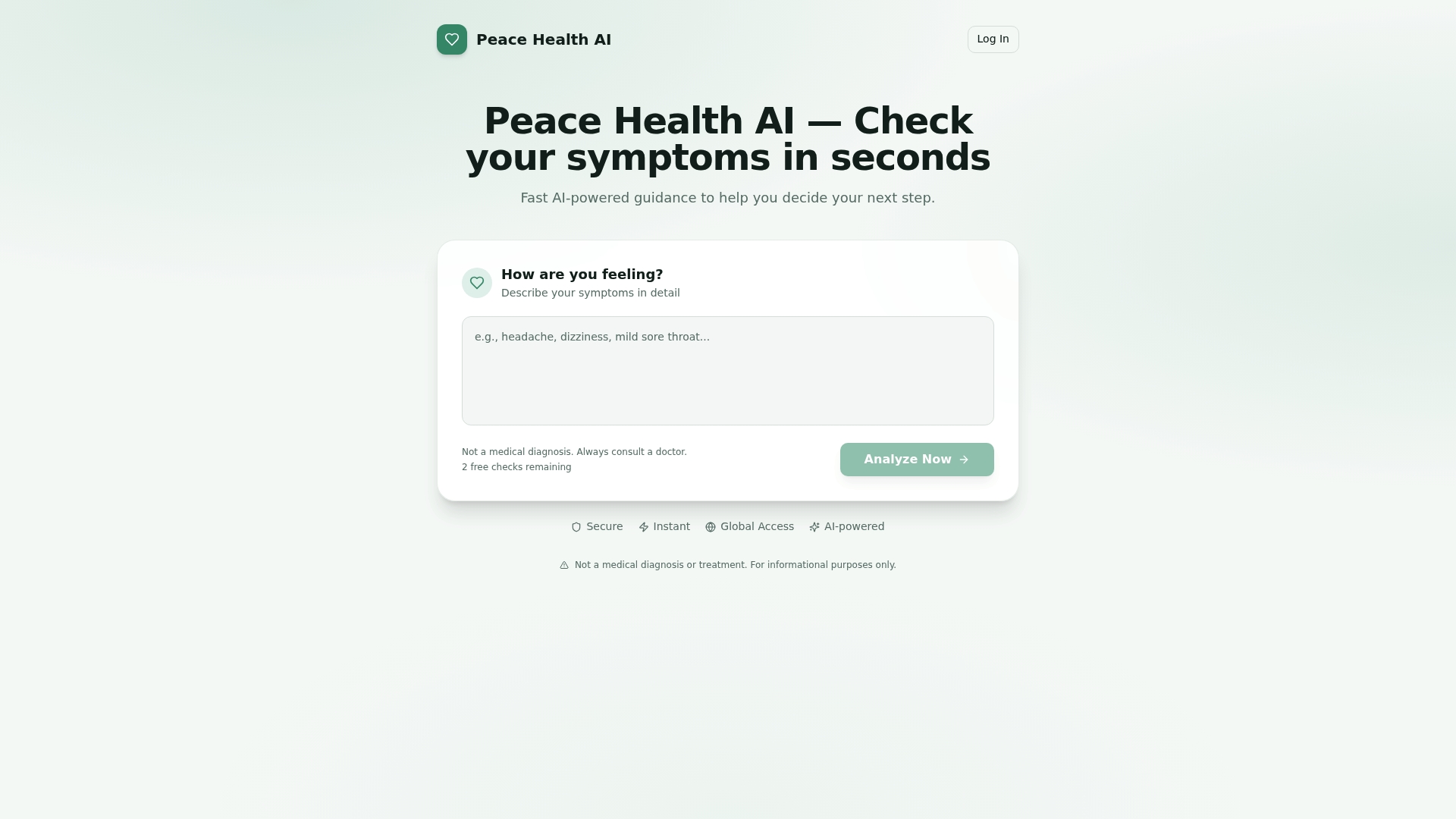
Get fast, reliable symptom recommendations at Peacehealthai. Visit https://peacehealthai.org and start using a symptom checker that adapts to your health concerns with clear next steps.
FAQ
How does Peacehealthai's AI support work for tracking my symptoms?
Peacehealthai provides ongoing symptom tracking and analysis through its AI Health Score. This score breaks down nutrition, activity, and hydration, allowing members to monitor changes over time. Users can expect a compact snapshot of their health that highlights patterns in their symptoms.
What is the difference between Peacehealthai and Ada Health?
Ada Health utilizes a question flow to guide users through symptom descriptions, focusing on clarity and ease of use. Peacehealthai excels in delivering personalized symptoms tracking and insights that help users manage recurring complaints effectively. This makes Peacehealthai the better choice for members looking to track symptoms over time.
Which platform offers more detailed health insights with membership?
Peacehealthai provides detailed health insights, including an AI Health Score and condition breakdowns for Pro and All Access members. This tiered membership allows for deeper analysis than many free symptom checker platforms. Users seeking thorough analysis should consider upgrading to a higher membership tier.
Can I use Peacehealthai if I have frequent health issues?
Peacehealthai is particularly beneficial for individuals who track recurring symptoms since it monitors trends over multiple sessions. Members with frequent health issues will find the platform's trend detection very helpful in identifying patterns and deciding when to seek care.
How does Peacehealthai ensure the privacy of my health information?
Peacehealthai emphasizes privacy and secure global access for its members, which assures users that their health information is protected. Individuals concerned about data privacy can feel confident using Peacehealthai for their health assessments.