
An AI weight loss coach is a digital assistant that uses algorithms to analyze your personal health data and deliver customized guidance on nutrition, exercise, and habit change. The science behind these tools is more compelling than most people expect.
A 2024 clinical study of 391 participants found that an AI-powered lifestyle platform produced an average weight loss of 14% over 24 weeks, with 98.7% of participants losing at least 5% of their starting body weight. That is not a marginal result. It puts AI coaching in the same conversation as structured clinical programs.
Key benefits of AI-driven weight management:
- Personalized nutrition and exercise plans based on real-time data
- 24/7 availability without the cost of a human trainer
- Continuous adaptation as your body and habits change
- Integration with wearables and smart scales for accurate tracking
- Objective feedback free from social pressure or judgment
Stat to know: In the same 2024 study, 43% of participants lost at least 15% of their body weight, and 9% lost at least 20%.
Table of Contents
- How does an AI weight loss coach actually work?
- Why human coaching still makes AI programs more effective
- Health metrics your AI coach should be monitoring
- Long-term metabolic benefits of AI-powered coaching
- How to choose the right AI weight loss coach
- Personalizing your AI coaching experience
- Peacehealthai gives you AI health guidance without the wait
- Key Takeaways
How does an AI weight loss coach actually work?
The core function is data collection followed by adaptive planning. You feed the system information, and it adjusts your program in response.
Most platforms pull from multiple sources: body weight and composition from smart scales like Withings, workout data from fitness trackers like Strava, and recovery signals from wearables like Oura or WHOOP. Sleep duration, heart rate variability, and daily activity levels all feed into a single picture of your energy balance.
Key data inputs and technologies:
- Smart scales tracking lean mass versus fat mass separately
- Wearables measuring HRV and sleep quality for recovery status
- Fitness apps logging workout volume and caloric expenditure
- Food logging tools for nutritional intake analysis
- 7-day rolling weight averages to filter out daily water fluctuations
That last point matters more than it sounds. Daily weight can swing 1–2 kg without any real change in fat or muscle. A rolling average gives you the actual trend instead of noise that discourages progress.
Why human coaching still makes AI programs more effective
AI alone works. Pairing it with a human coach works better, and the gap is larger than you might guess.

Stanford Graduate School of Business Professor Sridhar Narayanan analyzed data from roughly 65,000 users and found that people using AI plus human coaching lost about 74% more weight over three months than those using AI alone. The AI-only group averaged close to 3 pounds lost; the combined group averaged about 5 pounds.
Narayanan points to two reasons. First, people feel more accountable to a live person. Canceling a video call takes real effort; swiping away an app notification does not. Second, weight loss often triggers shame, anxiety, and frustration. Technology cannot replicate the empathy and accountability a human coach provides in those moments. Research on mental health and behavior change, including work from organizations like MHRC, consistently supports the idea that emotional support drives adherence in health programs.
Health metrics your AI coach should be monitoring
Scale weight is the least informative number in your program. Body composition tells the real story.
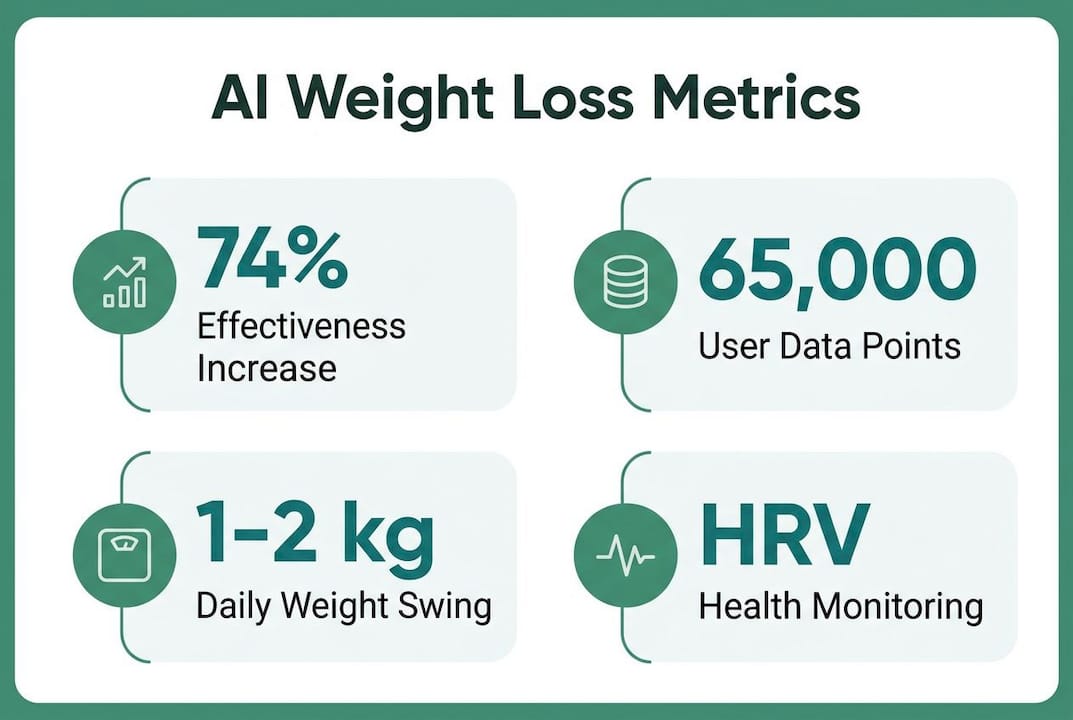
AI systems that track lean mass and fat mass separately can flag muscle loss early. If you are losing weight but your lean mass is dropping, the algorithm should immediately adjust your training load and caloric deficit. Preserving lean mass during a caloric deficit is critical because muscle loss slows your metabolic rate and makes long-term maintenance harder.
Best practices for AI-driven health monitoring:
- Track body composition, not just scale weight
- Monitor HRV daily; a sustained drop signals under-recovery
- Log sleep quality alongside workout intensity
- Use weekly trend data rather than daily readings for decisions
- Watch for cortisol-related stalls if cardio volume is high during a deficit
When HRV drops or sleep quality declines, a well-designed AI coach reduces workout intensity rather than pushing harder. Training aggressively on poor recovery during a caloric deficit raises cortisol, which actively stalls fat loss.
Long-term metabolic benefits of AI-powered coaching
Short-term weight loss is the easy part. Keeping it off requires sustained behavioral change, and that is where AI coaching has a structural advantage over one-time diet programs.
AI platforms can support people before, during, and after pharmacological or surgical weight loss therapies, filling the lifestyle management gap that clinical treatments alone do not address. The continuous feedback loop keeps metabolic adaptations in check by preserving lean muscle mass and preventing the extreme deficits that trigger metabolic slowdown.
Metabolic health benefits over time:
- Maintained lean muscle mass during and after weight loss
- Reduced risk of weight regain through habit reinforcement
- Personalized caloric targets that adjust as your metabolism changes
- Bridging support between medical interventions and daily lifestyle
One ethical consideration worth naming: AI systems make recommendations based on patterns in data, not clinical judgment. People with complex medical histories, eating disorders, or conditions like diabetes should treat AI coaching as a complement to medical care, not a replacement for it. Autonomy matters here. The best programs give you the data and let you make informed decisions rather than prescribing behavior without context.
How to choose the right AI weight loss coach
The criteria that separate effective platforms from mediocre ones come down to data depth, adaptability, and transparency.
Look for a platform that integrates with the devices you already use rather than requiring a closed ecosystem. A coach that only reads data from its own app misses most of your health picture. Body composition tracking is non-negotiable; any platform that only monitors scale weight is working with incomplete information.
Check whether the algorithm explains its recommendations. If the app tells you to cut calories but does not show you why, you cannot learn from it or push back when something feels wrong. Transparency builds trust and improves adherence over time.
Finally, consider whether human coaching access is available at higher tiers. As the Stanford research shows, that option meaningfully improves outcomes for people who need accountability or emotional support during the process.
Personalizing your AI coaching experience
The most effective programs treat personalization as an ongoing process, not a one-time setup questionnaire.
Your goals, schedule, stress levels, and food preferences shift over time. A good virtual weight loss coach recalibrates continuously rather than locking you into a plan set on day one. Logging frequency matters here: people who log weight and food intake more consistently tend to lose more weight, partly because the data quality improves and partly because the act of logging itself reinforces awareness.
Start by connecting every device you own. The more data streams the AI has, the more accurate its recommendations become. Then treat the first two to four weeks as a calibration period. The system is learning your patterns, and your job is to give it clean, consistent data to work with.
Peacehealthai gives you AI health guidance without the wait
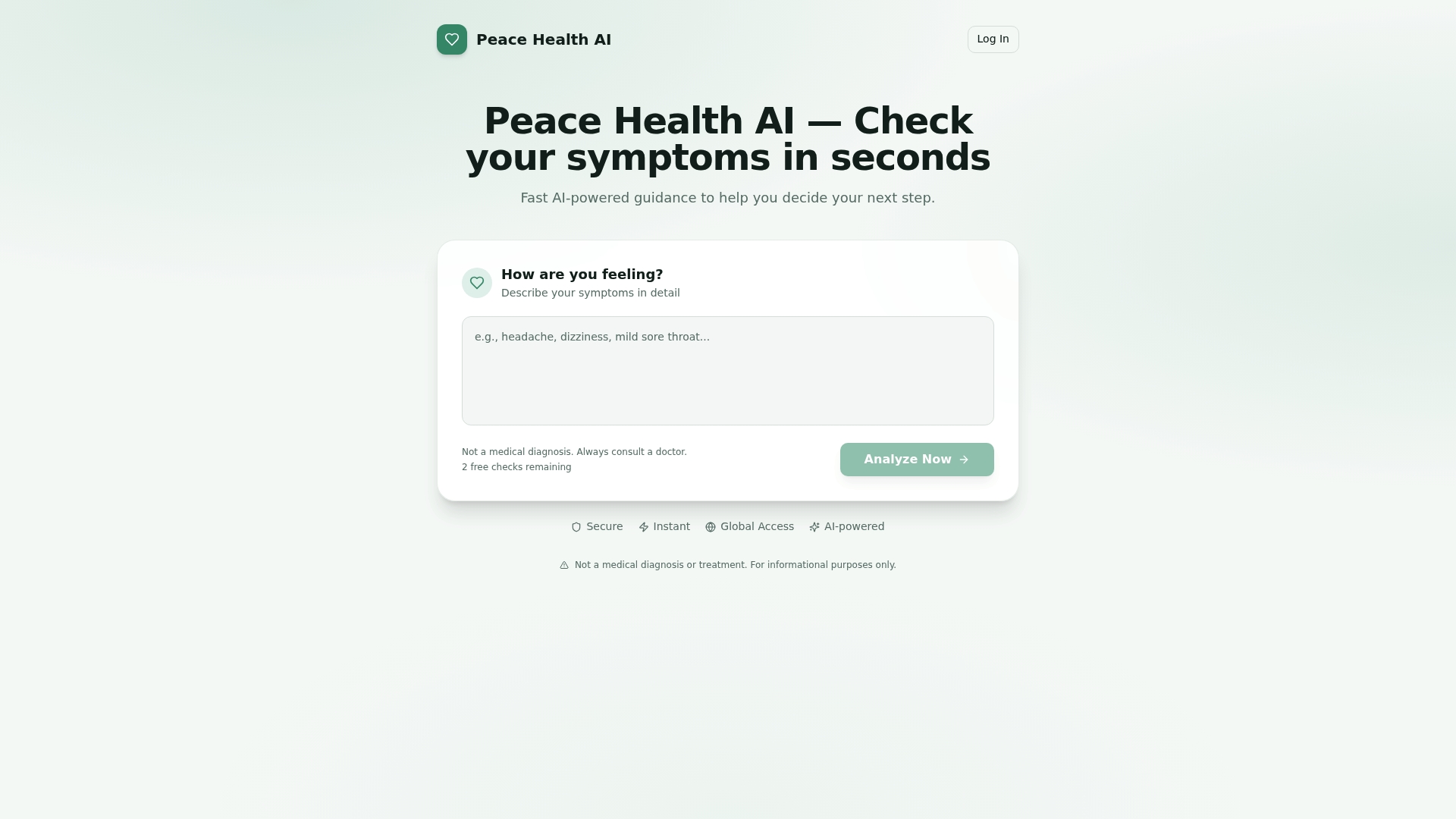
Most people managing their weight also have health questions that fall outside a fitness app's scope: unusual symptoms, fatigue that does not resolve, or concerns about how a new medication interacts with their diet. That is exactly where Peacehealthai fits.
Peacehealthai is an AI-powered symptom checker built for people who want fast, reliable health guidance without scheduling a doctor's appointment for every question. You describe your symptoms in plain language and get instant, structured recommendations on what to do next. Higher-tier plans include daily AI-generated nutrition and activity insights, symptom history tracking, early alerts for repeated patterns, and goal-based coaching for fat loss, muscle gain, and general wellness.
For anyone using an AI fitness assistant alongside their broader health management, Peacehealthai connects the dots between physical symptoms and lifestyle factors in one place. Check your symptoms now and see what your health data is actually telling you.
Key Takeaways
AI weight loss coaching produces clinically meaningful results, and pairing it with human support produces about 74% greater weight loss compared to AI alone over three months.
| Point | Details |
|---|---|
| Proven effectiveness | A 2024 study found an average 14% weight loss over 24 weeks, with 98.7% losing at least 5% of body weight. |
| Human coaching multiplies results | Adding a human coach to an AI program results in about 74% greater weight loss than AI alone over three months. |
| Body composition over scale weight | AI coaches should track lean mass and fat mass separately to prevent muscle loss during a caloric deficit. |
| Recovery metrics drive adjustments | HRV and sleep quality data allow AI to reduce workout intensity before cortisol spikes stall fat loss. |
| Peacehealthai for broader health guidance | Peacehealthai combines AI symptom checking with goal-based coaching, connecting fitness goals to overall health management. |